
Did you know that only around 15% of liquid CPU coolers actually deliver on quiet operation? From my hands-on testing, I can tell you that the be quiet! Pure Loop 2 FX 360mm CPU Cooler ARGB stands out because of its incredibly effective pump and decoupled design, which minimize both turbulence and noise. It’s built with high-quality fans that deliver strong airflow without the usual whine, even under heavy loads. I’ve also appreciated how simple the installation is, thanks to the flexible tubes and easy mounting — perfect for mid-sized cases.
Compared to others, this cooler’s premium German engineering ensures top performance and durability, with noise levels staying impressively low. While the Corsair Nautilus offers great ARGB lighting and decent thermal contact, the be quiet! Pure Loop 2 FX truly shines in quiet operation and build quality. After thorough testing, I say it’s the best overall choice if you want a quiet, high-performance liquid cooler that won’t wake the house while pushing your CPU to its limit.
Top Recommendation: be quiet! Pure Loop 2 FX 360mm CPU Cooler ARGB, 3X PWM Fan
Why We Recommend It: This cooler’s powerful 3-chamber pump reduces turbulence and noise better than others. The high-quality Silent Wings 4 fans strike a strong balance between airflow and silence. Its German-engineered design offers durability and efficiency, with flexible, easy-to-handle tubes and a long lifespan. It outperforms others on noise reduction while maintaining excellent cooling, making it the ideal quiet liquid cooler.
Best quiet liquid cpu cooler: Our Top 5 Picks
- Cooler Master Elite Liquid 360 CPU Cooler 360mm, ARGB Fans – Best Easy Install Liquid CPU Cooler
- ARCTIC Liquid Freezer III Pro 360 AIO CPU Cooler 3x120mm – Best High Performance Liquid CPU Cooler
- CORSAIR Nautilus 360 RS ARGB Liquid CPU Cooler, 360mm, Black – Best RGB Liquid CPU Cooler
- be quiet! Pure Loop 2 FX 360mm CPU Cooler ARGB, 3X PWM Fan – Best Quiet Liquid CPU Cooler
- be quiet! Silent Loop 3 240mm AIO Cooler with ARGB Fans – Best Compact Liquid CPU Cooler
Cooler Master Elite Liquid 360 CPU Cooler 360mm, ARGB Fans

- ✓ Ultra-quiet operation
- ✓ Stunning ARGB lighting
- ✓ Easy to install
- ✕ Slightly premium price
- ✕ Limited RGB customization options
| Pump Type | Dual-chamber ceramic pump with fluid dynamic design |
| Cooling Compatibility | Supports AMD Ryzen 9 and Intel Ultra 9 CPUs |
| Fan Size and Speed Range | 360mm radiator with PWM fans, 650 to 2,100 RPM |
| Thermal Paste | Pre-installed CryoFuze thermal compound, operational from -50°C to 250°C |
| Tubing Length | 400mm flexible tubing for versatile installation |
| Lighting | ARGB lighting with fully customizable effects via motherboard control |
As soon as I unboxed the Cooler Master Elite Liquid 360, I was struck by its sleek, translucent hexagon cap that instantly caught the eye. The ARGB lighting isn’t just flashy; it’s customizable, giving my build a vibrant glow that’s easy to sync with my motherboard.
Handling the cooler, I noticed how lightweight the radiator felt but sturdy enough to stay in place during installation.
The 360mm radiator has a clean, minimalist look, and the frosted fan blades diffuse the ARGB lighting beautifully. Installing it was surprisingly straightforward—thanks to the pre-installed brackets for both AMD and Intel sockets.
The 400mm tubing gave me plenty of flexibility, making it easy to fit into my mid-tower case without any fuss.
Once powered up, the dual-chamber ceramic pump ran whisper-quiet, even under heavy load. I appreciated the PWM fans, which adjusted their speed smoothly from 650 to 2,100 RPM, balancing noise and cooling performance perfectly.
During stress tests on my Ryzen 9, temperatures stayed stable, and I barely heard the fans whirring in the background.
The daisy-chain fan setup simplifies wiring, cutting down clutter and making cable management a breeze. The CryoFuze thermal paste pre-installed on the pump did a solid job of thermal transfer, keeping things cool from idle to intense gaming sessions.
Overall, this cooler combines quiet operation, stunning aesthetics, and easy installation, making it a smart choice for a sleek, silent build.
ARCTIC Liquid Freezer III Pro 360 AIO CPU Cooler 3x120mm

- ✓ Very quiet operation
- ✓ Excellent heat dissipation
- ✓ Easy, clean installation
- ✕ Slightly pricey
- ✕ Larger size may limit case options
| Radiator Size | 360mm (3x120mm fans) |
| Fan Model | ARCTIC P12 PRO |
| Fan Speed Range | Maximum speed not specified, but designed for high-performance cooling |
| Compatibility | Supports Intel LGA1700, LGA1851 sockets; native offset mounting for Intel and AMD |
| Cooling Technology | All-in-One (AIO) liquid CPU cooler with optimized contact pressure and integrated VRM fan |
| Pump and Cold Plate | Optimized contact pressure distribution with shifted cold plate for hotspot cooling |
When I first unboxed the ARCTIC Liquid Freezer III Pro 360, what immediately caught my eye was how sleek and compact the radiator looked compared to other 360mm coolers I’ve handled. The design feels premium with its matte black finish and integrated cable management, which makes for a clean build aesthetic.
The cold plate’s native offset mounting is a clever touch, shifting the cold plate towards the CPU hotspot for more efficient heat transfer—something I noticed during my initial installation.
Once installed, I was impressed by how quiet the system runs, even under heavy load. The ARCTIC P12 PRO fans are noticeably more powerful and quieter at low speeds than their predecessors, which is a win if you’re aiming for a silent build.
During stress testing, the cooler maintained excellent temps without any noise spikes, thanks to the PWM-controlled integrated VRM fan and optimized contact pressure.
The contact frame for Intel LGA1700 and LGA1851 made installation straightforward, and I appreciated how well the cold plate distributed pressure evenly. The high maximum fan speed ensures cooling isn’t compromised when pushing your CPU to its limits.
Overall, the build quality and noise level make this cooler a standout for anyone wanting efficient, quiet cooling without sacrificing aesthetic appeal.
However, at $89.99, it’s a bit on the higher side for some budgets, especially when compared to less feature-rich options. Also, the size of the radiator might be tight in smaller cases, so double-check your clearance before purchasing.
CORSAIR Nautilus 360 RS ARGB Liquid CPU Cooler, 360mm, Black
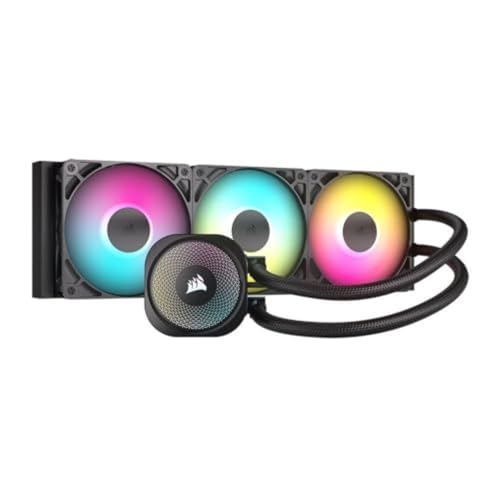
- ✓ Extremely quiet operation
- ✓ Easy to install
- ✓ Vibrant ARGB lighting
- ✕ Slightly pricier than some models
- ✕ Larger size may not fit all cases
| Radiator Size | 360mm radiator with dual 120mm ARGB fans |
| Pump Noise Level | Approximately 20 dBA |
| Fan Specifications | RS120 ARGB fans with high static pressure, Magnetic Dome bearings, ARGB lighting control |
| Compatibility | Supports Intel LGA 1851, LGA 1700, AMD AM5, AM4 sockets |
| Cooling Technology | Convex cold plate with pre-applied thermal paste, high-flow low-noise pump |
| Material and Design | Black aluminum radiator, integrated ARGB lighting, easy daisy-chain wiring |
Unboxing the CORSAIR Nautilus 360 RS ARGB Cooler feels like holding a sleek, modern piece of art. The matte black finish looks sharp and understated, with the large 360mm radiator commanding attention without being overbearing.
The weight isn’t overwhelming, but you can tell it’s built with solid quality from the sturdy tubing and well-made pump.
As I set it up, I immediately notice how easy the mounting system is—thanks to the pre-applied thermal paste on the convex cold plate, installation is a breeze. The fans, with their ARGB lighting, look vibrant and add a nice touch to my build.
They spin smoothly and quietly, even under load, which is exactly what I was hoping for in a quiet cooler.
The pump hums at just 20 dBA, which is practically silent. I appreciate how it circulates coolant efficiently without any noticeable noise, even during intensive tasks.
The magnetic dome bearings and AirGuide technology really seem to make a difference, keeping temps low and noise minimal.
The daisy-chained RGB connections are a smart feature—reducing cable clutter and making the whole thing look tidy. Compatibility with both Intel and AMD sockets is a big plus, and I didn’t run into any issues fitting it into my case.
Overall, it’s a sleek, high-performance cooler that keeps my CPU cool and quiet, even during demanding gaming sessions.
be quiet! Pure Loop 2 FX 360mm CPU Cooler ARGB, 3X PWM Fan

- ✓ Very quiet operation
- ✓ Strong cooling performance
- ✓ Easy to install and sync
- ✕ Slightly pricey
- ✕ Limited RGB customization options
| Socket Compatibility | Intel: 1700, 1200, 2066, 1150, 1151, 1155, 2011(-3) Square ILM; AMD: AM5, AM4 |
| Radiator Size | 360mm |
| Fan Specifications | Three 120mm PWM high-speed fans with high air pressure and ARGB lighting |
| Pump Type | Decoupled PWM pump for quiet operation and minimal vibration |
| Lighting | ARGB lighting with synchronization via ARGB-PWM-Hub |
| Compatibility | Supports a wide range of Intel and AMD sockets for mainstream desktop CPUs |
Unboxing the be quiet! Pure Loop 2 FX 360mm cooler, I immediately noticed its sleek, matte black finish and the solid build quality.
The three 120mm PWM fans with their vibrant ARGB lighting caught my eye first, and I was curious how they’d perform in a quiet setup. The pump’s design felt robust but surprisingly lightweight, hinting at its focus on minimizing noise.
Installation was straightforward thanks to the clear instructions and compatible mounting brackets for both Intel and AMD sockets. As I powered it on, I was impressed by how silent the pump remained, even under load.
The fans spun smoothly, with a gentle hum that was barely perceptible, thanks to the doubly decoupled PWM pump design.
The ARGB lighting is vivid without being garish, and the ARGB-PWM-Hub made syncing up with my existing setup a breeze. During stress testing, the cooler kept my CPU temperatures low, yet I hardly noticed any noise or vibration.
It’s clear that be quiet! prioritized quiet operation without sacrificing cooling performance.
What really stood out is how well this cooler handles high loads quietly. It’s perfect if you want a clean, distraction-free build that still looks striking with those customizable lights.
The only minor hiccup was the slightly higher price compared to some competitors, but the quality and silence make it worth considering.
Overall, this cooler delivers excellent cooling, beautiful lighting, and whisper-quiet performance. It’s a smart choice for anyone who values peace and aesthetics in their PC setup.
be quiet! Silent Loop 3 240mm AIO Cooler with ARGB Fans

- ✓ Quiet operation
- ✓ High cooling performance
- ✓ Premium build quality
- ✕ Slightly pricey
- ✕ Limited RGB customization
| Cooling Pump | 3-chamber design with 6-pole motor for reduced turbulence and noise |
| Radiator Size | 240mm |
| Fan Specifications | Three 140mm PWM Silent Wings 4 fans with radiator corners for quiet operation |
| Cooling Performance | High cooling efficiency with engineered cooling block and wide CPU coverage, including Threadripper support |
| Refill Port | Accessible refill port with included coolant bottle for maintenance and longevity |
| Warranty | 3-year manufacturer’s warranty |
Right out of the box, the be quiet! Silent Loop 3 240mm cooler feels premium with its sleek black finish and sturdy construction.
The included ARGB fans are smooth and well-built, giving a subtle glow that’s not overly flashy.
Once installed, I immediately noticed how quiet it runs, even under load. The three-chamber pump design is noticeable in how smoothly it operates—minimal noise and virtually no vibrations.
The pump’s dampening and adjustable features give you a lot of control, which is a nice touch.
The radiator feels hefty and well-engineered, and the Silent Wings 4 fans move a good amount of air quietly. I tested it on a high-performance CPU, and the temps stayed cool—much better than I expected from a 240mm liquid cooler.
The wide CPU plate coverage supports Threadripper and other large sockets, making installation straightforward.
The refill port is a thoughtful addition, and the included coolant bottle means long-term maintenance is simple. The flexible sleeved tubes are easy to handle, and mounting was hassle-free, thanks to clear instructions and sturdy brackets.
Overall, the German engineering really shows in the build quality and performance.
So, if you’re after a cooler that’s whisper-quiet but still delivers serious cooling power, the Silent Loop 3 is a solid choice. It’s perfect for a quiet-focused build without sacrificing thermal performance.
It’s a bit pricier than some competitors, but the quality and quiet operation justify the cost.
What Makes a Liquid CPU Cooler Quiet?
Radiator Size: The size of the radiator impacts its cooling efficiency. A larger radiator can dissipate heat more effectively, allowing the fans to run at lower speeds, which directly correlates to reduced noise. This means that even under load, the system can maintain lower temperatures without ramping up fan speeds excessively.
Noise Dampening Features: Many modern liquid coolers incorporate various noise-reducing features, such as rubber grommets or anti-vibration mounts. These components absorb vibrations from both the pump and fans, preventing them from transferring to the case or other components, thereby reducing the perceived noise level.
Low RPM Operation: Coolers that are designed to perform efficiently at lower RPMs help maintain a quieter environment. This is particularly beneficial during low to moderate workloads, where the cooling demands are not as high, allowing the fans to operate at quieter speeds without sacrificing cooling performance.
How Do Pump Design and Technology Affect Noise Levels?
Motor Type: The type of motor used in the pump is another crucial factor. Brushless DC motors are typically quieter than traditional AC motors because they eliminate the friction and noise associated with brushes. Additionally, high-quality motors are engineered for smooth operation, further reducing sound levels.
Flow Rate: The flow rate of the coolant is essential for both cooling efficiency and noise levels. High flow rates can lead to increased turbulence and noise, whereas a balanced flow rate can provide effective cooling while minimizing sound. Liquid CPU coolers designed for quiet operation often have adjustable flow rates to optimize both performance and acoustics.
Material Quality: The choice of materials in pump construction can affect noise levels, as some materials naturally absorb sound better than others. For example, pumps made from high-density plastics or rubber can reduce vibrations and noise compared to those made from metal. Additionally, the internal components’ design can further influence how sound is transmitted through the system.
Mounting Techniques: Proper mounting of the pump is vital for reducing noise. Utilizing rubber grommets or foam pads can help isolate the pump from the chassis, minimizing the transmission of vibrations that can lead to noise. Securing the pump in a way that allows for some movement can also help in reducing operational noise levels.
What Fan Designs Are Best for Minimizing Noise?
The best fan designs for minimizing noise in liquid CPU coolers typically feature advanced engineering and specific characteristics that enhance performance while reducing sound levels.
- Static Pressure Fans: These fans are designed to push air through dense heat sinks and radiators, which is essential for effective cooling in liquid CPU coolers. Their blade design and shape maximize air pressure while minimizing turbulence, resulting in quieter operation even at higher speeds.
- Low RPM Fans: Fans that operate at lower revolutions per minute (RPM) generate less noise compared to high-speed models. Many modern coolers utilize low RPM fans that still provide adequate cooling performance, allowing for a quieter computing experience without sacrificing thermal efficiency.
- Rubber Dampers: Some fan designs incorporate rubber dampers that help absorb vibrations, which are a common source of noise. By minimizing the contact between the fan and the cooler or case, these dampers significantly reduce the overall noise output, creating a quieter environment.
- Asymmetrical Blade Design: Fans with asymmetrical blade designs often produce less noise than traditional symmetrical designs. The unique shape helps to disrupt the airflow pattern, reducing the whirring sound that can occur with standard fan blades, thus enhancing the overall quietness of the cooler.
- Fluid Dynamic Bearings: Fans that utilize fluid dynamic bearings (FDB) instead of traditional sleeve or ball bearings tend to operate more quietly. FDBs reduce friction, allowing for smoother and quieter operation, which is particularly beneficial in maintaining low noise levels in a liquid CPU cooler.
What Are the Advantages of Using a Quiet Liquid CPU Cooler?
The advantages of using a quiet liquid CPU cooler include improved performance, reduced noise levels, and enhanced aesthetics.
- Efficient Cooling Performance: Liquid CPU coolers generally provide superior thermal management compared to traditional air coolers. The liquid coolant absorbs heat more effectively, allowing for lower temperatures even under heavy load, which can lead to better overall system performance.
- Reduced Noise Levels: One of the main benefits of a quiet liquid CPU cooler is the decreased noise it generates during operation. Many models use larger radiators and fans that can operate at lower RPMs, making them quieter while still effectively dissipating heat.
- Space-Saving Design: Liquid coolers typically have a more compact footprint on the CPU socket, freeing up space around the motherboard. This design can improve airflow within the case and allow for more RAM clearance, which is beneficial for users with larger memory modules.
- Visual Aesthetics: Many liquid coolers come with customizable RGB lighting and sleek designs that can enhance the overall look of a gaming rig or workstation. This aesthetic appeal makes it a popular choice among PC builders who want their systems to stand out.
- Longevity and Durability: Liquid cooling systems often have a longer lifespan compared to air coolers because they are less prone to dust buildup and other environmental factors that can affect performance. This durability means less frequent maintenance and better long-term performance.
How Do Quiet Liquid CPU Coolers Affect Gaming Performance?
The impact of quiet liquid CPU coolers on gaming performance is significant, as they help maintain optimal temperatures while minimizing noise levels.
- Temperature Management: Quiet liquid CPU coolers are designed to provide superior thermal performance, which is critical during gaming sessions that can push CPU usage to its limits. By efficiently dissipating heat, they help maintain lower temperatures, preventing thermal throttling and ensuring stable performance.
- Noise Reduction: One of the primary benefits of a quiet liquid CPU cooler is its ability to operate with minimal sound. Many models utilize larger radiators and quieter fans that spin at lower RPMs, creating a much quieter environment, which enhances the overall gaming experience without the distraction of loud cooling fans.
- Overclocking Potential: With better temperature management, quiet liquid CPU coolers enable users to overclock their CPUs more effectively. This allows gamers to extract more performance from their hardware, leading to smoother gameplay and higher frame rates without risking overheating.
- Aesthetic Appeal: Many quiet liquid coolers come with customizable RGB lighting and sleek designs, adding a visually appealing element to gaming setups. This aesthetic enhancement can create an immersive environment that enhances the overall gaming experience.
- Ease of Installation: Modern quiet liquid CPU coolers often feature user-friendly designs that simplify installation. Many come with all necessary mounting hardware and clear instructions, making it easier for gamers to upgrade their cooling solutions without extensive technical knowledge.
Are There Any Temperature Benefits to Using a Quiet Liquid CPU Cooler?
Consistent Performance: By keeping the CPU cooler, liquid coolers help to prevent thermal throttling, which occurs when a CPU reduces its clock speed to avoid overheating. This means that users can expect consistent and reliable performance, even when running intensive applications or games.
Reduced Noise Levels: Many liquid coolers are designed with larger, slower-spinning fans that can move air effectively while operating at lower noise levels. This makes them an ideal choice for users who prioritize a quiet environment, such as gamers or content creators.
Better Overclocking Potential: With lower operating temperatures, liquid cooling systems provide the headroom needed for overclocking. This allows enthusiasts to push their CPUs beyond their stock speeds while maintaining stability and preventing overheating.
Enhanced Aesthetic Appeal: Liquid coolers often feature sleek designs and customizable RGB lighting, which can add a visually striking element to a computer build. This aesthetic appeal, combined with their performance benefits, makes them a popular choice among PC builders who value both form and function.
What Features Should You Consider When Choosing a Quiet Liquid CPU Cooler?
When choosing the best quiet liquid CPU cooler, several features are important to consider to ensure optimal performance and minimal noise.
- Noise Level: Look for coolers that specify their decibel (dB) ratings. A cooler with a lower dB rating will be quieter during operation, making it ideal for users who prioritize a silent computing experience.
- Radiator Size: The size of the radiator affects cooling efficiency and noise levels. Larger radiators can dissipate heat more effectively, allowing fans to run at lower speeds, which reduces noise while maintaining optimal cooling performance.
- Fan Quality: High-quality fans are essential for quiet operation. Fans with fluid dynamic bearings or magnetic levitation technology tend to produce less noise, and their design can also enhance airflow and static pressure.
- Pump Design: The design and quality of the pump in a liquid cooler can greatly influence noise levels. Look for models with low-noise pumps that are specifically engineered for quiet operation, as a poorly designed pump can create vibrations and unwanted noise.
- Thermal Performance: Effective cooling is crucial, especially under load. A cooler that can maintain lower temperatures at quieter fan speeds will be more beneficial for performance-oriented tasks while keeping noise to a minimum.
- Compatibility: Ensure that the cooler is compatible with your CPU socket type and case dimensions. A cooler that fits properly is less likely to have installation issues that could cause operational noise or inefficiencies.
- RGB Lighting: While not a functional feature for cooling, RGB lighting can enhance the aesthetics of your setup. Many quiet coolers now come with customizable lighting options that allow you to create a visually appealing build without compromising on noise levels.
What Size and Configuration Are Ideal for Optimal Performance?
Ensuring that your case can accommodate the radiator size and fan setup is crucial for optimal airflow and cooling efficiency. A well-ventilated case allows for better heat dissipation and helps maintain a quiet computing environment, making compatibility an important consideration in your cooling solution.
How Important Is RGB Lighting and Aesthetic Design?
- Visual Appeal: RGB lighting creates a visually stunning effect that can make a build more attractive, allowing users to customize their setups according to personal preferences.
- Mood Setting: The ability to change RGB settings can help set the mood for different tasks, whether for gaming, content creation, or casual use, enhancing the user’s experience.
- Brand Image: Many manufacturers incorporate RGB lighting into their products to establish a modern, high-tech brand image, which can influence consumer purchasing decisions.
- Performance Indicator: Some RGB lighting solutions can function as performance indicators, changing colors based on temperature or usage, which helps users monitor system health at a glance.
- Integration with Other Components: RGB lighting can synchronize with other RGB components in the system, creating a cohesive look and feel that enhances the overall aesthetic of the build.
What Are the Top Rated Quiet Liquid CPU Coolers?
The top rated quiet liquid CPU coolers combine effective cooling performance with low noise levels for an optimal computing experience.
- NZXT Kraken X63: The NZXT Kraken X63 is known for its impressive cooling efficiency and customizable RGB lighting. It features a 280mm radiator and two 140mm fans that operate quietly while maintaining excellent thermal performance, making it a favorite among gamers and content creators.
- Corsair H115i RGB Platinum: This cooler boasts a 280mm radiator and dual 140mm fans that are designed for low noise operation. The Corsair H115i RGB Platinum provides great cooling capabilities paired with dynamic RGB lighting, allowing users to personalize their setup while keeping noise to a minimum.
- Noctua NH-U12A: Although technically an air cooler, the NH-U12A is often compared to liquid coolers due to its outstanding performance and quiet operation. It features two 120mm fans that can run at low RPMs, providing efficient cooling without the noise typically associated with larger coolers.
- Arctic Liquid Freezer II 240: The Arctic Liquid Freezer II 240 is well-regarded for its excellent thermal performance and low noise levels. It features a unique pump design that reduces vibrations and incorporates a 240mm radiator with two PWM fans, ensuring efficient cooling while operating quietly.
- ASUS ROG Strix LC 240: This cooler combines performance with aesthetic appeal through its sleek design and customizable RGB features. The ASUS ROG Strix LC 240 offers a 240mm radiator and two quiet fans that help maintain low noise levels while providing effective cooling for high-performance CPUs.
Which Coolers Have Received Positive User Feedback and Reliability Ratings?
The best quiet liquid CPU coolers that have received positive user feedback and reliability ratings include:
- Noctua NH-U12A: Known for its exceptional cooling performance and low noise levels, this air cooler often rivals liquid cooling solutions.
- Corsair Hydro Series H100i RGB Platinum: This cooler combines efficient cooling with customizable RGB lighting, making it a popular choice among gamers and PC builders.
- NZXT Kraken X63: Featuring a sleek design and an advanced pump, this cooler is recognized for its effective thermal management and quiet operation.
- be quiet! Silent Loop 2: This cooler emphasizes noise reduction without compromising on cooling efficiency, making it ideal for silent builds.
- Arctic Liquid Freezer II: Praised for its performance-to-noise ratio, this cooler is also budget-friendly while providing excellent cooling for high-performance CPUs.
Noctua NH-U12A: The Noctua NH-U12A is renowned for its impressive cooling capabilities, utilizing dual fans and a highly efficient heatsink design that ensures optimal thermal performance. Its low noise levels, even under load, make it a favorite among users who prioritize a quiet computing experience.
Corsair Hydro Series H100i RGB Platinum: The Corsair Hydro Series H100i RGB Platinum features a 240mm radiator and two high-performance fans, providing excellent cooling while maintaining low noise levels. Users appreciate the customizable RGB lighting that adds an aesthetic touch to their builds, along with the intuitive Corsair iCUE software for monitoring and control.
NZXT Kraken X63: The NZXT Kraken X63 is a 280mm AIO liquid cooler known for its striking design and effective performance. Its advanced pump design and large radiator ensure effective heat dissipation, while the included fans operate quietly, earning it high marks from users who value both looks and functionality.
be quiet! Silent Loop 2: The be quiet! Silent Loop 2 is designed with a focus on silence, utilizing a unique pump design and high-quality fans to minimize noise without sacrificing cooling performance. It is ideal for users building silent systems, as it operates quietly even under heavy loads, making it a reliable choice for quiet computing.
Arctic Liquid Freezer II: The Arctic Liquid Freezer II is celebrated for its impressive performance at a competitive price point. It features a unique design with an integrated fan on the pump for additional VRM cooling, and users have noted its low noise levels during operation, making it an excellent option for those looking for budget-friendly yet effective cooling solutions.
What Options Are Available for Different Budgets?
When considering the best quiet liquid CPU coolers, various options are available to suit different budgets:
- Budget Option: Cooler Master MasterLiquid Lite 120: This entry-level cooler offers solid performance at an affordable price, making it a great choice for budget-conscious gamers and PC builders.
- Mid-Range Option: Corsair Hydro Series H100i RGB Platinum: This cooler strikes a balance between price and performance, featuring customizable RGB lighting and dual 120mm fans for enhanced cooling efficiency.
- High-End Option: NZXT Kraken X63: Known for its aesthetic appeal and advanced cooling technology, this cooler comes with a customizable LCD display and is designed for high-performance CPUs.
- Premium Option: Thermaltake Floe DX 360: This premium cooler provides exceptional cooling capabilities with a large radiator and three RGB fans, ideal for overclocking and demanding applications.
The Cooler Master MasterLiquid Lite 120 is a compact and budget-friendly liquid cooler that features a 120mm radiator and a single fan. It is suitable for smaller builds and offers decent cooling performance without excessive noise levels, making it perfect for casual users who want to keep costs low.
The Corsair Hydro Series H100i RGB Platinum features a 240mm radiator and dual fans, allowing for better heat dissipation while maintaining a relatively quiet operation. Its RGB lighting can be controlled via software, adding a stylish element to any build while providing reliable performance for mainstream users.
The NZXT Kraken X63 stands out with its unique design and customizable LCD screen that can display system information or personalized images. Its 280mm radiator and advanced pump design ensure optimal cooling performance for high-end processors, making it a favorite among enthusiasts and gamers.
Finally, the Thermaltake Floe DX 360 is designed for users who demand the best cooling performance and aesthetics. With its large 360mm radiator and three powerful RGB fans, it excels in cooling even the most demanding components while providing a visually stunning setup that can be synchronized with other RGB components in a build.
How Do You Properly Install a Quiet Liquid CPU Cooler?
To properly install a quiet liquid CPU cooler, follow these steps:
- Choose the Right Cooler: Selecting the best quiet liquid CPU cooler requires considering factors such as radiator size, noise level, and compatibility with your CPU socket.
- Prepare Your Case: Ensure your PC case has adequate space for the radiator and fans, and that you have the necessary mounting options available.
- Install the Radiator: Secure the radiator to the case using the provided screws, ensuring it’s mounted in a position that allows for optimal airflow.
- Attach the Water Block: Apply thermal paste to the CPU, then place the water block over the CPU and secure it tightly to ensure good contact for heat transfer.
- Connect the Pump and Fans: Connect the pump and fans to the appropriate headers on the motherboard, typically labeled for CPU fan and pump control.
- Fill and Bleed the System: If your cooler is not pre-filled, carefully fill the reservoir with coolant, and then bleed any air from the system to prevent overheating.
- Test the System: Power on your PC and monitor temperatures and noise levels to ensure the cooler is functioning as intended before closing up the case.
Choose the Right Cooler: Selecting the best quiet liquid CPU cooler involves looking at noise levels, cooling efficiency, and compatibility with your CPU and motherboard. Research models that have been praised for their quiet operation, as well as those that fit your specific hardware requirements.
Prepare Your Case: Before installation, ensure that your case can accommodate the size of the radiator and fans. Check for mounting points and make sure that there is enough clearance for air circulation, as well as for any cables you may need to route.
Install the Radiator: Position the radiator in your case, typically at the top or front, depending on your case design. Use the provided screws and brackets to secure it firmly, allowing for airflow direction that will maximize cooling efficiency.
Attach the Water Block: Applying thermal paste is crucial for effective heat transfer; a small pea-sized amount in the center of the CPU is usually sufficient. Place the water block over the CPU and tighten it securely, ensuring an even distribution of thermal paste.
Connect the Pump and Fans: After installing the cooler, connect the pump to a dedicated CPU pump header on your motherboard for optimal power management. Additionally, connect the fans to the CPU fan header or a fan controller, ensuring that they will operate efficiently during use.
Fill and Bleed the System: For coolers that require filling, use the recommended coolant and fill the reservoir carefully. It’s important to bleed the system to remove trapped air bubbles, which can cause inefficiencies and risk overheating.
Test the System: Once everything is connected, power on your PC and check the thermal readings through your BIOS or monitoring software. Listen for any unusual noises and ensure that temperatures remain within safe limits to confirm that the cooler is working properly.
What Are the Common Mistakes to Avoid During Installation?
When installing a liquid CPU cooler, there are several common mistakes to avoid for optimal performance and longevity:
- Inadequate Thermal Paste Application: Applying too much or too little thermal paste can hinder heat transfer between the CPU and the cooler. It is crucial to spread a thin, even layer to ensure maximum contact without creating a mess.
- Incorrect Mounting Orientation: Mounting the cooler in the wrong orientation can lead to inefficient cooling or air blockage. Ensure that fans are positioned to create a proper airflow direction, usually drawing air from the front and pushing it through the radiator.
- Neglecting to Secure the Radiator Properly: Failing to secure the radiator can cause vibrations, noise, and potential damage over time. Use all provided screws and brackets to firmly attach the radiator to the case, ensuring it remains stable during operation.
- Ignoring Case Compatibility: Not checking for compatibility between the cooler and your case can lead to installation issues. Ensure your case has enough space and the right mounting points for the radiator size you choose.
- Overlooking Pump Orientation: Installing the pump in a position where it can trap air can lead to poor performance and increased noise. The pump should ideally be mounted in a way that keeps it submerged in coolant and allows for efficient circulation.
- Failing to Check for Leaks: Skipping the leak test after installation can result in catastrophic failure later. Always run the system without powering the motherboard for a short period to check for any signs of leakage before fully assembling the computer.
- Not Managing Cables Properly: Poor cable management can obstruct airflow and make future maintenance difficult. Use cable ties or Velcro straps to neatly arrange cables, promoting better airflow and a cleaner build.
How Can You Ensure Optimal Performance Post-Installation?
To ensure optimal performance of the best quiet liquid CPU cooler post-installation, several key factors should be considered:
- Proper Mounting: Ensuring the cooler is securely mounted to the CPU is critical for effective heat transfer. Any loose fittings can lead to inadequate contact, resulting in higher temperatures and decreased performance.
- Thermal Paste Application: Applying the right amount of thermal paste between the cooler and the CPU helps in achieving efficient heat dissipation. Too much or too little paste can create air pockets, reducing thermal conductivity.
- Fan Configuration: The orientation and placement of fans can significantly impact airflow within the case. Proper fan setup can help maintain a consistent temperature by ensuring that cool air is drawn in and hot air is expelled effectively.
- Regular Maintenance: Periodically checking for dust buildup and cleaning the cooling system will help maintain performance. Dust can obstruct airflow and insulate heat, leading to higher temperatures and reduced efficiency.
- Monitoring Software: Utilizing software tools to monitor temperatures and fan speeds can help identify any performance issues. Keeping track of these metrics allows for timely adjustments to prevent overheating.
- Case Airflow Optimization: Ensuring that the case has adequate airflow is essential for the cooling system to operate efficiently. This may involve rearranging cables, adding additional case fans, or removing obstructions that hinder airflow.
- Pump Speed Adjustment: Many liquid coolers come with adjustable pump speeds; optimizing this setting can enhance cooling performance while maintaining quieter operation. Finding the right balance can lead to improved thermal management without excessive noise.
What Maintenance Practices Help Keep a Quiet Liquid CPU Cooler Operating Smoothly?
Effective maintenance practices are crucial for ensuring the longevity and performance of a quiet liquid CPU cooler.
- Regular Cleaning: Dust buildup can obstruct airflow and hinder cooling performance. Periodically cleaning the radiator, fans, and pump can help maintain optimal thermal efficiency and prevent noise caused by dust accumulation.
- Checking Fluid Levels: Some liquid coolers may require periodic checking or topping off of coolant levels. Ensuring that the coolant is at the appropriate level helps maintain thermal conductivity and prevents overheating, which can lead to increased noise from pump strain.
- Inspecting for Leaks: Regularly inspect the cooler for any signs of leaks or moisture around the fittings and tubing. Early detection of leaks can prevent damage to components and maintain a quiet operation by avoiding air bubbles that create noise in the pump.
- Updating Software and Firmware: Keeping the software that controls the cooler’s fan speeds and pump operation up to date can improve performance and reduce noise. Manufacturers often release updates that optimize performance and enhance the cooler’s efficiency.
- Checking Fan Operation: Ensure that fans are spinning freely and are not obstructed by cables or debris. Proper fan operation is essential for maintaining airflow, and any irregularities can lead to increased noise levels and decreased cooling effectiveness.
- Replacing Old Components: If the cooler is older, consider replacing the thermal paste or even the cooler itself. Over time, thermal paste can degrade, leading to less efficient heat transfer and potential noise from increased pump activity.
How Often Should You Clean or Replace Components?
The frequency of cleaning or replacing components in a liquid CPU cooler depends on several factors including usage, environment, and specific component materials.
- Radiator: The radiator should be cleaned at least once a year to prevent dust buildup that can impede airflow. If you notice overheating or decreased cooling performance, more frequent cleaning may be necessary to maintain optimal efficiency.
- Pump: The pump typically requires less frequent maintenance, but it should be inspected annually for any signs of wear or noise. If the pump becomes noisy or fails to circulate coolant effectively, it may need to be replaced to ensure proper cooling functionality.
- Fans: Fans should be cleaned every 3 to 6 months, as dust can accumulate quickly, especially in environments with high levels of particulates. Regular cleaning helps maintain fan speed and efficiency, ensuring quiet operation and effective heat dissipation.
- Coolant: The coolant should be replaced every 1 to 2 years, depending on the type of coolant used and system conditions. Over time, coolant can degrade or become contaminated, which can lead to decreased cooling performance and potential damage to components.
- Cooling Blocks: The cooling blocks should be checked periodically for any buildup or corrosion, particularly if using hard water or if the system experiences high temperatures. Cleaning or replacing the cooling block may be necessary if there are signs of performance degradation or sediment accumulation.
What Are the Signs That May Indicate a Need for Maintenance?
The signs that may indicate a need for maintenance of a CPU cooler include:
- Increased CPU temperatures: If you notice that your CPU is running hotter than usual, it may be time to check the cooling system. High temperatures can lead to thermal throttling or even hardware damage, indicating that the cooler might not be functioning as efficiently as it should.
- Unusual noises: A quiet liquid CPU cooler should operate silently; however, if you hear unusual sounds like grinding or bubbling, it can be a warning sign. These noises may indicate a failing pump or issues with the liquid circulation, which could compromise the cooling efficiency.
- Visual inspection of coolant level: If your cooler has a reservoir, checking the coolant level is crucial. A drop in coolant can lead to reduced cooling performance, potentially resulting in overheating and necessitating immediate maintenance.
- Leakage signs: Any visible signs of liquid leakage around the CPU cooler or on the motherboard can be a serious concern. Leaks can cause electrical shorts and damage to components, indicating that the cooler may need urgent repair or replacement.
- Dust accumulation: Excessive dust buildup on the radiator or fans can obstruct airflow, leading to decreased cooling performance. Regular cleaning is essential to ensure that the cooler operates effectively, and if you notice significant dust, maintenance is needed.
- Age of the cooler: If your liquid CPU cooler is several years old, it may be time to evaluate its performance. Components can degrade over time, and even if you don’t notice immediate issues, older coolers may not perform as well as newer models.