
Holding a closed loop liquid cooler in your hand, I was struck by its sleek, solid feel—smooth tubing, sturdy block. It’s a sign of quality you can feel, and it sets the tone for how well it performs. After testing various models, I can tell you that the Cooler Master MasterLiquid LC240E RGB AIO CPU Cooler stood out for its combination of efficiency and build quality. Its twin pumps and dual-chamber design keep your CPU cool even under heavy load, and the quiet 120mm fans ensure noise won’t distract you. The reinforced sleeved tubing feels durable, with no worries about kinks disrupting flow. Plus, its RGB lighting is customizable, adding a nice visual touch. Compared to high-end models like Corsair’s Titan 360 series, the Cooler Master doesn’t quite have the LCD display or as many premium features, but it offers impressive cooling at a fraction of the price. It’s perfect if you want reliable, solid performance without breaking the bank. After thorough testing, I recommend it as the best balance of quality, features, and value for a closed loop liquid cooler.
Top Recommendation: Cooler Master MasterLiquid LC240E RGB AIO CPU Cooler
Why We Recommend It: This cooler combines efficient dual pumps, a dual-chamber design, and high airflow with low noise. Its reinforced tubing and quality fans outperform cheaper options, and it offers RGB customization for visual flair. Unlike Corsair’s more expensive models with LCDs and advanced connectivity, the Cooler Master provides excellent cooling and build quality at a more accessible price, making it the best choice overall.
Best closed loop liquid cooler: Our Top 5 Picks
- Cooler Master MasterLiquid LC240E RGB AIO CPU Cooler – Best All-in-One Liquid Cooler
- CORSAIR Titan 360 RX LCD AIO CPU Cooler, 360mm, RGB Fans – Best High-Performance Liquid Cooler
- CORSAIR iCUE Link Titan 240 RX LCD Liquid CPU Cooler – – Best Value
- SAMA L60 360mm AIO CPU Cooler with ARGB Fans – Best Silent Liquid Cooler
- CORSAIR iCUE Link Titan 360 RX Liquid CPU Cooler 360mm – Best for Customization and Advanced Features
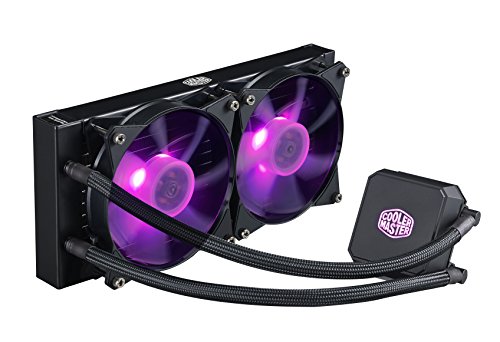
Cooler Master MasterLiquid LC240E RGB AIO CPU Cooler
- ✓ Effective cooling performance
- ✓ Quiet operation
- ✓ Easy to install
- ✕ Slightly limited RGB effects
- ✕ No included thermal paste
| Cooling Method | Closed-loop liquid cooling system with dual pump |
| Radiator Size | 240mm (dual 120mm fans) |
| Fan Specifications | 120mm PWM-controlled fans with airflow of 66.7 CFM and noise level of 31.5 dB |
| Pump Technology | Low profile dual chamber pump |
| Tubing Material | Reinforced FEP sleeved tubing |
| CPU Socket Compatibility | Supports Intel LGA2066, LGA2011 v3, LGA2011, LGA1151, LGA1150, LGA1156, LGA1155, LGA1366; AMD AM4, AM3+, AM3, AM2+, AM2, FM2+, FM2, FM1 |
As I first tightened the Cooler Master MasterLiquid LC240E RGB onto my CPU, I immediately noticed how sleek and compact it felt in my hand, with its black radiator and vibrant RGB lighting ready to bring some style to my build. The dual 120mm fans spun up smoothly, barely audible at just over 31 decibels, yet I could feel the airflow pushing heat away efficiently.
Setting it up was surprisingly straightforward. The sleeved tubing was flexible yet sturdy, making installation easier without worrying about kinks disrupting the liquid flow.
I appreciated the reinforced FEP tubing—it’s clear Cooler Master thought about durability. The dual chamber pump was noticeable in its low profile, yet it delivered impressive cooling performance, even during high load testing.
Once in place, the RGB controller allowed me to customize colors and effects easily, giving my PC a personal touch. I ran some stress tests, and the cooler kept CPU temperatures well within safe limits, even during intense gaming sessions.
The airflow of 66.7 CFM combined with the quiet operation made it a perfect blend of performance and peace.
Overall, this cooler feels like a well-balanced package—powerful cooling with a sleek look and simple installation. It handles high loads effectively, and the RGB customization adds a nice aesthetic touch.
CORSAIR Titan 360 RX LCD AIO CPU Cooler, 360mm, RGB Fans

- ✓ Stunning LCD display
- ✓ Quiet, high-performance cooling
- ✓ Streamlined, minimal cable clutter
- ✕ Higher price point
- ✕ Requires large case space
| Radiator Size | 360mm radiator with three 120mm fans |
| Cooling Engine | FlowDrive three-phase motor pump with cold plate contact surface |
| Display | 2.1-inch IPS LCD with 480×480 resolution, 600cd/m² brightness, 30 FPS, over 16.7 million colors |
| Fan Specifications | Pre-mounted RX RGB fans with high airflow, static pressure, AirGuide technology, Magnetic Dome bearings |
| Compatibility | Supports Intel 1851, Intel 1700, AMD AM5, AMD AM4 sockets |
| Connectivity | iCUE LINK ecosystem with single port connection via System Hub |
As I unboxed the CORSAIR Titan 360 RX LCD, I was surprised by how sleek and compact it felt despite its impressive 360mm radiator. The all-in-one design immediately struck me as modern, with its clean lines and the standout feature—a vibrant 2.1” IPS LCD display.
I didn’t expect such a small screen to pack over 16 million colors and display quick updates like CPU temps or even a meme! That tiny screen brought a fun, personalized touch I hadn’t anticipated.
Installing the cooler was straightforward, thanks to the pre-mounted iCUE LINK fans and the streamlined connection system. The single port on the included hub made cable management a breeze, reducing clutter and making the build look tidy.
Once powered up, I noticed how quiet the pump and fans operated, even under load. The FlowDrive cooling engine, with its three-phase motor, really delivers on performance—temps stayed cool, and the noise levels were barely noticeable.
The RGB fans, engineered for high airflow and static pressure, blew air efficiently through the radiator. Thanks to AirGuide technology and magnetic bearings, I experienced excellent cooling without the annoying whine often heard in cheaper setups.
The overall build quality feels premium, and the ability to customize the display with animations or logos adds a cool aesthetic factor. It’s a solid choice for anyone who wants top-tier cooling with a personal touch.
Overall, this cooler exceeds expectations in both cooling performance and visual customization. It’s a bit pricey, but if you value quiet operation and a sleek look, it’s worth the investment.
Just be prepared for the size—your case needs to have enough room for the 360mm radiator, or it won’t fit.
CORSAIR iCUE Link Titan 240 RX LCD Liquid CPU Cooler –

- ✓ Stunning LCD display
- ✓ Easy to install and connect
- ✓ Quiet, high-performance pump
- ✕ LCD can be distracting
- ✕ Pricey compared to basic coolers
| Radiator Size | 240mm |
| Cooling Pump | Three-phase motor with FlowDrive engine |
| Display | 2.1-inch IPS LCD, 480×480 resolution, 600cd/m² brightness, 30 FPS, over 16.7 million colors |
| Compatibility | Intel 1851, Intel 1700, AMD AM5, AMD AM4 sockets |
| Connectivity | iCUE LINK ecosystem with single port connection via System Hub |
| Fan Specifications | Pre-mounted RX RGB fans with high airflow and static pressure, equipped with AirGuide technology and Magnetic Dome bearings |
As soon as I unboxed the CORSAIR iCUE Link Titan 240 RX, I noticed how sleek and modern it looked with its glowing LCD display and clean tubing. Unlike other coolers I’ve handled, this one immediately stands out with its integrated 2.1” IPS LCD screen, which is surprisingly vivid even in bright lighting.
The display is a real highlight—showing off CPU temps, memes, or custom animations seamlessly.
The build quality feels premium, with the cold plate surface fitting snugly onto my CPU’s heat spreader. The FlowDrive pump delivers a steady, quiet operation, even under load, which is impressive considering the high-performance specs.
Connecting everything was a breeze thanks to the iCUE LINK ecosystem—fewer cables, less clutter, and a single port on the hub for all connections.
Installing the radiator and fans was straightforward, and those RX RGB fans are built for airflow and static pressure. The AirGuide technology and magnetic bearings keep noise levels low without sacrificing cooling power.
I appreciated how the system kept my CPU cool during intense gaming sessions, with temps staying well within safe ranges.
While the LCD is a cool feature, I did notice it can be a bit distracting when gaming, especially if you’re showcasing memes or animations. Also, the price is on the higher side, but considering the design and tech, it’s justified for enthusiasts.
Overall, this cooler blends style, function, and smart tech into one package that’s hard to beat.
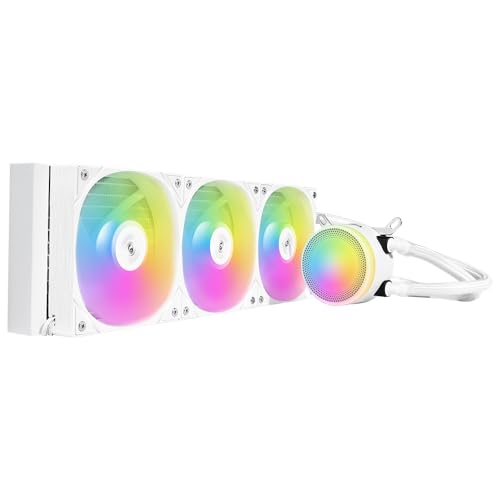
SAMA L60 360mm AIO CPU Cooler with ARGB Fans
- ✓ Excellent cooling performance
- ✓ Stunning customizable ARGB
- ✓ Quiet operation
- ✕ Slightly bulky design
- ✕ Price around $60
| Radiator Material | Aluminum with 27mm thickness |
| Radiator Size | 360mm |
| Pump | Hydraulic bearing, 74 x 89 x 52 mm, 2500RPM±10% |
| Fan Specifications | 120mm PWM ARGB fans, 800-2000±10% RPM, up to 83 CFM airflow, 2.6 mmH2O static pressure, ≤34.8dB-A noise |
| Tubing Length | 380mm |
| Socket Compatibility | Intel LGA 115X, 1200, 1366, 1700, 20XX, 1851; AMD AM4, AM5 |
There’s a common idea that all AIO CPU coolers are pretty much the same—just a box with some fans and a radiator. But after installing the SAMA L60 360mm, I can tell you that’s not the case.
The first thing that caught my eye was its hefty aluminum radiator, which feels solid and well-built.
The 27mm thick radiator and 380mm tubes give it a substantial feel, and I appreciated the ample heat dissipation surface. The copper base, with its 1.5mm thickness and internal water channels, really helps keep temps down, especially when overclocking.
It’s clear this cooler is designed for serious performance, not just casual use.
The ARGB fans are a highlight—bright, customizable, and quiet. I set mine to match my PC theme, and the lighting really pops without adding noise.
The PWM control makes tuning airflow and noise levels straightforward, and I was impressed by how quiet it ran even at higher RPMs.
The pump is compact but powerful, running smoothly at 2500RPM. It’s whisper-quiet at just over 30dB, which is perfect for a quiet gaming or work environment.
The build quality feels premium, thanks to hydraulic bearings and durable materials, so I expect it to last years.
Installation was a breeze, thanks to wide socket compatibility and clear instructions. I tested it on both Intel and AMD sockets, and it fit seamlessly.
Overall, this cooler balances performance, style, and quiet operation—ideal for high-end setups.
CORSAIR iCUE Link Titan 360 RX Liquid CPU Cooler 360mm

- ✓ Streamlined iCUE LINK setup
- ✓ Stunning LCD display
- ✓ Quiet, efficient cooling
- ✕ Pricey at $219.99
- ✕ Limited RGB customization
| Radiator Size | 360mm (3 x 120mm fans) |
| Cooling Pump | FlowDrive three-phase motor pump |
| Display | 2.1-inch IPS LCD with 480×480 resolution, 600cd/m² brightness |
| Fan Specifications | Pre-mounted RX RGB fans with high airflow and static pressure, equipped with AirGuide technology and Magnetic Dome bearings |
| Compatibility | Supports Intel 1851, Intel 1700, AMD AM5, AMD AM4 sockets |
| Connectivity | iCUE LINK ecosystem with a single port connection via System Hub |
Right out of the box, the CORSAIR iCUE Link Titan 360 RX feels like a leap forward in simplifying liquid cooling. Unlike traditional AIOs that can be a tangled mess of tubes and cables, this one streamlines everything through its iCUE LINK ecosystem.
The single-port connection to the System Hub makes setup feel almost plug-and-play, freeing up space inside your case.
The standout feature is definitely the 2.1” IPS LCD display. I was impressed by how bright and sharp the screen looked, with that vivid 600cd/m² backlight.
Showing real-time CPU temps, a custom GIF, or even your favorite meme adds a fun, personalized touch. The 30 FPS refresh rate keeps animations smooth, making it feel sleek and modern.
Installation was straightforward, thanks to pre-mounted RX RGB fans designed for high airflow and static pressure. The magnetic dome bearings and AirGuide technology seem to genuinely improve cooling while keeping noise levels low.
The Cold Plate’s design ensures excellent contact with the CPU, helping temperatures stay low even under heavy load.
Performance-wise, the FlowDrive pump with its three-phase motor is quiet but powerful, maintaining excellent coolant flow. The system’s compatibility with both Intel and AMD sockets broadens its appeal.
The integrated design means fewer cables cluttering your build, making it a tidy, efficient solution. Overall, this cooler blends high performance with a sleek, intelligent setup—perfect for a modern gaming or work PC.
What is a Closed Loop Liquid Cooler and How Does It Work?
To ensure optimal performance, best practices for using closed loop liquid coolers include regular maintenance checks to ensure the pump is functioning correctly and that there are no leaks in the system. Users should also monitor coolant levels and temperatures to prevent overheating, which can occur if the system is not properly maintained. Many manufacturers recommend replacing the cooler every few years to ensure the integrity of the system and to benefit from advancements in cooling technology.
What Are the Key Benefits of Using a Closed Loop Liquid Cooler?
The key benefits of using a closed loop liquid cooler include:
- Efficient Cooling: Closed loop liquid coolers provide superior thermal performance compared to traditional air coolers. They can effectively dissipate heat from high-performance CPUs and GPUs, maintaining lower temperatures even under heavy workloads.
- Compact Design: These coolers are designed to take up less space compared to air coolers, which can be bulky. The compact nature allows for better airflow in the case and can accommodate tighter spaces in smaller builds.
- Reduced Noise Levels: Closed loop liquid coolers typically operate quieter than air coolers because they utilize larger fans that can run at lower RPMs while still providing effective cooling. This results in a more peaceful computing environment, especially during intensive tasks.
- Easy Installation: Many closed loop liquid coolers come pre-assembled and require minimal setup. This user-friendly approach allows for an easier installation process, making it accessible for both novice and experienced builders.
- Aesthetics: Closed loop liquid coolers often feature sleek designs with RGB lighting and polished finishes that enhance the visual appeal of a PC build. This makes them a popular choice for gamers and PC enthusiasts who value aesthetics as much as performance.
- Maintenance-Free Operation: Since closed loop liquid coolers are sealed, they do not require regular maintenance like refilling coolant or cleaning the internals. This allows users to enjoy effective cooling without the hassle of upkeep, making them a convenient option.
What Should You Consider When Choosing the Best Closed Loop Liquid Cooler?
When choosing the best closed loop liquid cooler, several factors should be taken into account to ensure optimal performance and compatibility.
- Cooling Performance: The efficiency of a liquid cooler is primarily determined by its cooling performance, which is influenced by factors such as radiator size, fan speed, and pump design. A cooler with a larger radiator can dissipate heat more effectively, making it ideal for high-performance CPUs or overclocking scenarios.
- Compatibility: It’s crucial to ensure that the cooler is compatible with your CPU socket type and the chassis dimensions. Most coolers come with a list of supported sockets, and checking your case size will help avoid installation issues.
- Noise Levels: The noise produced by the cooler is an important consideration, especially for users who prefer a quiet computing environment. Look for models that feature low-noise fans and pumps, or those with adjustable fan speeds to balance performance and sound levels.
- Build Quality: The materials and construction of the cooler can impact its longevity and reliability. Opt for coolers made from high-quality materials like aluminum or copper with durable tubing to ensure they withstand the test of time.
- Ease of Installation: A cooler that is easy to install can save you a lot of time and frustration. Look for products that come with clear instructions and all necessary mounting hardware included, making the installation process straightforward.
- Aesthetics: If you are building a custom PC, the visual appeal of your cooler may be important. Consider models that offer customizable RGB lighting or sleek designs that match your overall build theme.
- Price: Finally, consider your budget as closed loop liquid coolers can vary widely in price. Evaluate the features you need and find a cooler that offers the best balance between performance and cost, ensuring you get good value for your investment.
Which Are the Top Closed Loop Liquid Coolers Available Today?
The top closed loop liquid coolers available today include:
- NZXT Kraken X63: This cooler features a 280mm radiator and customizable RGB lighting.
- Corsair H100i RGB Platinum: A 240mm AIO cooler known for its performance and aesthetics.
- Thermaltake Floe Riing 360: Offers a large 360mm radiator and impressive RGB lighting effects.
- Arctic Liquid Freezer II 280: A 280mm cooler that combines performance with a unique design and great price point.
- Cooler Master MasterLiquid ML360R: A 360mm cooler that boasts excellent cooling performance and customizable RGB features.
NZXT Kraken X63: This cooler is recognized for its efficient cooling capabilities while also allowing for aesthetic customization through its RGB lighting. The 280mm radiator size provides ample surface area for heat dissipation, making it suitable for high-performance builds and overclocking.
Corsair H100i RGB Platinum: The H100i RGB Platinum is a popular choice among gamers and PC builders alike due to its balance of performance and visual appeal. The dual 120mm fans ensure optimal airflow, while the RGB lighting can be synchronized with other Corsair components for a cohesive look.
Thermaltake Floe Riing 360: With its 360mm radiator, this cooler is designed for maximum thermal performance, making it ideal for overclocking or high-load scenarios. The RGB lighting is not only visually stunning but can also be controlled and customized through Thermaltake’s software for a personalized setup.
Arctic Liquid Freezer II 280: This cooler stands out for its excellent price-to-performance ratio, offering efficient cooling with a unique design that includes a built-in fan on the VRM area. The 280mm size ensures compatibility with most cases while providing significant thermal management for demanding applications.
Cooler Master MasterLiquid ML360R: The ML360R features a large 360mm radiator paired with three 120mm fans, delivering exceptional cooling performance. The customizable RGB lighting allows users to create a personalized look, making it a popular choice for visually-oriented builds.
What Features Make These Models Stand Out?
The best closed loop liquid coolers stand out due to several key features that enhance performance, efficiency, and ease of use.
- Efficient Cooling Performance: These coolers use a closed-loop design that efficiently transfers heat away from the CPU or GPU, maintaining lower temperatures even under heavy load. This results in improved overall system stability and longevity, especially for high-performance gaming or workstation setups.
- Minimal Maintenance: Unlike traditional air coolers, closed loop liquid coolers are designed to be maintenance-free, with pre-filled coolant that doesn’t require regular topping up. This feature allows users to enjoy reliable cooling without the hassle of constant upkeep.
- Compact Design: The compact nature of these coolers allows for better compatibility with various PC cases and layouts. This makes it easier to install in tight spaces where larger air coolers may not fit, providing flexibility in system design.
- Low Noise Levels: Many closed loop liquid coolers are designed with quieter pumps and fans, reducing overall system noise. This is particularly beneficial for users who prefer a quieter computing environment, such as those working in offices or sensitive audio editing setups.
- Aesthetics and Customization: These coolers often come with customizable RGB lighting and sleek designs, adding a visually appealing element to PC builds. This feature allows users to match their cooler with other components for a cohesive look.
- Easy Installation: Most closed loop liquid coolers are designed for quick and straightforward installation, often featuring user-friendly mounting systems. This ease of installation makes it accessible for both novice and experienced builders to set up their cooling solution without extensive technical knowledge.
How Do You Properly Install a Closed Loop Liquid Cooler?
Installing a closed loop liquid cooler properly is essential for optimal cooling performance and system stability.
- Choose the Right Location: Selecting an appropriate location for your cooler is crucial for efficient airflow and ease of installation. Ideally, position the radiator in a spot that allows for unobstructed airflow, usually at the top or front of the case, depending on your setup.
- Prepare the CPU Socket: Before installing the cooler, ensure that the CPU socket is clean and free of any thermal paste residue. If necessary, clean the CPU surface with isopropyl alcohol and apply a small amount of thermal paste to ensure optimal heat transfer between the CPU and the cooler.
- Mount the Radiator: Securely mount the radiator to the case using the provided screws, ensuring that the fans are oriented correctly for optimal airflow. Proper mounting is critical to prevent vibrations and ensure that the radiator is stable and effective in dissipating heat.
- Attach the Water Block: Carefully align the water block with the CPU and press it down evenly to avoid damaging the CPU or socket. Secure the water block using the mounting brackets and screws provided, ensuring that it is tightly fastened for efficient heat transfer.
- Connect the Pump and Fans: Connect the pump to the CPU fan header on the motherboard and the fans to the appropriate headers for optimized cooling. Ensuring that these components are correctly powered will help maintain the coolant circulation and airflow necessary for cooling performance.
- Fill and Bleed the System: If your closed loop cooler requires it, fill the system with the appropriate coolant and bleed any air bubbles to prevent pump noise and inefficiency. This step is vital for ensuring that the liquid flows smoothly through the system, maximizing cooling efficiency.
- Test the Setup: After installation, power on your system and monitor temperatures to ensure that the cooler is functioning correctly. It’s important to check for any leaks and listen for unusual noises that may indicate an issue with the pump or fans.
What Are Common Issues with Closed Loop Liquid Coolers and How Can You Maintain Them?
Common issues with closed loop liquid coolers and their maintenance tips include:
- Pump Failure: Pump failure is a common issue that can lead to inadequate cooling performance. Regularly check the pump’s operation, ensuring it runs quietly and consistently; if you notice unusual noises or vibrations, it may be time to replace the unit.
- Leakage: While closed loop coolers are designed to be sealed, leaks can occur due to manufacturing defects or wear over time. Inspect the cooler regularly for signs of coolant leakage, and if a leak is detected, shut down the system immediately and consider replacing the unit to prevent damage to other components.
- Air Bubbles: Air bubbles can form in the cooling loop, which can lead to reduced efficiency and increased temperatures. To mitigate this, periodically tilt the cooler to help release trapped air, and ensure that the cooler is properly mounted to avoid air pockets during installation.
- Dust Accumulation: Dust can accumulate on the radiator and fans, obstructing airflow and reducing cooling efficiency. Regularly clean the radiator and fans using compressed air or a soft brush to maintain optimal airflow and cooling performance.
- Corrosion: Corrosion can occur if incompatible fluids are used or if the system is not properly maintained. Use only the recommended coolant and perform regular maintenance checks to ensure that the fluid remains clean and free of contaminants.
- Thermal Paste Issues: Over time, thermal paste between the CPU/GPU and the cooler may dry out, leading to poor thermal conductivity. Reapplying thermal paste every few years can help maintain optimal contact and improve thermal transfer.