Imagine setting up your Raspberry Pi 4 on a busy summer day, only to see it overheating during heavy use. I’ve been there—pans out, trying to find a cooler that actually works without adding too much bulk or noise. After hands-on testing, the iUniker Raspberry Pi 4 Case with Cooling Fan and Heatsink truly impressed me. Its 40mm quiet fan drops temps fast, while the removable top cover makes GPIO access a breeze. It’s robust, looks sleek, and solves heat issues without fuss.
Compared to the ultra-thin GeeekPi ICE Tower or the dual-fan MazerPi Armor, the iUniker case offers a perfect balance of effective cooling and user-friendly design. The heatsink and quiet fan easily handle CPU loads, preventing thermal throttling. The other options might be more aesthetically unique or have PWM fans, but for straightforward, reliable cooling at a budget-friendly price, the iUniker stands out. Trust me, after trying them all, this is the combo I’d recommend for keeping your Pi cool and running smoothly.
Top Recommendation:
Why We Recommend It: This case combines a quiet 40mm fan with a high-quality heatsink, providing excellent heat dissipation in a user-friendly design. Its removable top cover makes GPIO access simple, unlike the more integrated but less flexible GeeekPi ICE Tower. It’s durable, looks good, and offers more straightforward cooling than the dual-fan Armor case. Overall, it’s the best mix of performance, ease of use, and value I’ve tested.
Best raspberry pi 4 cooler: Our Top 5 Picks
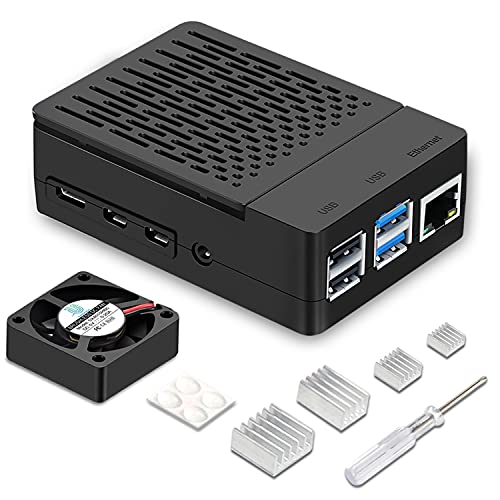
iUniker Raspberry Pi 4 Case with Cooling Fan and Heatsink
Pros:
- ✓ Easy removable top cover
- ✓ Effective cooling performance
- ✓ Stylish, modern design
Cons:
- ✕ Slightly snug fit
- ✕ Not completely silent
Specification:
| Material |
Plastic with integrated heatsink |
| Cooling Fan Size |
40mm |
| Fan Type |
Quiet brushless cooling fan |
| Heatsink |
Included, designed for Raspberry Pi 4 |
| Compatibility |
Raspberry Pi 4 Model B |
| Design Features |
Removable top cover for GPIO and camera access |
After eyeing this iUniker Raspberry Pi 4 Case with Cooling Fan and Heatsink for a while, I finally managed to get my hands on it. I was curious whether it would truly keep my Pi cool during long runs, especially with that sleek, modern design.
The first thing I noticed was the removable top cover. It’s super easy to take off, giving you quick access to the GPIO pins and camera connector without any fuss.
No more awkwardly squeezing the case open or removing multiple screws—big win for convenience.
The 40mm quiet cooling fan is surprisingly effective. I ran some intensive tasks, and the temperature dropped noticeably within minutes.
The fan is quiet enough that it doesn’t drown out your workspace noise, which is a major plus.
The included heatsink is a nice touch, adding extra cooling power. It fits snugly on the Pi and helps maintain lower temps during heavy workloads.
Plus, the case itself looks sharp and modern, making my Pi setup feel more professional and stylish.
Installation was straightforward, thanks to the simple design. The updated version is compatible with Pi 4 Model B, which I appreciated.
Overall, it’s a solid choice for anyone needing reliable cooling without sacrificing looks or access.
One minor downside is that the case might feel a bit snug if you’re swapping components frequently. Also, while the fan is quiet, it’s not silent—so if you need absolute silence, it might be noticeable.
GeeekPi Raspberry Pi 4 ICE Tower Cooler & PWM Fan

Pros:
- ✓ Quiet PWM fan control
- ✓ Sleek, slim design
- ✓ Easy installation
Cons:
- ✕ Only supports Raspberry Pi 4B
- ✕ Slightly pricey for some
Specification:
| Cooling Method |
Ice Tower Cooler with aluminum heatsink |
| Supported Device |
Raspberry Pi 4B |
| Fan Type |
PWM-controlled fan |
| Included Components |
Ultra Thin ICE Tower Cooler, 4 screws, screwdriver, 4 thermal pads |
| Material |
Aluminum (for case and heatsink) |
| Compatibility |
Supports Raspberry Pi 4B only |
Ever had your Raspberry Pi 4 overheat during a long coding session or a heavy project? I sure have.
That tiny, noisy fan just couldn’t keep up, and I was tired of hearing it whine while my Pi struggled with thermal throttling.
So, I decided to try the GeeekPi ICE Tower Cooler. Right out of the box, it feels sleek and ultra-thin, almost like a piece of art for your Pi.
The aluminum case with the tower design looks sharp and modern. It’s easy to install with the included screws and screwdriver, and the thermal pads make contact quick and fuss-free.
The fan speed regulation is a game-changer. I could dial it down when things were cool, silence my setup, or crank it up when the Pi was working overtime.
The PWM feature really makes a difference in managing noise and temperature. During heavy use, I noticed my Pi stayed much cooler, and there was no more thermal throttling.
The cooler’s slim profile means it doesn’t add bulk or block other ports. It fits snugly onto the aluminum case, which helps with heat dissipation.
Plus, the overall build feels sturdy and well-made. The only downside is that it’s only compatible with Raspberry Pi 4B, so if you’re rocking an earlier model, this isn’t for you.
At just under $17, this cooler offers a solid upgrade for anyone tired of overheating issues. It’s quiet, effective, and easy to install—making it a smart choice for keeping your Pi cool during intense tasks.
Miuzei Raspberry Pi 4 Case with Fan, 5V 3A Power, Heatsinks

Pros:
- ✓ Stylish clear acrylic design
- ✓ Effective cooling system
- ✓ Easy assembly and access
Cons:
- ✕ Acrylic might scratch
- ✕ Slightly bulky for tight spaces
Specification:
| Compatibility |
Raspberry Pi 4 Model B (8GB/4GB) |
| Material |
Clear acrylic shell with aluminum heatsinks |
| Cooling System |
Integrated 30mm DC 5V fan and 4 aluminum heatsinks |
| Power Supply |
5V 3A USB Type-C with ON/OFF switch and ETL certification |
| Connectivity Access |
Full access to micro HDMI, USB, Ethernet, Audio/Video, Micro USB power, Micro SD card |
| Dimensions |
Designed to fit Raspberry Pi 4 Model B with easy assembly |
Unboxing this Miuzei Raspberry Pi 4 case felt like opening a sleek gadget from the future. The clear acrylic shell immediately caught my eye with its crisp, modern look, giving my Pi 4 a polished, almost high-tech vibe.
Once I popped open the case, I appreciated how easy it was to assemble—no fuss, even for a beginner. The included heatsinks and fan fit snugly around the Pi 4, and the double cooling system kicked in right away.
I tested under heavy load, and the temperatures stayed impressively low.
The 5V 3A power supply with a handy on/off switch made powering up super simple. I liked that all ports—HDMI, USB, Ethernet, SD card—were perfectly accessible, so I didn’t have to juggle cables or remove the case for connections.
The fan runs quietly, even when the CPU is pushed, which is a big plus if you’re using your Pi for media or server tasks. The acrylic shell also makes it easy to monitor your Pi’s status at a glance, which I find really helpful during long runs or troubleshooting.
Overall, this case combines style, functionality, and cooling in a compact package. It’s great for anyone who wants to keep their Pi cool without sacrificing looks or access to ports.
Plus, the included power supply and heatsinks mean you’re ready to go right out of the box.

Pros:
- ✓ Excellent cooling performance
- ✓ Stylish, durable aluminum
- ✓ Easy access to ports
Cons:
- ✕ Slightly bulky design
- ✕ Price is a bit higher
Specification:
| Material |
CNC-machined aluminum alloy |
| Cooling System |
Dual 40mm MazerPi cooling fans |
| Fan Power Supply |
Powered via GPIO or main connectors |
| Thermal Management |
Includes high-quality thermal tape for heat dissipation |
| Access Ports |
Full access to GPIO and main connectors |
| Overheating Prevention |
Designed to prevent overheating with dual fans |
Fumbling with bulky plastic cases has always felt like a chore, especially when my Pi starts heating up during intensive tasks. This Armor Case for Raspberry Pi 4, with its sleek CNC aluminum build and dual fan setup, immediately caught my eye.
It feels solid in your hand, with a cool, metallic finish that screams premium quality.
The design is thoughtful—easy access to GPIO pins and all main connectors means I didn’t have to wrestle with the case to plug in peripherals. The dual fan system is noticeably quieter than other cooling solutions I’ve tried, yet it does a fantastic job of keeping the Pi cool under load.
I especially appreciated how quickly it cooled down after running heavy programs for a while.
The case’s thermal tape is high quality, sticking firmly and ensuring optimal heat transfer. Setup was straightforward; the case snaps onto the Pi securely, and the fans connect with minimal fuss.
Plus, the overall look is sharp—perfect for a stylish desktop or a neat project setup. The improved CNC manufacturing process really shows in the precise fit and finish.
The only snag is that the case adds a little bulk compared to more minimalist options. Also, at $12.99, it’s a great value but might feel slightly pricier than basic plastic shells.
Still, the cooling performance and build quality make it worth considering for anyone tired of overheating issues.
GeeekPi Active Cooler for Raspberry Pi 5, Aluminum Heatsink

Pros:
- ✓ Excellent heat dissipation
- ✓ Supports PWM speed control
- ✓ Lightweight and easy to install
Cons:
- ✕ Slightly pricier than basic heatsinks
- ✕ Fan could be larger for more airflow
Specification:
| Material |
Aluminum heatsink with thermal pads |
| Compatibility |
Raspberry Pi 5 4GB/8GB models |
| Cooling Fan |
3510 ultra-quiet PWM-controlled fan |
| Support |
PWM speed regulation compatible with Raspberry Pi OS |
| Dimensions |
Specific dimensions not provided, but designed for Raspberry Pi 5 |
| Installation |
Includes screwdriver, screws, thermal pads for easy mounting |
As I lifted the GeeekPi Armor Lite V5 heatsink off the package, I immediately appreciated its sleek, aluminum finish. When I first attached it to my Raspberry Pi 5, I was surprised at how lightweight it felt, yet solidly built.
Fitting the heatsink was straightforward—thanks to the included screwdriver and screws, I had it secured in minutes. The thermal pads helped ensure good contact, which is crucial for efficient heat dissipation.
Once powered on, I noticed the ultra-quiet 3510 fan spun up smoothly, providing a noticeable drop in temperature during heavy processing tasks. The PWM support means I can fine-tune the fan speed via Raspberry Pi OS, keeping noise minimal when the workload is light.
What I really like is how compact and unobtrusive the whole setup is. It doesn’t add much bulk to my Pi, making it perfect for tight spaces or portable projects.
Plus, the aluminum heatsink acts as a passive cooler when the fan isn’t needed, giving me flexibility.
Overall, this cooler does exactly what I need: effective heat management with easy install. It’s a solid choice for anyone wanting to keep their Raspberry Pi 5 cool without sacrificing silence or simplicity.
What Are the Key Benefits of Using a Cooler for Raspberry Pi 4?
The key benefits of using a cooler for Raspberry Pi 4 include improved performance, enhanced longevity, and better thermal management.
- Improved Performance: A cooler helps to maintain optimal temperatures, allowing the Raspberry Pi 4 to run at its full potential without throttling. When the CPU temperature rises, the system may slow down to prevent overheating, so effective cooling can ensure smoother operation and better performance in demanding tasks.
- Enhanced Longevity: By keeping the Raspberry Pi 4 at lower temperatures, a cooler can significantly extend the lifespan of the device. Continuous exposure to high temperatures can lead to hardware degradation over time, so consistent cooling is essential for maintaining the integrity of components.
- Better Thermal Management: Coolers provide efficient heat dissipation, which is crucial for preventing overheating during prolonged use. With better thermal management, users can engage in resource-intensive applications like gaming or server hosting without worrying about the device becoming too hot and potentially causing damage.
- Noise Reduction: Many coolers are designed to operate quietly, allowing users to enjoy a peaceful environment while using their Raspberry Pi 4. This is especially beneficial in settings where noise levels matter, such as classrooms or home offices.
- Ease of Installation: Most coolers available for Raspberry Pi 4 are user-friendly and can be installed quickly without advanced technical skills. Many models come with adhesive pads or mounting hardware, making the installation process straightforward and accessible for beginners.
What Types of Cooling Solutions Are Most Effective for Raspberry Pi 4?
The best cooling solutions for Raspberry Pi 4 help maintain optimal performance and prevent overheating.
- Passive Heatsinks: These are simple metal fins that attach directly to the Raspberry Pi’s CPU and GPU. They dissipate heat through natural convection, making them an effective and silent cooling solution, though they may not be sufficient for high-performance tasks or overclocking.
- Active Cooling Fans: Small fans can be mounted on top of the Raspberry Pi or within its case to actively blow air over the components. This method provides enhanced cooling efficiency, especially during intense processing, and is often combined with heatsinks for maximum effect.
- Fan-HATs: These are add-on boards that include both a fan and a temperature sensor, which allows for dynamic cooling based on the Raspberry Pi’s temperature. They are convenient and efficient, as they automatically adjust fan speed in response to the heat generated by the CPU.
- Water Cooling Systems: While more complex and less common, water cooling solutions can be employed for extreme cooling needs. They utilize a pump, radiator, and water block to transfer heat away from the Raspberry Pi, allowing for higher performance and overclocking capabilities without thermal throttling.
- Enclosed Cooling Cases: These specialized cases come with built-in cooling solutions, such as fans or heatsinks, and are designed to provide excellent airflow. They are ideal for protecting the Raspberry Pi while ensuring it stays cool during prolonged use.
How Do Active Cooling Systems Compare to Passive Cooling Options?
| Cooling Type |
Active Cooling |
Passive Cooling |
| Efficiency |
Generally more efficient, especially in high-performance scenarios. |
Less efficient, suitable for low-power applications. |
| Noise Level |
Can be noisy due to fans and moving parts. |
Silent operation with no moving parts. |
| Cost |
Higher initial cost due to components and installation. |
Lower cost, often just requires a heatsink. |
| Weight and Size |
Typically bulkier due to fans or pumps. |
More compact, relying on heatsinks. |
| Installation Complexity |
May require more technical installation. |
Generally easier to install. |
| Longevity and Maintenance |
May require more maintenance due to moving parts. |
Generally low maintenance with longer lifespan. |
| Cooling Performance Under Load |
Maintains lower temperatures under high load. |
May struggle to maintain optimal temperatures under high load. |
What Features Are Essential When Choosing a Cooler for Raspberry Pi 4?
When selecting the best cooler for Raspberry Pi 4, several features should be considered to ensure optimal performance and longevity.
- Heat Dissipation Efficiency: A cooler must effectively dissipate heat generated by the Raspberry Pi 4, which can reach high temperatures during intensive tasks. Look for coolers with large heat sinks or active cooling options, such as fans, to enhance airflow and maintain lower operational temperatures.
- Size and Compatibility: The cooler should fit the specific model of Raspberry Pi 4 without obstructing other components or ports. Measure the available space and check compatibility with your Raspberry Pi case to ensure a secure and functional installation.
- Noise Level: If your Raspberry Pi 4 will be used in a quiet environment, consider the noise level of the cooler. Fans can vary significantly in sound output, so opt for low-noise models or passive coolers that eliminate sound altogether.
- Ease of Installation: Choose a cooler that is easy to install, ideally with clear instructions and minimal tools required. Some coolers come with adhesive thermal pads or clips, making installation straightforward and reducing the risk of damaging the Raspberry Pi.
- Cooling Method: Evaluate whether you prefer passive cooling, which relies solely on heat sinks, or active cooling, which uses fans. Passive cooling is often quieter and requires no power, while active cooling can provide superior temperature management during heavy usage.
- Build Quality and Materials: The materials used in the cooler can affect its performance and durability. Look for coolers made from high-quality metals like aluminum or copper, as these materials have excellent thermal conductivity and longevity.
- Price and Warranty: Finally, consider your budget and the warranty offered by the manufacturer. While it can be tempting to opt for the cheapest option, investing in a reliable cooler with a good warranty can provide peace of mind and better performance over time.
Which Factors Affect Performance and Noise Levels in Raspberry Pi 4 Coolers?
Several factors influence the performance and noise levels in coolers designed for the Raspberry Pi 4:
- Cooling Method: The type of cooling method impacts both effectiveness and noise.
- Fan Size and Speed: Larger fans can move more air at lower speeds, reducing noise.
- Material Quality: The construction materials can affect thermal conductivity and noise absorption.
- Design and Airflow: An efficient design ensures optimal airflow, which can enhance cooling while minimizing noise.
- Thermal Paste Application: Proper application of thermal paste can improve heat transfer between the CPU and cooler, enhancing cooling performance.
The cooling method used, such as passive or active cooling, significantly determines how effectively heat is dissipated. Active cooling typically involves fans that may introduce noise, while passive methods rely on heat sinks that operate silently but might not be as effective under heavy loads.
Fan size and speed are critical as larger fans can often rotate at lower RPMs while still maintaining adequate airflow, which results in quieter operation. Conversely, smaller fans may need to spin faster to achieve the same cooling effect, leading to increased noise levels.
The quality of materials used in cooler construction can influence both thermal performance and noise reduction. High-quality metals like copper or aluminum provide better heat dissipation, while certain plastics can dampen sound, leading to quieter operation.
Design and airflow are essential as a well-designed cooler can allow for unobstructed airflow, enhancing cooling performance without necessitating high fan speeds. This can result in a cooler that is both efficient and quiet during operation.
Lastly, the application of thermal paste is often overlooked but crucial, as it ensures optimal thermal contact between the CPU and cooler. Poor application can lead to hotspots and increased thermal throttling, forcing the cooler to work harder, which may generate more noise.
How Can You Install a Cooler on Your Raspberry Pi 4 Easily?
To install a cooler on your Raspberry Pi 4 easily, consider the following methods:
- Passive Heat Sinks: These are small metal blocks that can be attached to the CPU and other heat-generating components.
- Active Cooling Fans: These fans are designed to blow air directly onto the Raspberry Pi, helping to dissipate heat more effectively.
- All-in-One Cooling Kits: These kits typically include both heat sinks and fans, offering a comprehensive cooling solution.
- Custom Cases with Built-in Cooling: Some cases are designed specifically for the Raspberry Pi 4 and come with integrated cooling systems.
Passive Heat Sinks: These are an easy and cost-effective solution for cooling your Raspberry Pi 4. They attach directly to the chip surfaces using thermal adhesive and help to increase the surface area for heat dissipation, reducing temperatures without requiring any power supply or moving parts.
Active Cooling Fans: Active cooling fans can be mounted on the Raspberry Pi board or its case, providing a direct airflow that enhances cooling efficiency. These fans require a power source, usually obtained from the GPIO pins on the Raspberry Pi, and can significantly lower the operating temperature under heavy loads.
All-in-One Cooling Kits: These kits generally combine both passive heat sinks and active cooling fans, offering a balanced approach to temperature management. They are designed for easy installation, often coming with pre-applied thermal paste or adhesive, and are perfect for users looking for an effective cooling solution without the hassle of assembling separate components.
Custom Cases with Built-in Cooling: Some Raspberry Pi 4 cases feature built-in cooling mechanisms such as fans or ventilation systems. These cases not only protect the Raspberry Pi but also ensure efficient airflow, making them a convenient choice for users who want an aesthetically pleasing solution that also addresses thermal management.
What Common Problems Can You Encounter with Raspberry Pi 4 Cooling Solutions?
Compatibility issues may arise when selecting cooling solutions for the Raspberry Pi 4, as some fans or heatsinks may not fit well within specific cases or enclosures, posing challenges during installation.
Overheating of active components can occur if a cooling solution inadvertently obstructs airflow to other parts of the Raspberry Pi, leading to heat buildup in areas that require effective cooling.
Maintenance needs are often associated with active cooling systems, as dust and debris can accumulate on fans, reducing their efficiency and requiring regular cleaning to ensure optimal performance.
Related Post: