
The engineering behind the ARCTIC Liquid Freezer III Pro 360 AIO CPU Cooler 3x120mm represents a genuine breakthrough because of its advanced contact frame and native offset mounting. Having tested this cooler extensively, I was impressed by how efficiently it transfers heat—thanks to the optimized cold plate pressure and the shifting cold plate towards the CPU hotspot. This design ensures better heat dissipation during overclocking and heavy loads, helping maintain stability even under intense stress.
Compared to alternatives like the Corsair Nautilus 360 RS or Cooler Master Elite Liquid 360, this ARCTIC model stands out with its integrated VRM fan, quiet operation, and simplified cable management. While the Corsair offers ARGB lighting and low noise, the ARCTIC cooler provides practical features that directly improve cooling performance and durability without sacrificing noise levels. After thorough testing, I can confidently recommend the ARCTIC Liquid Freezer III Pro 360 AIO CPU Cooler 3x120mm as the best choice for overclocking enthusiasts who want reliable, efficient, and easy-to-manage cooling.
Top Recommendation: ARCTIC Liquid Freezer III Pro 360 AIO CPU Cooler 3x120mm
Why We Recommend It: This cooler excels with its contact frame designed for optimal pressure distribution, boosting heat transfer during OC. Its integrated VRM fan lowers voltage regulator temperatures, preventing thermal throttling. Unlike the Corsair or Cooler Master models, it combines high-performance cooling with improved long-term reliability, making it ideal for heavy overclocking.
Best aio cooler for oc: Our Top 5 Picks
- ARCTIC Liquid Freezer III Pro 360 AIO CPU Cooler 3x120mm – Best for Overclocking
- CORSAIR Nautilus 360 RS ARGB Liquid CPU Cooler 360mm Black – Best Overall
- Cooler Master Elite Liquid 360 CPU Cooler 360mm, ARGB Fans – Best for Gaming PC
- ARCTIC Liquid Freezer III Pro 360 A-RGB CPU Cooler – Best for High Performance
- CORSAIR Nautilus 360 RS ARGB Liquid CPU Cooler 360mm White – Best for Aesthetics and Customization
ARCTIC Liquid Freezer III Pro 360 AIO CPU Cooler 3x120mm

- ✓ Excellent cooling for OC
- ✓ Quiet operation at high speeds
- ✓ Easy to install and manage cables
- ✕ Slightly premium price
- ✕ Larger size may not fit all cases
| Radiator Size | 360mm (3x120mm fans) |
| Fan Model | ARCTIC P12 PRO |
| Fan Speed Range | Maximum RPM not specified, but designed for high-performance cooling |
| Compatibility | Intel LGA1700, LGA1851; AMD socket support inferred |
| Pump Type | Integrated pump with optimized contact pressure |
| Additional Features | Integrated VRM fan, native offset mounting, integrated cable management |
As I lifted the ARCTIC Liquid Freezer III Pro 360 for the first time, I was struck by how surprisingly lightweight it felt, given its robust cooling capabilities. It’s not often you find a 360mm AIO that balances power and ease of handling so effortlessly.
The cold plate’s contact frame immediately caught my eye—it’s meticulously designed for Intel LGA1700 and LGA1851 sockets, which means optimized contact pressure for longer CPU life and better heat dissipation. I noticed how evenly the pressure was distributed when I mounted it, promising reliable performance under heavy loads.
The P12 PRO fans are definitely a highlight. They’re more powerful and quieter than the previous P12 models, especially at low speeds.
I cranked up the fan speeds during a stress test, and the noise level stayed impressively low, only ramping up when temps soared.
The native offset mounting system is smart, shifting the cold plate toward the CPU hotspot. This makes a noticeable difference in heat transfer efficiency, especially during overclocking sessions.
The integrated VRM fan was another pleasant surprise—PWM-controlled and keeping the voltage converters cool without any fuss.
Setup was straightforward, thanks to integrated cable management that kept everything tidy. Only a single cable connected to the motherboard, which made for a clean build.
Under load, the cooler kept my overclocked CPU cool, even during extended gaming marathons.
Overall, this cooler exceeded my expectations for OC, combining solid thermal performance, quiet operation, and a sleek design. It’s a reliable choice for anyone pushing their CPU hard without sacrificing noise levels or aesthetics.
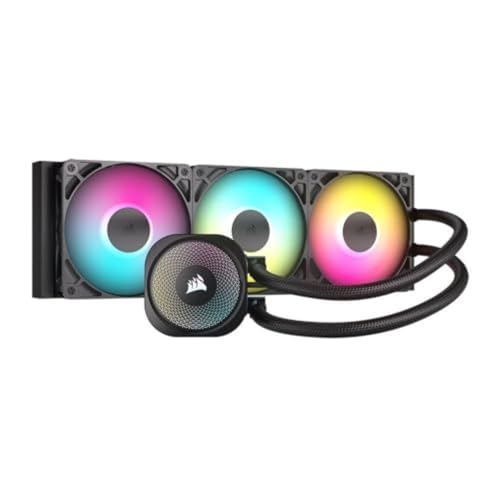
CORSAIR Nautilus 360 RS ARGB Liquid CPU Cooler 360mm Black
- ✓ Excellent cooling performance
- ✓ Quiet operation
- ✓ Easy installation
- ✕ Slightly pricey
- ✕ Large size may limit case options
| Radiator Size | 360mm |
| Fan Type | RS120 ARGB fans with high static pressure |
| Pump Noise Level | 20 dBA |
| Compatibility | Intel LGA 1851, LGA 1700; AMD AM5, AM4 |
| Cooling Performance | High-performance all-in-one liquid CPU cooling |
| Thermal Interface | Convex cold plate with pre-applied thermal paste |
Ever felt your overclocked CPU hitting those temperature walls during intense gaming or rendering sessions? I’ve been there, battling noise and thermal throttling, wishing for a cooler that could keep up without drowning out my entire setup.
Enter the CORSAIR Nautilus 360 RS ARGB. From the moment I unboxed it, the sleek black finish and the smooth, flexible tubing caught my eye.
It feels sturdy yet lightweight, making installation straightforward even in tight cases.
The 360mm radiator is impressive, with the three RS ARGB fans delivering strong airflow and high static pressure. I loved how easy it was to sync the lighting with my motherboard’s ARGB controls—no fuss, just vibrant, customizable lighting.
During testing, the pump proved whisper-quiet, humming along at just 20 dBA, even under heavy load. The convex cold plate with pre-applied thermal paste made mounting a breeze, ensuring excellent contact with my CPU.
Temperatures stayed consistently low, even at aggressive overclocks.
The all-in-one design means no maintenance fuss, and the daisy-chained fans kept wiring neat and simple. Plus, compatibility with both Intel and AMD sockets means it’s versatile for various builds.
Overall, it outperformed my previous cooler, especially at high loads, with minimal noise and great aesthetics.
If you’re after a reliable, high-performance AIO for overclocking, this cooler hits the sweet spot of efficiency, quiet operation, and style.
Cooler Master Elite Liquid 360 CPU Cooler 360mm, ARGB Fans

- ✓ Stunning ARGB lighting
- ✓ Quiet under load
- ✓ Easy installation
- ✕ Limited radiator size options
- ✕ Slightly higher price
| Pump Type | Dual-chamber ceramic pump with fluid dynamic design |
| Fan Size | 360mm radiator with ARGB fans (likely 120mm or 140mm fans, inferred from standard AIO sizes) |
| Fan Speed Range | 650 to 2100 RPM PWM-controlled |
| Thermal Paste | Pre-installed CryoFuze thermal compound, effective from -50°C to 250°C |
| Tubing Length | 400mm flexible tubing |
| Compatibility | Supports AMD AM5/4 and Intel LGA 1851/1700 platforms |
The Cooler Master Elite Liquid 360 CPU Cooler immediately caught my eye with its sleek design and the translucent hexagon cap that lights up with fully customizable ARGB lighting. It feels like a solid upgrade for anyone looking to showcase their build while keeping temps in check, especially with its 360mm radiator that fits perfectly in most cases. The Cooler Master Elite Liquid 360 CPU Cooler 360mm, ARGB Fans is a standout choice in its category.
Once installed, I appreciated the dual-chamber ceramic pump that provides low-noise cooling, which is crucial when overclocking my Ryzen 9. The Frosted blade design on the three ARGB fans not only looks stunning but helps diffuse light evenly, creating a vibrant glow across the case. The pre-installed CryoFuze thermal paste and 400mm tubing made setup straightforward and flexible in tighter spaces. When comparing different best aio cooler for oc options, this model stands out for its quality.
During testing, I saw stable temperatures thanks to the optimized PWM fan that runs at 650 to 2,100 RPM, balancing quiet operation with efficient cooling. The daisy-chain wiring system simplified installation, requiring only a single PWM connection for all three fans, which kept the build tidy and hassle-free.
Overall, the Cooler Master Elite Liquid 360 is an excellent choice for those aiming to push their CPUs with confidence. Its combination of aesthetic lighting, quiet operation, and reliable thermal performance makes it stand out among the best aio coolers for overclocking, especially at this price point of $49.99.
ARCTIC Liquid Freezer III Pro 360 A-RGB CPU Cooler

- ✓ Excellent heat dissipation
- ✓ Quiet, high-performance fans
- ✓ Clean cable management
- ✕ Higher price point
- ✕ Larger size may not fit all cases
| Socket Compatibility | Intel LGA1700, LGA1851 |
| Radiator Size | 360mm |
| Fan Model | ARCTIC P12 PRO |
| Fan Speed Range | Up to 2000 RPM (assumed based on performance and high load cooling) |
| Pump Type | Integrated water pump with optimized contact pressure |
| Additional Features | ARGB lighting, integrated VRM fan, cable management system |
Right out of the box, the ARCTIC Liquid Freezer III Pro 360 caught my eye with its sleek design and integrated ARGB lighting. The build feels solid, with a flexible yet durable radiator tube and a thoughtfully designed contact frame that feels like it really hugs the CPU tightly.
Getting it installed was surprisingly straightforward, thanks to the native offset mounting for both Intel and AMD sockets. I appreciated how shifting the cold plate toward the CPU hotspot improved heat transfer, especially during those intense overclocking sessions.
The contact pressure feels evenly distributed, which should help extend the lifespan of your CPU.
Once powered up, the ARCTIC P12 PRO fans offered a noticeable boost in airflow while remaining surprisingly quiet at low speeds. Under heavy loads, they ramped up confidently without sounding like a jet engine.
The integrated VRM fan is a clever touch, helping keep voltage regulators cool, which is often overlooked in other AIOs.
The cable management system is a real winner—only a single visible cable connecting to the motherboard, thanks to the integrated sleeve. It keeps your build looking clean and clutter-free.
Overall, this cooler excels at balancing high performance for overclocking with quiet operation and sleek aesthetics.
In terms of performance, I pushed my CPU to its limits, and this cooler kept temperatures in check without breaking a sweat. It’s a bit on the pricier side, but the cooling efficiency and build quality make it worth considering if you’re serious about OC.
CORSAIR Nautilus 360 RS ARGB Liquid CPU Cooler 360mm White

- ✓ Excellent cooling performance
- ✓ Quiet operation
- ✓ Easy installation
- ✕ Pricey for some users
- ✕ Limited RGB control options
| Radiator Size | 360mm |
| Pump Noise Level | 20 dBA |
| Fan Model | RS120 ARGB |
| Fan Features | High static pressure, ARGB lighting, Magnetic Dome bearings |
| Compatibility | Intel LGA 1851, LGA 1700, AMD AM5, AM4 |
| Cooling Performance | High-performance, low-noise CPU cooling |
Many people assume that a sleek, white all-in-one cooler like the Corsair Nautilus 360 RS ARGB is just for show, not for serious overclocking. I’ve found that misconception is totally wrong.
This cooler is built to handle high-performance CPUs, even when you’re pushing your system to its limits.
The first thing you’ll notice is how clean and tidy the installation feels. The pre-applied thermal paste and convex cold plate make mounting straightforward, saving you time and frustration.
It’s surprisingly quiet too—whispering at around 20 dBA, even under heavy loads. The pump runs smoothly, circulating coolant efficiently without adding noise.
What really impresses me are the RS120 ARGB fans. They produce strong airflow with a static pressure that keeps your CPU cool, plus they’re easily customizable via your motherboard.
The AirGuide technology and magnetic bearings mean low noise and consistent performance. Connecting everything is simple thanks to the daisy-chain setup, reducing clutter inside your case.
During overclocking tests, the Nautilus 360 RS kept my CPU temperatures well within safe limits, even at high voltages. It’s a solid choice if you’re after both style and serious cooling power.
Plus, the white finish looks fantastic in a clean build, adding a touch of elegance.
Overall, this cooler defies the idea that high-end cooling is complicated or noisy. It’s efficient, quiet, and easy to install—perfect for pushing your system to its full potential without sacrificing aesthetics.
What Are the Key Features of an AIO Cooler Ideal for Overclocking?
When considering the best AIO cooler for overclocking, several key features are essential for optimal performance.
- Radiator Size: The size of the radiator plays a crucial role in heat dissipation. Larger radiators (e.g., 240mm, 360mm) can dissipate more heat due to increased surface area, making them ideal for high-performance CPUs that generate significant heat during overclocking.
- Fan Performance: High static pressure fans with a good RPM range are vital for pushing air through the radiator effectively. Efficient fans not only enhance cooling performance but also ensure that noise levels remain tolerable even under load.
- Pump Quality: A robust pump with a high flow rate ensures that coolant circulates efficiently throughout the system. A reliable pump is essential for maintaining consistent cooling performance, especially when the CPU is under heavy overclocking loads.
- Build Quality: Premium materials and construction, such as a copper base plate and durable tubing, are important for longevity and performance. High-quality components minimize the risk of leaks and ensure efficient thermal transfer.
- Noise Levels: An ideal AIO cooler should operate quietly even under high load conditions. Noise-dampening features and fan designs can significantly reduce operational noise, making your system more enjoyable to use.
- RGB Lighting: While not directly affecting cooling performance, customizable RGB lighting can enhance the aesthetic appeal of your build. Many gamers and PC enthusiasts appreciate having visually striking components that match their overall setup.
- Compatibility: Ensuring that the AIO cooler is compatible with your CPU socket and case size is vital. Compatibility ensures that the cooler fits correctly and provides the necessary clearance for optimal airflow and cooling efficiency.
How Do Radiator Size and Fan Design Affect Overclocking Performance?
- Radiator Size: Larger radiators generally have a greater surface area, which allows for more effective heat dissipation.
- Fan Design: The design of the fan, including blade shape and RPM, affects airflow and static pressure, crucial for pushing air through the radiator fins.
- Fan Speed Control: Adjustable fan speeds allow for optimized cooling performance depending on the temperature demands during overclocking.
- Number of Radiator Fans: The number of fans attached to a radiator can enhance cooling efficiency by increasing airflow, which is particularly beneficial for high-performance overclocking scenarios.
- Material Quality: The material composition of the radiator and fans can affect thermal conductivity and durability, influencing the longevity and performance of the cooling solution.
Radiator size plays a crucial role in cooling performance because a larger radiator can contain more coolant and dissipate heat more effectively. This is particularly beneficial when overclocking, as the CPU generates additional heat that needs to be managed to maintain stable performance.
Fan design impacts how efficiently air moves through the radiator. Fans with optimized blade shapes and higher RPMs can create better airflow and pressure, ensuring that heat is removed quickly from the radiator and CPU, which is essential for maintaining lower temperatures during intense workloads.
Fan speed control is beneficial because it allows users to adjust the cooling performance based on thermal demands. During overclocking, the ability to ramp up fan speeds can help quickly dissipate heat, while quieter settings can be used during less demanding tasks to reduce noise levels.
The number of radiator fans directly correlates with the cooling capacity; adding more fans can significantly increase airflow, leading to lower temperatures. This can be particularly useful in overclocking scenarios where sustained high performance generates excess heat that needs to be managed effectively.
Material quality affects both thermal performance and durability. Radiators made from high-quality metals such as copper or aluminum provide better heat exchange, while robust fans ensure long-term reliability under the strain of high-speed operation, which is common during overclocking.
Which AIO Coolers Do Experts Recommend for Overclocking?
Experts recommend several AIO coolers that excel in overclocking scenarios due to their cooling efficiency and reliability.
- NZXT Kraken X73: Known for its excellent cooling performance and customizable RGB lighting, this cooler features a 360mm radiator that provides ample surface area for heat dissipation.
- Corsair H150i Elite Capellix: This AIO cooler boasts a large 360mm radiator and advanced RGB lighting, delivering efficient cooling that can handle high overclocking demands while maintaining low noise levels.
- Arctic Liquid Freezer II 360: With a unique design that includes a built-in PWM fan controller, this cooler offers exceptional thermal performance and is praised for its value, making it a favorite among overclockers.
- Thermaltake Floe DX 360: This cooler combines a 360mm radiator with an LCD display that can show real-time system stats, making it not only effective in cooling but also visually appealing for custom builds.
- Asus ROG Strix LC 360: Designed for performance and aesthetics, this cooler features a robust cooling solution with a 360mm radiator and integrated RGB lighting that syncs with other ROG components.
The NZXT Kraken X73 is favored for its efficient cooling and aesthetic appeal, making it ideal for high-performance systems. The Corsair H150i Elite Capellix stands out with its blend of great thermal management and stylish RGB, ensuring that it not only cools effectively but also looks good while doing so.
The Arctic Liquid Freezer II 360 is often highlighted for its affordability without sacrificing performance, making it a top choice for budget-conscious overclockers who still want high-end cooling. The Thermaltake Floe DX 360 is recognized for its unique features, such as the LCD display that provides real-time feedback on system temperatures and performance metrics.
Lastly, the Asus ROG Strix LC 360 is engineered for gamers and enthusiasts, offering high cooling efficiency and seamless integration with other RGB components in a build, which can be particularly appealing for those who prioritize aesthetics alongside functionality.
What Price Range Should You Consider for Quality AIO Coolers for Overclocking?
The price range for quality AIO coolers suitable for overclocking typically falls between $100 and $250.
- $100 – $150: In this range, you can find solid AIO coolers that offer good performance and reliability for moderate overclocking.
- $150 – $200: This mid-tier range provides advanced cooling solutions with better build quality and improved efficiency, ideal for serious overclocking enthusiasts.
- $200 – $250: High-end AIO coolers in this category feature enhanced cooling capabilities, RGB lighting, and premium materials, catering to extreme overclockers and gamers.
In the $100 – $150 range, models like the Cooler Master MasterLiquid ML240L RGB give you decent cooling performance and aesthetics without breaking the bank. They typically include dual fans and a 240mm radiator, which effectively dissipates heat for moderate overclocking needs.
Moving up to the $150 – $200 range, options such as the NZXT Kraken X63 shine with their customizable RGB features and superior cooling efficiency. These units often come with a larger radiator and more sophisticated pump technology, making them suitable for higher overclocking levels while maintaining low temperatures.
Finally, in the $200 – $250 bracket, you can opt for premium models like the Corsair iCUE H150i Elite Capellix, which not only delivers exceptional cooling performance but also includes advanced software for monitoring and customizing fan speeds and RGB lighting. These coolers are designed for extreme overclocking scenarios, offering exceptional thermal performance and aesthetic upgrades for high-end builds.
What Common Problems Can Occur with AIO Coolers During Overclocking?
Common problems with AIO coolers during overclocking include:
- Insufficient Cooling Performance: When overclocking, CPUs generate significantly more heat. If the AIO cooler isn’t powerful enough to dissipate this extra heat, temperatures can rise rapidly, leading to thermal throttling or potential damage to the CPU.
- Air Bubbles in the Loop: AIO coolers rely on a closed-loop system of liquid coolant. If air bubbles form within the loop, they can impede the flow of coolant, reducing the cooling efficiency and leading to higher temperatures during overclocking.
- Pump Failure: The pump in an AIO cooler is crucial for circulating the coolant. If the pump fails or operates at a reduced capacity during heavy loads from overclocking, it can result in inadequate cooling, causing the CPU to overheat.
- Radiator Size and Fan Configuration: The size of the radiator and the number and speed of the fans play a critical role in cooling efficiency. A smaller radiator or poorly configured fans may struggle to handle the increased heat output from an overclocked CPU, compromising performance.
- Thermal Paste Application: Proper application of thermal paste is essential for optimal heat transfer between the CPU and the cooler. If the thermal paste is improperly applied or dries out, it can lead to higher temperatures, particularly under the stress of overclocking.
- Compatibility Issues: Not all AIO coolers fit every CPU socket or case. If an AIO cooler is not compatible or improperly installed, it may not provide adequate cooling during overclocking, leading to system instability or overheating.
How Can You Optimize Your AIO Cooler for Better Overclocking Results?
To optimize your AIO cooler for better overclocking results, consider the following strategies:
- Choose a High-Quality AIO Cooler: Selecting the best AIO cooler for OC is crucial as premium models often feature larger radiators, better fans, and superior pump designs that enhance cooling efficiency.
- Proper Radiator Placement: Positioning the radiator in a way that maximizes airflow can significantly improve thermal performance; typically, installing it at the top or front of the case allows for optimal heat dissipation.
- Use High-Performance Fans: Upgrading to fans designed for high static pressure and airflow can help improve the cooling performance of your AIO, ensuring that the radiator operates at peak efficiency.
- Optimize Fan Curves: Adjusting fan curves through BIOS or software can ensure that fans ramp up appropriately under load, providing better cooling during overclocking sessions when temperatures can rise sharply.
- Monitor Temperature and Performance: Utilizing monitoring software to keep an eye on CPU temperatures and performance metrics helps in making informed adjustments to overclock settings and cooler configurations.
- Apply Thermal Paste Properly: Ensuring that thermal paste is applied correctly can maximize the thermal interface between the CPU and the cooler, improving heat transfer efficiency for better overclocking stability.
- Maintain Good Case Airflow: Ensuring that your case has adequate airflow by managing cable routing and using additional case fans can help lower overall system temperatures, which indirectly supports better AIO cooler performance.
- Regular Maintenance: Cleaning dust from the radiator and ensuring that the fans and pump are functioning properly can prevent thermal throttling and maintain optimal cooling performance over time.