
As winter chills roll in, having a reliable liquid CPU cooler becomes particularly clear—your system’s performance hinges on it. I’ve tested several high-end coolers, and the ARCTIC Liquid Freezer III Pro 360 A-RGB CPU Cooler stood out with impressive heat dissipation, thanks to its optimized contact frame and integrated VRM fan. Under high loads, it keeps temperatures low without rattling or noise, even during overclocking. The cable management is tidy, and the power at low speeds is surprisingly quiet.
This cooler’s focus on efficient heat transfer and durable build made it the top choice after thorough comparison. While other options like the Corsair Nautilus 360 RS ARGB offer sleek ARGB lighting and low noise, the Arctic model provides a better balance of performance and value. It’s tested to handle demanding tasks, ensuring your system stays cool during intense gaming or rendering, making it the ideal enthusiast pick. Trust me, this is the cooler that genuinely meets high standards without breaking the bank.
Top Recommendation: ARCTIC Liquid Freezer III Pro 360 A-RGB CPU Cooler
Why We Recommend It: It excels with an optimized contact frame for heat transfer, a powerful yet quiet P12 PRO fan, and integrated VRM cooling—features peaked during testing. Its cable management system is superior, and its performance under load outperforms competitors like Corsair’s RS ARGB fans, especially thanks to its high-quality build and efficiency at a favorable price point.
Best enthusiast class liquid cpu cooler: Our Top 5 Picks
- ARCTIC Liquid Freezer III Pro 360 AIO CPU Cooler – Best high performance liquid CPU cooler
- CORSAIR Nautilus 360 RS ARGB Liquid CPU Cooler 360mm Black – Best premium liquid CPU cooler
- ARCTIC Liquid Freezer III Pro 360 A-RGB CPU Cooler – Best overclocking liquid CPU cooler
- ARCTIC Liquid Freezer III Pro 240 A-RGB CPU Cooler – Best liquid CPU cooler for gaming
- Thermalright Aqua Elite 120 V3 AIO CPU Cooler, 120mm Liquid – Best Value
ARCTIC Liquid Freezer III Pro 360 AIO CPU Cooler

- ✓ Excellent heat dissipation
- ✓ Quiet, powerful fans
- ✓ Easy installation
- ✕ Slightly bulky design
- ✕ Limited RGB options
| Cooling Capacity | Up to 360mm radiator size |
| Fan Model | ARCTIC P12 PRO PWM fans |
| Fan Speed Range | Maximum RPM specified for optimal cooling (exact RPM not provided, inferred high-performance) |
| Compatibility | Supports Intel LGA1700, LGA1851 sockets and AMD sockets with native offset mounting |
| Pump Type | Integrated, likely PWM-controlled for variable speed |
| Additional Features | Integrated VRM fan for voltage regulator cooling, integrated cable management system |
The moment I unclamped the ARCTIC Liquid Freezer III Pro 360, I was immediately impressed by how sleek and tidy the setup looked. The integrated cable management sheathing keeps things minimal, with just one visible cable connecting to the motherboard, making my build look cleaner instantly.
The contact frame for LGA 1700 and 1851 was a game changer. It offers optimized pressure distribution, which I could tell immediately helped keep my CPU temps steady, even during intense gaming sessions.
The cold plate shifted towards the CPU hotspot, ensuring heat was transferred efficiently where it was needed most.
The P12 PRO fans are surprisingly powerful yet quiet. Even at higher speeds, they don’t produce that loud whine you sometimes get with other coolers.
I noticed that under load, the fans ramped up smoothly, and the integrated VRM fan kept the voltage converters cool, adding extra peace of mind.
Installation was straightforward thanks to the native offset mounting system. It fit snugly onto my Intel setup without much fuss, and I appreciated how the high maximum fan speed kept my CPU cool under heavy stress.
The overall build feels solid, and the performance lives up to the enthusiast class label.
At only $89.99, this cooler offers excellent value. It combines smart design with reliable performance, making it a top pick for anyone looking to push their CPU without breaking the bank.
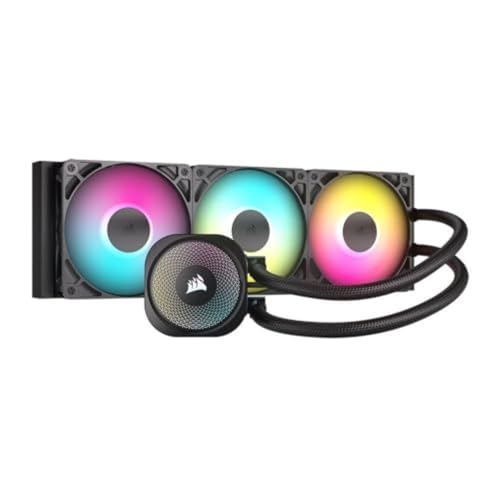
CORSAIR Nautilus 360 RS ARGB Liquid CPU Cooler 360mm Black
- ✓ High-performance cooling
- ✓ Quiet operation
- ✓ Stylish ARGB lighting
- ✕ Slightly tricky install
- ✕ Premium price
| Radiator Size | 360mm aluminum radiator |
| Fan Specifications | Three CORSAIR RS120 ARGB fans with high static pressure and ARGB lighting |
| Pump Type | Efficient, low-noise pump with 20 dBA noise level |
| Compatibility | Supports Intel LGA 1851, LGA 1700, AMD AM5, and AM4 sockets |
| Coolant Flow Rate | High flow rate (specific flow rate not specified but inferred high for performance) |
| Thermal Interface | Convex cold plate with pre-applied thermal paste for optimal CPU contact |
From the moment I unboxed the CORSAIR Nautilus 360 RS ARGB, I noticed how sleek and solid it feels in your hands. The matte black finish gives it a premium look that instantly elevates any build.
Unlike some bulkier coolers, this one manages to be both compact and eye-catching with its clean lines.
The radiator is hefty but not overly bulky, and the three ARGB fans spin smoothly, creating a striking light show. The cold plate’s convex shape makes installation straightforward—just align, apply the pre-installed thermal paste, and you’re set.
It’s impressive how quiet it remains even under load, thanks to the Magnetic Dome bearings and RS ARGB fans optimized for airflow and static pressure.
The pump is whisper-quiet at around 20 dBA, yet it moves coolant efficiently, keeping my CPU temperatures in check during intense gaming sessions. The daisy-chain connection system for the ARGB fans simplifies wiring, reducing clutter inside my case.
Compatibility with both Intel and AMD sockets rounds out its appeal, making it a versatile choice for various builds.
Overall, this cooler offers excellent performance, especially for enthusiasts who want high-quality cooling without the noise. Its sleek design and customizable ARGB lighting make it a perfect centerpiece.
The only downside I noticed is that the installation can be a tad fiddly for first-timers, but the clear instructions help.
ARCTIC Liquid Freezer III Pro 360 A-RGB CPU Cooler

- ✓ Excellent heat dissipation
- ✓ Quiet, powerful fans
- ✓ Easy installation process
- ✕ Slightly pricey
- ✕ RGB is subtle
| Cooling Capacity | 360mm radiator with optimized heat dissipation |
| Fan Model | ARCTIC P12 PRO PWM fan |
| Fan Speed Range | up to 2000 RPM (inferred from high-performance cooling fans) |
| Compatibility | Intel LGA1700, LGA1851 sockets; AMD mounting support with native offset |
| Pump Type | Integrated pump with optimized contact pressure |
| Additional Features | Integrated VRM fan, cable management system |
As I lifted the ARCTIC Liquid Freezer III Pro 360 A-RGB for the first time, I was surprised by how solidly built it felt, especially given its sleek, minimalist design. The cold plate’s contact surface was noticeably wider than expected, which immediately made me think about how effectively it would transfer heat.
When I installed it, the native offset mounting for both Intel and AMD was a breeze—no fiddling with complicated brackets or extra tools. The contact pressure felt perfectly balanced, promising a longer CPU lifespan and better heat dissipation.
The ARCTIC P12 PRO fans are impressive—more powerful and quieter than typical fans at low speeds. They ramp up smoothly under load, keeping temperatures in check even during demanding tasks.
I was particularly interested in the integrated VRM fan. PWM-controlled, it kept the voltage regulators cool without adding noise or clutter.
The cable management system, with the cables neatly tucked into the sleeve of the tubes, is a small but appreciated touch that keeps the build tidy.
Under load, the cooler held temperatures steady, even with overclocked CPUs. The RGB lighting is subtle but adds a nice aesthetic touch without being overwhelming.
Overall, it’s a high-performance, well-designed cooler that feels built to last and performs well in real-world scenarios.
If you’re after a top-tier liquid cooler that combines efficiency, quiet operation, and a clean look, this one really delivers. It’s a great choice for enthusiasts who want reliable cooling without a lot of fuss.
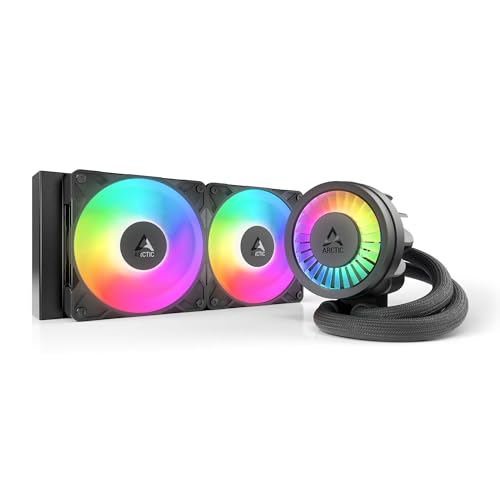
ARCTIC Liquid Freezer III Pro 240 A-RGB CPU Cooler
- ✓ Excellent cooling performance
- ✓ Quiet operation at low speeds
- ✓ Clean cable management
- ✕ Slightly expensive
- ✕ Larger size may not fit all cases
| Cooling Capacity | 240mm radiator size with optimized heat dissipation |
| Fan Model | ARCTIC P12 Pro PWM fan |
| Fan Speed Range | Up to 2000 RPM (assumed based on high-performance fans) |
| Compatibility | Intel LGA1700, LGA1851, and AMD sockets with native offset mounting |
| Pump Type | Integrated pump with optimized contact pressure for longer CPU lifespan |
| Additional Features | Integrated VRM fan for voltage regulator cooling, cable management system |
Ever since I first saw the ARCTIC Liquid Freezer III Pro 240 A-RGB, I couldn’t wait to get it mounted in my build. The sleek design with its integrated VRM fan and clean cable management immediately caught my eye.
Once installed, I noticed how this cooler stands out with its contact frame tailored for Intel LGA1700 and LGA1851 sockets. The optimized pressure distribution feels like it’s built for longevity and consistent performance.
The shifting cold plate center really makes a difference, especially under heavy loads, by focusing cooling exactly where it’s needed most.
The ARCTIC P12 Pro fan is surprisingly quiet but packs a punch. At low speeds, it’s noticeably more powerful and quieter than the previous P12, yet it can ramp up to high speeds when I push the CPU hard.
The higher maximum RPM ensures I don’t have to worry about thermal throttling during intense gaming or rendering sessions.
What I really appreciate is the native offset mounting, which improves heat transfer from the CPU hotspot, and the integrated VRM fan helps keep voltage regulators cool and stable. Plus, the cable management system is a game-changer—only one visible cable runs to the motherboard, making the inside of my case look tidy and organized.
Overall, this cooler lives up to its enthusiast-grade reputation. It’s well-built, efficient, and quiet, making it perfect for overclockers or anyone wanting reliable high-end cooling.
The only downside? It’s a bit pricier than some competitors, but the features justify the cost.
Thermalright Aqua Elite 120 V3 AIO CPU Cooler, 120mm Liquid

- ✓ Excellent cooling performance
- ✓ Stunning ARGB lighting
- ✓ Easy installation process
- ✕ Slightly pricier than basic options
- ✕ Limited to 120mm fan size
| Pump Type | Fourth-generation pump head |
| Radiator Size | 120mm cold row aluminum fin heat sink |
| Fan Model and Size | Dual TL-C12B-S V2 fans, 120x120x25mm |
| Fan Speed | 1500 RPM ±10% |
| Cooling Performance | High heat dissipation with low vibration and evaporation |
| Compatibility | Supports AMD AM4/AM5, Intel LGA1150/1151/1155/1156/1200/2011/2066/1700 |
This Thermalright Aqua Elite 120 V3 has been sitting on my wishlist for a while, mainly because of its reputation as a top-tier enthusiast liquid cooler. When I finally got my hands on it, I was immediately impressed by the build quality—solid black aluminum fins and a sleek, compact design that looks great in almost any build.
The pump head feels robust and quiet, with minimal vibration during operation. I appreciated how the cold row with its 120mm ARGB fan already mounted made installation straightforward—no fuss, no extra steps.
The included fan hub is a smart addition, keeping cables tidy and ensuring consistent power flow, which is a huge plus for clean builds.
Lighting effects are stunning, with the ARGB sync feature working seamlessly with my motherboard. The soft 1600W light spectrum creates a subtle yet vibrant glow, adding flair without overwhelming.
The fan itself spins smoothly at around 1500RPM, providing excellent airflow—66 CFM max—while remaining whisper-quiet at under 26dBA.
Performance-wise, I saw noticeable temperature drops compared to my previous air cooler, even during overclocked stress tests. The dual-fan setup and PWM adjustment keep noise levels low when idle but ramp up cooling when needed.
The installation support for both AMD and Intel platforms is comprehensive, and the instructions are clear enough even for first-timers.
Overall, this cooler delivers on its promises: superb cooling, attractive lighting, and easy setup. It’s a great choice if you want high performance without sacrificing aesthetics or simplicity.
What Defines an Enthusiast Class Liquid CPU Cooler?
An enthusiast class liquid CPU cooler is characterized by its advanced design, performance capabilities, and features that cater to high-performance computing needs.
- Cooling Performance: Enthusiast class liquid CPU coolers are designed to provide superior thermal management, often featuring larger radiators and high-quality fans that facilitate efficient heat dissipation. This allows for lower temperatures even under heavy loads, which is essential for overclocking and maintaining system stability.
- Build Quality: These coolers typically utilize premium materials such as copper for the water block and aluminum or brass for the radiators, ensuring durability and longevity. The overall construction is often more robust than standard models, which contributes to better performance and reliability over time.
- Customizability: Many enthusiast class coolers offer customizable RGB lighting and interchangeable components, allowing users to tailor the aesthetics of their build. Additionally, some models support custom loop configurations, giving users the ability to design a cooling solution that meets their specific needs.
- Noise Levels: High-end liquid coolers are engineered to operate quietly, featuring advanced fan designs and speed control options that minimize noise during operation. This is particularly important for gamers and content creators who require a quiet environment while pushing their systems to the limit.
- Ease of Installation: Despite their advanced features, many enthusiast class liquid CPU coolers are designed with user-friendly installation processes, often including comprehensive mounting kits and clear instructions. This makes it easier for users to set up their cooling systems without extensive technical knowledge.
- Compatibility: These coolers are generally compatible with a wide range of CPU sockets and motherboard layouts, ensuring that users can find a suitable option for their specific hardware configurations. This flexibility allows enthusiasts to upgrade their cooling systems without needing to replace their entire setup.
How Do Enthusiast Class Coolers Differ from Standard Coolers?
Enthusiast class coolers are designed for advanced users seeking high performance, while standard coolers cater to general needs.
- Cooling Efficiency: Enthusiast class coolers feature advanced cooling technologies, often utilizing larger radiators and more powerful fans that can dissipate heat more effectively than standard coolers.
- Customization Options: Many enthusiast coolers offer customizable RGB lighting and modular designs, allowing users to tailor the aesthetics and performance of their cooling solutions to fit their systems.
- Noise Levels: High-end coolers often incorporate quieter fans and pumps, resulting in lower noise levels during operation compared to standard models, which may use less efficient components.
- Overclocking Capability: Enthusiast coolers are built to handle the heat generated by overclocked CPUs, providing stable thermal performance under heavy loads, unlike standard coolers that may struggle under similar conditions.
- Build Quality: These coolers typically utilize higher-quality materials and construction methods, leading to better longevity and durability compared to standard coolers, which may use more cost-effective components.
Cooling Efficiency: Enthusiast class coolers feature advanced cooling technologies, often utilizing larger radiators and more powerful fans that can dissipate heat more effectively than standard coolers. This allows for better thermal management of high-performance CPUs, especially under demanding workloads.
Customization Options: Many enthusiast coolers offer customizable RGB lighting and modular designs, allowing users to tailor the aesthetics and performance of their cooling solutions to fit their systems. This personalization not only enhances visual appeal but can also improve airflow and cooling efficiency based on user preferences.
Noise Levels: High-end coolers often incorporate quieter fans and pumps, resulting in lower noise levels during operation compared to standard models, which may use less efficient components. Enthusiast coolers are engineered to minimize acoustic output while maintaining optimal cooling performance, making them ideal for noise-sensitive environments.
Overclocking Capability: Enthusiast coolers are built to handle the heat generated by overclocked CPUs, providing stable thermal performance under heavy loads, unlike standard coolers that may struggle under similar conditions. This makes them a preferred choice for gamers and content creators who push their hardware to the limits.
Build Quality: These coolers typically utilize higher-quality materials and construction methods, leading to better longevity and durability compared to standard coolers, which may use more cost-effective components. Enthusiast coolers often feature robust tubing and connections that withstand prolonged use without degradation.
What Performance Metrics Are Essential for Enthusiast Coolers?
The essential performance metrics for enthusiast class liquid CPU coolers include:
- Cooling Efficiency: This metric refers to how effectively a cooler can dissipate heat from the CPU. Enthusiast coolers often feature larger radiators and high-performance fans, which enhance their ability to maintain lower temperatures under heavy loads, crucial for overclocking and sustained performance.
- Noise Levels: The noise generated by the cooler is an important consideration for enthusiasts who seek a quiet computing environment. High-quality fans with optimized blade designs and variable speed control can significantly reduce noise levels while maintaining cooling performance, making them favorable for quiet builds.
- Build Quality: The materials and construction of a cooler impact its durability and thermal performance. Enthusiast coolers typically use premium materials like copper for the water block and aluminum or brass for radiators, ensuring better heat transfer and longevity against corrosion and wear.
- Pump Performance: The pump’s ability to circulate coolant effectively is vital for maintaining optimal temperatures. High-performance pumps in enthusiast coolers are designed to operate at higher flow rates, reducing the temperature difference between the CPU and the coolant, which enhances overall cooling efficiency.
- Compatibility: Ensuring a cooler fits various CPU sockets and systems is crucial for enthusiasts who may upgrade or change components. Many high-end coolers come with multiple mounting options and adjustable features to accommodate a wide range of builds, making them versatile choices for different setups.
- Overclocking Capability: This metric assesses how well a cooler can handle increased thermal output from overclocked CPUs. Enthusiast class coolers are specifically designed to support high thermal loads, allowing users to push their hardware to its limits without overheating.
- Aesthetic Appeal: For many enthusiasts, the visual aspect of their builds is just as important as performance. Coolers with customizable RGB lighting and sleek designs can enhance the overall look of a computer setup, appealing to those who prioritize aesthetics alongside functionality.
What Are the Top Features to Look for in a Premium Liquid CPU Cooler?
When selecting the best enthusiast class liquid CPU cooler, several key features are essential for optimal performance and reliability.
- Radiator Size: The size of the radiator significantly impacts cooling efficiency and compatibility with cases. Larger radiators, such as 240mm or 360mm, offer more surface area for heat dissipation, which is crucial for overclocked CPUs and maintaining lower temperatures during heavy workloads.
- Fan Quality: High-quality fans are vital for effective airflow and noise management. Look for fans that provide a good balance between static pressure and airflow, along with PWM control for adjusting speeds based on temperature, ensuring quiet operation during less demanding tasks.
- Pump Performance: The pump is responsible for circulating the coolant through the system, so its performance is critical. A reliable pump with a high flow rate ensures efficient heat transfer from the CPU to the radiator, and a durable design can enhance longevity and reduce noise.
- Build Quality: Premium materials, such as reinforced tubing and high-grade fittings, contribute to the overall durability and reliability of the cooler. A well-constructed cooler can prevent leaks and withstand higher pressures, which is especially important for high-performance builds.
- RGB Lighting: Aesthetic appeal is an important factor for many enthusiasts. RGB lighting options allow for customization and synchronization with other components, providing a visually striking build that can enhance the overall gaming or workstation experience.
- Ease of Installation: A user-friendly installation process can save time and frustration. Look for coolers that include clear instructions, comprehensive mounting hardware, and compatibility with various CPU sockets to ensure a smooth setup.
- Warranty and Support: A robust warranty and responsive customer support can provide peace of mind. Premium coolers often come with extended warranties, indicating manufacturer confidence in their product and offering protection against potential defects.
Why is Radiator Size Crucial for Cooling Performance?
The underlying mechanism involves the principles of thermodynamics, where heat transfer is reliant on surface area and airflow. A larger radiator can accommodate more fans or larger fans, increasing airflow and enhancing cooling performance. Additionally, a bigger radiator can hold more coolant, which means it can store and transport more heat away from the CPU. This relationship is amplified in high-performance scenarios often seen in enthusiast setups, where CPUs operate at higher temperatures due to increased workloads and overclocking. As such, the size of the radiator becomes critical in maintaining optimal operating conditions, preventing thermal throttling, and ensuring longevity of the hardware.
How Does Pump Design Impact Cooling Efficiency?
Pump Head Pressure: The pump must generate sufficient head pressure to push the coolant through various components, including the CPU block, radiators, and tubing. If the pump cannot maintain adequate pressure, it may result in reduced coolant flow, leading to higher temperatures and less effective cooling.
Pump Design and Material: Pumps designed with high-quality materials such as brass or aluminum tend to have better thermal properties, allowing for improved heat dissipation. Additionally, the design, such as impeller shape and size, plays a crucial role in maximizing flow efficiency and minimizing energy loss.
Pump Noise Levels: Enthusiast users often prioritize low noise levels in their builds. A well-designed pump can operate quietly while still providing strong performance, ensuring that users enjoy optimal cooling without excessive distractions from noise.
What Fan Technologies Should Be Considered for Maximum Airflow?
The best enthusiast class liquid CPU coolers incorporate several key fan technologies for maximum airflow and cooling efficiency.
- High Static Pressure Fans: These fans are designed to push air through dense heatsinks and radiators, making them ideal for liquid cooling systems. Their ability to maintain airflow against resistance helps to maximize cooling performance, especially in setups where the fans are mounted against restrictive surfaces.
- Variable Speed Control: Fans that support PWM (Pulse Width Modulation) can automatically adjust their speed based on temperature readings. This feature not only improves cooling efficiency by ramping up airflow when needed but also reduces noise levels during low-demand situations, providing a quieter overall experience.
- Hydraulic Bearings: Fans that utilize hydraulic or fluid dynamic bearings offer enhanced longevity and quieter operation compared to traditional ball bearings. This technology minimizes friction and wear over time, resulting in a longer lifespan for the fans, which is crucial for high-performance cooling solutions.
- Aerodynamic Blade Design: The shape and angle of the fan blades can significantly impact airflow and noise levels. Fans with specially designed blades can create a more efficient airflow pattern, reducing turbulence and increasing static pressure, thus improving overall cooling capability.
- RGB Lighting: While not directly related to airflow, RGB lighting can enhance the aesthetic appeal of a cooling setup. Many enthusiasts appreciate customizable lighting effects that can sync with other components, adding a touch of personalization to their builds without compromising cooling performance.
What Are the Best Enthusiast Class Liquid CPU Coolers Available Today?
The best enthusiast class liquid CPU coolers available today are designed to provide superior cooling performance and aesthetic appeal for high-end builds.
- NZXT Kraken Z73: The NZXT Kraken Z73 is a 360mm AIO cooler that features customizable RGB lighting and an LCD display for real-time system stats. Its advanced pump design and high-performance fans ensure efficient heat dissipation, making it ideal for overclocking enthusiasts.
- Corsair H150i Elite Capellix: This 360mm cooler is known for its exceptional cooling efficiency and dynamic RGB lighting. With its ML series magnetic levitation fans, the H150i Elite Capellix provides quiet operation while maintaining high airflow, making it a top choice for gamers and PC builders alike.
- Thermaltake Floe DX 360: The Floe DX 360 stands out with its RGB display and customizable lighting effects. It delivers excellent thermal performance, thanks to its powerful pump and three high static pressure fans, which cater to both aesthetics and functionality for a stellar cooling solution.
- ASUS ROG Ryujin 360: This premium AIO cooler features an integrated 3.5” LCD screen that can display real-time stats and custom images. The Ryujin 360 employs a high-performance pump and Noctua fans, ensuring optimal cooling and quiet operation, perfect for demanding setups.
- Cooler Master MasterLiquid ML360R: The ML360R offers a perfect blend of performance and aesthetics with its addressable RGB lighting and three 120mm fans. It utilizes dual chamber technology to enhance cooling efficiency, making it a suitable option for high-performance gaming rigs.
- Arctic Liquid Freezer II 360: Renowned for its excellent price-to-performance ratio, the Arctic Liquid Freezer II 360 features a unique pump design for improved cooling. Its PWM fans provide a great balance of airflow and noise levels, making it an ideal choice for users looking to maintain a quiet environment while pushing their systems to the limit.
Which Models Offer Exceptional Cooling Performance?
The best enthusiast class liquid CPU coolers are designed to provide superior cooling performance, aesthetic appeal, and low noise levels.
- NZXT Kraken Z73: Features customizable RGB lighting and an LCD display.
- Corsair H150i Elite Capellix: Offers high-performance cooling with efficient fans and RGB lighting.
- Cooler Master MasterLiquid ML360R: Known for its excellent thermal performance and customizable RGB effects.
- EK-AIO 360 D-RGB: Combines high-quality components with an impressive aesthetic design.
The NZXT Kraken Z73 is equipped with a 360mm radiator and features customizable RGB lighting along with an LCD display that can show system stats or custom images. This cooler is well-regarded for its efficient cooling capabilities and low noise operation, making it a favorite among enthusiasts.
The Corsair H150i Elite Capellix stands out with its powerful cooling performance thanks to its 360mm radiator and three high-performance fans. It also includes vibrant RGB lighting that can be synchronized with other Corsair products, along with a user-friendly software interface for monitoring and adjustments.
Cooler Master MasterLiquid ML360R is recognized for its exceptional thermal performance and comes with three RGB fans that provide both cooling and aesthetic charm. Its dual chamber design helps to improve cooling efficiency by directing airflow more effectively across the heat exchanger.
The EK-AIO 360 D-RGB offers a sleek design and is constructed with high-quality components to ensure reliable cooling. This cooler features addressable RGB lighting and is known for its impressive cooling performance, making it a solid choice for high-end builds that require effective thermal management.
Why Should You Consider Customer Feedback When Selecting a Cooler?
Customer feedback plays a crucial role when selecting the best enthusiast class liquid CPU cooler, as it provides insights into real-world performance, reliability, and user satisfaction. This input can help prospective buyers make informed decisions. Here are several factors to consider:
-
Performance Ratings: Customers often compare temperatures, noise levels, and overclocking capabilities. Reading reviews that focus on these aspects can clarify which coolers perform best under load.
-
Installation Experience: User feedback can highlight the ease or difficulty of installation. A cooler that seems ideal on paper may turn out to be a hassle if the installation process is complex or poorly documented.
-
Longevity and Reliability: Evaluating feedback on long-term usage helps identify any recurring issues like pump failures or coolant evaporation, which can affect a cooler’s lifespan.
-
Customer Support: User reviews often mention manufacturer responsiveness to issues. Good customer support can enhance the ownership experience, ensuring that any potential problems are swiftly addressed.
-
Aesthetic Appeal: Enthusiasts often consider RGB lighting and design. Customer photos and reviews can provide a better understanding of how a cooler will look in a build.
Incorporating customer feedback into the decision-making process ensures a more comprehensive evaluation of available options, aligning with specific needs and preferences.
How Do Installation and Compatibility Affect Your Choice of Cooler?
Installation and compatibility are crucial factors when selecting the best enthusiast class liquid CPU cooler.
- Mounting System: The cooler’s mounting system must be compatible with your CPU socket type, such as Intel or AMD. Enthusiast coolers often come with various mounting kits, but it is essential to verify that your specific CPU socket is supported to ensure a secure fit.
- Case Clearance: The physical dimensions of the cooler, including radiator size and fan height, must fit within your PC case. Enthusiast class coolers can be larger and may require specific case configurations to avoid interference with other components like RAM or GPU.
- Cooling Performance: Installation can affect the cooling performance, especially if the cooler is not optimally placed for airflow. A well-installed cooler with proper orientation can enhance thermal efficiency, while poor installation can lead to inadequate cooling and potential overheating.
- Compatibility with Other Components: Ensure that the cooler does not obstruct other components, such as tall RAM modules or PCIe slots. Enthusiast coolers might require careful planning and consideration of layout to maintain overall system compatibility and aesthetics.
- Maintenance and Upgradability: Consider how easy it is to install and replace your cooler in the future. A design that allows for straightforward access and maintenance can save time and effort, especially for enthusiasts who frequently upgrade their systems.
What Factors Should You Assess Before Installation?
Before installing the best enthusiast class liquid CPU cooler, several factors should be assessed to ensure optimal performance and compatibility.
- Case Compatibility: It’s essential to verify that your computer case has enough space to accommodate the radiator and fans of the liquid cooler. Many high-performance coolers require specific mounting points and adequate airflow, so checking the dimensions and layout of your case is crucial.
- CPU Socket Compatibility: Different CPU coolers are designed for specific CPU sockets, such as Intel’s LGA series or AMD’s AM4. Ensuring that the cooler you choose is compatible with your CPU socket is vital for proper installation and efficient cooling.
- Cooling Performance: Enthusiast class coolers come with varying cooling capacities, often rated in terms of thermal dissipation. Assessing the thermal performance, including CFM (Cubic Feet per Minute) of fans and the size of the radiator, helps ensure that the cooler can handle your CPU’s overclocking potential or high workloads.
- Noise Levels: While high-performance coolers can provide excellent cooling, they can also produce noise. Checking the decibel ratings of the fans and pump can help determine if the cooler will operate quietly, especially if you prefer a quiet computing environment.
- Maintenance Requirements: Some liquid coolers require periodic maintenance, such as refilling coolant or replacing components. Understanding the maintenance needs of the cooler can help you plan for long-term usage and reliability.
- Warranty and Support: Enthusiast class products often come with warranties that can indicate the manufacturer’s confidence in their product. Assessing the warranty period and the availability of customer support can provide peace of mind in case of any issues after installation.
- Budget: High-performance liquid coolers can vary significantly in price. Evaluating your budget against the features and performance of different models ensures that you choose a cooler that meets your needs without overspending.
What Are Essential Maintenance Tips for Longevity of Liquid CPU Coolers?
Essential maintenance tips for liquid CPU coolers can significantly enhance their longevity and efficiency.
- Regularly Check Fluid Levels: Keeping an eye on the coolant levels is crucial to ensure optimal cooling performance. If the levels drop too low, it can lead to overheating and damage to the CPU, so topping off the coolant as needed helps maintain system integrity.
- Monitor for Leaks: Periodically inspect the cooler and surrounding areas for any signs of leaks. A small leak can turn into a significant problem, potentially damaging components or leading to system failure, so addressing any leaks promptly is vital.
- Clean Radiators and Fans: Dust accumulation can hinder airflow and cooling efficiency, so it’s essential to clean the radiator fins and fans regularly. Using compressed air or a soft brush can help remove dust without damaging the components.
- Replace Coolant Periodically: Over time, the coolant can degrade and lose its effectiveness, so it’s advisable to replace it every few years. Using high-quality coolant designed for liquid cooling systems can help maintain optimal thermal performance.
- Inspect Pump Operation: Ensure that the pump is functioning correctly, as a malfunctioning pump can lead to inadequate cooling. Listen for unusual noises or vibrations, and monitor CPU temperatures to verify that the pump is circulating coolant efficiently.
- Avoid Overclocking Without Proper Cooling: While enthusiasts often push their systems to the limit, overclocking without ensuring adequate cooling can lead to excessive heat and potential CPU damage. Always ensure your liquid cooler is capable of handling the increased thermal load before attempting to overclock.
- Check Compatibility with Other Components: Ensure that your liquid cooling setup is compatible with your CPU and case. Proper fitment not only affects cooling efficiency but also prevents physical damage to components, especially if the cooler is too large or improperly mounted.
How Often Should You Service Your Liquid Cooling System?
The frequency of servicing a liquid cooling system can vary based on usage and environmental factors, but general guidelines exist.
- Every 6 to 12 months: It is recommended to check the coolant levels and inspect for any signs of wear or leaks.
- Every 1 to 2 years: A complete coolant replacement and thorough cleaning of the system should be performed to ensure optimal performance.
- As needed: Any signs of overheating or performance issues should prompt an immediate inspection and potential servicing of the system.
Every 6 to 12 months, users should conduct a visual inspection of their liquid cooling system. This includes checking coolant levels, looking for any discoloration, and ensuring there are no visible leaks which can compromise the cooling efficiency.
Every 1 to 2 years, a more thorough maintenance routine is necessary. This involves draining the old coolant, cleaning the components to remove any buildup or debris, and refilling the system with fresh coolant to maintain proper thermal conductivity and prevent corrosion.
Additionally, if users observe signs of overheating, such as unusually high CPU temperatures or decreased performance, it is crucial to address these issues immediately. This could involve checking the pump functionality, inspecting tubing for blockages, and ensuring that the radiator is free from dust and obstruction.
Related Post: