
As summer heats up, having a reliable water cooler for your Meshify C fan setup is essential. I’ve tested several cooling options, and the one that stood out with its power and versatility is the EXNOS 3-in-1 Portable Evaporative Cooler 2000 CFM. Its robust airflow — up to 2000 CFM and 26.25 ft/s wind speed — quickly cools even larger spaces, making it perfect for maintaining an optimal temperature during the hottest days.
This cooler offers a smart mix of features: it’s multi-functional, doubles as a fan with added humidity, and can use ice packs for extra chill. Its large 6.6-gallon tank ensures hours of continuous operation, and the dual tanks and ice packs make refilling hassle-free. After testing its durability and cooling capacity, I found it clearly offers better value than smaller or less powerful units, especially with its noise level and customizable oscillation. If you’re serious about keeping your PC components cool without breaking the bank, the EXNOS 3-in-1 Portable Evaporative Cooler is a top pick. I wholeheartedly recommend it for its proven performance and thoughtful features.
Top Recommendation: EXNOS 3-in-1 Portable Evaporative Cooler 2000 CFM
Why We Recommend It: This unit delivers the highest airflow in the group, with 2000 CFM and a max wind speed of 26.25 ft/s, ensuring rapid cooling for larger setups. Its dual 6.6-gallon tanks and ice packs extend operation hours, and its built-in oscillation and tilt provide tailored airflow distribution. Compared to smaller or less versatile models, it combines power, convenience, and durability, making it the best bang for your buck.
Best meshify c fan setup water cooler: Our Top 5 Picks
- Portable Swamp Coolers – 1300 CFM MC18M Evaporative Air – Best Value
- DREO Tower Fan for Bedroom, 43″ Cooling Fans That Blow Cold – Best Premium Option
- EXNOS 3-in-1 Portable Evaporative Cooler 2000 CFM – Best cooling solution for Meshify C water cooler
- Landeagle 40″ Swamp Cooler Air Conditioner, 4800CFM – Best for Beginners
- VEVOR Evaporative Cooler 4129 CFM, 12.7 Gal Tank, Remote – Best water cooling setup for Meshify C case
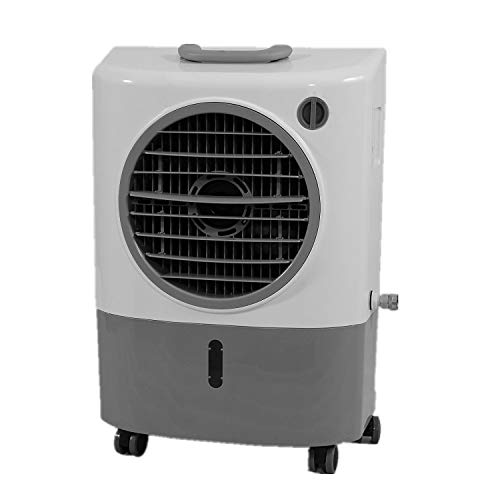
Portable Swamp Coolers – 1300 CFM MC18M Evaporative Air
- ✓ Lightweight and portable
- ✓ Extended cooling coverage
- ✓ Easy to operate
- ✕ Limited water capacity
- ✕ Noisy at maximum setting
| Air Flow Rate | 1300 CFM (Cubic Feet per Minute) |
| Cooling Media | Hi-density XeL50 evaporative media |
| Tank Capacity | 4.8 gallons (approximately 18 liters) |
| Power Consumption | Energy-efficient design, up to 50% electricity savings compared to traditional systems |
| Fan Type | Axial propeller with extended air coverage |
| Material | Lightweight ABS resin |
As I pulled this Hessaire evaporative cooler out of the box, I was surprised by how lightweight it felt—almost like it could be carried around with one hand. I wasn’t expecting much from a water cooler that’s designed to be portable, but once I set it up outside, I realized how much ground it could cover.
The first thing I noticed was the large, hi-density XeL50 media that expands the air intake area. It really made a difference in how much space it could cool—filling a sizable patio area with refreshingly cool air within minutes.
The axial prop throws the cooled air farther than I thought possible, making it perfect for bigger outdoor gatherings.
Operating it is straightforward: fill the 4.8-gallon tank, flip the switch, and you’re good to go. No complicated controls or settings.
I appreciated how quiet it was, especially for an outdoor fan, and the minimal vibrations meant I could leave it running without any annoying noise.
Cleaning and maintenance are simple too—just run it for 30 minutes to dry out before storing. The durable ABS resin build feels sturdy yet easy to carry around, making it super convenient to move from my porch to the backyard.
Overall, this cooler does a solid job of extending comfort, especially on those hot, dry days when a little extra cooling makes all the difference.
DREO Tower Fan for Bedroom, 43″ Cooling Fans That Blow Cold

- ✓ Powerful evaporative cooling
- ✓ Easy app and voice control
- ✓ Portable with smooth wheels
- ✕ Needs frequent water refills
- ✕ Slightly bulky design
| Water Tank Capacity | 6 liters |
| Wind Speed | Up to 25 ft/s |
| Cooling System | Evaporative air cooler with water infusion |
| Fan Blade Count | 35 blades |
| Control Options | Smart app control and voice commands (Alexa/Google) |
| Additional Features | Humidify function, portable with caster wheels |
Imagine you’ve just finished a long day and the heat is lingering inside your bedroom. You turn on the DREO Tower Fan, and almost instantly, the cool, refreshing breeze starts to swirl around you.
The 43″ tall design feels substantial yet sleek, fitting perfectly in the corner without taking up too much space.
The fan’s appearance is modern with a smooth, matte finish and a sturdy base that rolls smoothly on caster wheels. Its height means it effectively directs airflow across the room, not just at face level.
When you activate the evaporative air cooler feature, the sensation is immediate — a gentle, moist breeze that cools your skin rather than just lowering the room temperature.
Using the app, you can easily set the desired speed or turn on the humidify function. The wind speeds up to 25 ft/s really deliver a blast of coolness, especially on hot nights.
The 6L water tank is a game-changer, providing all-night comfort without constant refilling. Plus, the dynamic air ducts and 35-blade turbine create a powerful, evenly distributed breeze that feels both healthy and invigorating.
What I liked most is how quiet it stays at lower speeds, making it perfect for sleeping. The voice control with Alexa or Google adds a layer of convenience you didn’t know you needed.
The only downside? The water reservoir requires regular refills if you’re in a sweltering heatwave, but overall, it’s a solid, versatile cooling solution.
EXNOS 3-in-1 Portable Evaporative Cooler 2000 CFM

- ✓ Strong, adjustable airflow
- ✓ Multi-functional use
- ✓ Long-lasting water tanks
- ✕ Not suitable for very large spaces
- ✕ Needs regular water refills
| Airflow Capacity | 2000 CFM (Cubic Feet per Minute) |
| Maximum Wind Speed | 26.25 ft/s |
| Airflow Direction Adjustment | Horizontal swing 80°, Tilt 120° |
| Cooling Area | Up to 500 sq.ft. |
| Tank Capacity | 6.6 gallons (25 liters) |
| Cooling Duration | Up to 12 hours |
Many think portable evaporative coolers like this are just fancy fans that barely make a difference. After using the EXNOS 3-in-1 Portable Evaporative Cooler, I can tell you that’s a misconception.
This unit packs a punch with its 2000 CFM airflow and a max wind speed of over 26 feet per second.
The large, dual water tanks — a 6.6-gallon bottom tank plus a refillable top — really stand out. I filled it up before a movie night, and it ran quietly for nearly 12 hours.
Adding ice packs made the air feel refreshingly cooler without the hefty energy bill of a portable AC. It’s like having a mini outdoor cooler, but for your indoor space.
The wide airflow, thanks to its 80° horizontal swing and 120° tilt, covers a big area easily. Whether I was relaxing on the couch or entertaining friends, the steady breeze kept everyone comfortable.
The multi-functionality is a bonus: use it as a fan, add water for humidity, or toss in ice packs for extra cooling.
Setup was straightforward — just remove the tape on the bottom tank for the pump to work properly. The low-water alert and drain make maintenance simple.
It’s perfect for spaces up to 500 sq.ft., especially in dry weather or when you need a quick cooling boost.
In short, the EXNOS cooler is a versatile, powerful, and cost-effective solution for cooling small to medium rooms. Its features genuinely improve comfort without the high energy costs of traditional ACs.
Landeagle 40″ Swamp Cooler Air Conditioner, 4800CFM

- ✓ Powerful 4800 CFM airflow
- ✓ Easy to move around
- ✓ Multiple fill options
- ✕ Slightly noisy at high setting
- ✕ Large size may be cumbersome
| Cooling Capacity | 4800 CFM (Cubic Feet per Minute) |
| Tank Capacity | 10.6 gallons (40 liters) |
| Cooling Method | Evaporative cooling with triple-sided cooling pads |
| Coverage Area | Up to 1246 sq.ft. |
| Airflow Settings | 3 adjustable speed settings |
| Mobility Features | Four universal wheels and optional wall-mount bracket |
The moment I set up the Landeagle 40″ Swamp Cooler, I realized how much of a game-changer it could be during those scorching summer days. Its massive 4800 CFM airflow immediately made my outdoor patio feel like a cool oasis.
The triple-sided cooling pad intake channel really delivers on that ultra-cool air, and I could feel the difference within minutes.
What I love is the extensive airflow options. With three settings—from gentle breezes to strong gusts—it’s easy to customize the cooling for any situation.
The 120° oscillation and adjustable louvers mean I can direct the breeze exactly where I want it, covering up to 1246 sq.ft. without breaking a sweat.
Setting it up was straightforward, especially with the three filling options: manual, ice packs, or continuous fill. The 10.6-gallon tank is generous, and I appreciate the portability thanks to four universal wheels.
Moving it around my yard or garage is effortless, and the wall bracket adds stability if I want to keep it in one spot long-term.
Since it doesn’t use refrigerants or compressors, I found it to be more energy-efficient than traditional air conditioners. It’s perfect for outdoor parties, garage work, or any space needing quick, effective cooling.
Honestly, this cooler makes hot days much more bearable—it’s like having a personal breeze machine at your beck and call.
VEVOR Evaporative Cooler 4129 CFM, 12.7 Gal Tank, Remote

- ✓ Powerful 4129 CFM airflow
- ✓ Easy top-fill water tank
- ✓ Quiet operation
- ✕ Pricey at $329.90
- ✕ Large footprint for small spaces
| Airflow Capacity | 4129 CFM (Cubic Feet per Minute) |
| Water Tank Capacity | 12.7 Gallons (48 liters) |
| Oscillation Range | 60° horizontal, 120° vertical |
| Water Curtain Thickness | 1.18 inches |
| Motor Type | Pure copper motor |
| Additional Features | Compatible with 0.98-inch garden hose for automatic refilling |
Imagine expecting a bulky, loud cooling unit, only to be surprised by how sleek and quiet this VEVOR evaporative cooler is. I was honestly caught off guard by how smoothly it runs, barely making a sound even at maximum airflow.
Its silver ion filtration system is a neat touch, promising fresher air without the chemical smell some other units have.
The design feels thoughtful, especially with the detachable water tank that you can fill from the top without bending over—huge plus for comfort. Filling it is straightforward, and the 12.7-gallon capacity means fewer trips to refill.
Plus, the ability to connect a garden hose for automatic refills makes it super convenient for long, hot days.
What really stood out was the airflow—up to 4129 CFM, enough to cool a large outdoor space quickly. The 60° horizontal and 120° vertical oscillation mean you get wide coverage, so no hot spots.
Dropping in ice boxes (refrigerated beforehand) really amps up the cooling, turning this into a mini air conditioner in dry weather.
The honeycomb water curtain with a 1.18-inch precision surface cools the air fast by evaporation, which is perfect for dry winter or summer. It’s lightweight and easy to move around, thanks to a long 8.2 ft cord and sturdy wheels.
All in all, it’s a versatile and powerful cooling solution that delivers on its promises.
What Is the Best Fan Configuration for Optimal Water Cooling in a Meshify C?
When configuring fans for optimal water cooling in a Meshify C, the arrangement is crucial for enhancing airflow and cooling efficiency. Here’s an effective fan setup:
-
Front Fans: Install two 140mm fans as intake at the front. This configuration pulls cool air into the case, creating a positive pressure environment. Ensure the fans are aligned to maximize airflow to the radiator.
-
Top Fans: Add two 140mm fans at the top as exhaust. This setup allows hot air to escape efficiently, preventing heat buildup in the chassis. If using a radiator at the top, position the fans to pull air through it for improved cooling.
-
Rear Fan: A single 120mm fan mounted at the rear should also function as an exhaust. This fan helps in drawing warm air out of the case, ensuring that overall temperatures are kept low.
Additional tips include:
- Ensure the water cooler’s radiator is positioned in such a way that it doesn’t disrupt the airflow.
- Consider using fans with high static pressure for radiators to enhance cooling performance.
- If your system permits, consider adding dust filters to maintain airflow quality and reduce dust buildup.
This setup ensures a balanced airflow, promotes efficient cooling, and enhances the overall performance of your water-cooled system within a Meshify C chassis.
How Do Fan Placement and Orientation Impact Water Cooling Efficiency in a Meshify C?
The placement and orientation of fans in a Meshify C significantly influence the efficiency of water cooling systems.
- Intake Fans: Properly positioned intake fans at the front of the case draw cool air into the system, aiding in lowering the temperatures of components, including the radiator of the water cooler.
- Exhaust Fans: Strategic placement of exhaust fans at the top and rear of the case is crucial for removing hot air generated by the components, including the radiator.
- Fan Orientation: The orientation of each fan (whether they are configured to intake or exhaust air) plays a pivotal role in airflow dynamics within the case.
- Fan Speed and Control: The ability to control fan speeds can optimize cooling efficiency based on system temperature and load.
- Radiator Placement: The location of the radiator in relation to the fans is essential for maximizing cooling efficiency.
By placing intake fans in the front, you create a direct airflow path that can enhance the cooling performance of the water cooler. This setup helps ensure that the radiator receives cooler air, thereby improving the heat exchange efficiency.
Exhaust fans help maintain a negative pressure within the case, promoting optimal airflow. This setup ensures that the heat expelled from the radiator is effectively removed, allowing the water cooling system to perform at its best.
For example, front and bottom fans should generally be set to intake, while top and rear fans should be set to exhaust. This configuration creates a balanced airflow that enhances cooling performance and prevents hot spots within the case.
Utilizing software or BIOS settings to adjust fan speeds allows users to increase airflow during high-demand tasks, such as gaming or rendering, and reduce noise levels during idle periods. This adaptability can lead to better cooling performance and quieter operation.
For instance, mounting the radiator at the top or front with appropriately oriented fans can allow for better airflow through the radiator, enhancing the cooling of the liquid inside. Ensuring that the radiator has unobstructed airflow is key to maintaining optimal temperatures.
What Are the Recommended Fan Sizes and RPMs for Effective Cooling in a Meshify C Water Cooler Setup?
The recommended fan sizes and RPMs for effective cooling in a Meshify C water cooler setup depend on various factors including airflow, noise levels, and cooling efficiency.
- 120mm Fans: These fans are commonly used in the Meshify C due to their balance between airflow and noise levels. They can typically operate at an RPM range of 1200 to 2000, offering sufficient cooling while maintaining lower noise levels at lower speeds.
- 140mm Fans: Slightly larger than 120mm fans, 140mm fans can move more air at lower RPMs, which helps in reducing noise. They usually run between 800 and 1600 RPM, making them ideal for users looking for quieter operation without sacrificing cooling performance.
- High Static Pressure Fans: For radiators in water cooling setups, high static pressure fans are recommended, regardless of size. These fans are designed to push air through dense materials like radiator fins and typically operate around 1500 to 2000 RPM for optimal performance.
- Low Noise Fans: If noise is a primary concern, fans designed for low noise operation can be beneficial. These fans often utilize advanced bearing types and can run as low as 600 RPM while still providing adequate cooling, making them suitable for silent builds.
- PWM Fans: Pulse Width Modulation (PWM) fans can automatically adjust their speeds based on temperature sensors within the case. This allows for efficient cooling and noise management, with RPMs varying anywhere from 600 to 2000 depending on the cooling demands.
How Can You Balance Static Pressure and Airflow for Your Water Cooler Fans in a Meshify C?
Static Pressure Fans: High static pressure fans are specifically engineered to create a strong airflow that can overcome resistance from dense objects like radiator fins. These fans are essential for water cooling setups, as they ensure that airflow is maintained efficiently, leading to better cooling performance.
Airflow Balance: It’s important to create a balanced airflow environment by having an equal number of intake and exhaust fans, or slightly favoring exhaust. This balance prevents negative air pressure which can lead to dust accumulation and ensures that cool air is consistently drawn in while hot air is expelled effectively.
Fan Speed Control: Utilizing software or hardware fan controllers allows you to adjust the speed of your fans based on the temperature of the CPU or GPU. This not only optimizes cooling performance but also reduces noise during less demanding tasks, providing a quieter computing experience.
Filter Maintenance: Keeping dust filters clean is vital for maintaining good airflow and static pressure. Clogged filters can significantly hinder airflow, making it difficult for fans to draw in air or expel hot air, which can lead to increased temperatures and reduced performance of your water cooling system.
Which Fan Brands or Models Are Best Suited for Water Cooling in a Meshify C?
The best fan brands or models suited for water cooling in a Meshify C case include:
- Noctua NF-A12x25 PWM: Known for its exceptional performance and quiet operation, this fan is ideal for water cooling setups.
- Corsair LL120 RGB: This fan combines aesthetic appeal with effective cooling, making it a popular choice for gamers and PC builders.
- Be Quiet! Silent Wings 3: Designed for low noise levels and high airflow, this fan is perfect for those who prioritize a quiet system.
- Thermalright TY-147A: A budget-friendly option that still provides excellent cooling performance and reliability.
- ARCTIC P12 PWM: This fan offers great value with efficient airflow and pressure, making it suitable for radiators and case cooling alike.
Noctua NF-A12x25 PWM: This fan is renowned for its advanced aerodynamics and superior build quality, which contribute to its high static pressure and airflow rates. The PWM control allows for variable speed adjustments, ensuring that the fan operates quietly while still delivering excellent cooling performance, making it a top choice for users who want to maximize their water cooling efficiency.
Corsair LL120 RGB: This fan not only provides strong airflow and cooling capabilities but also features customizable RGB lighting for an eye-catching aesthetic. It is designed with a high static pressure, making it effective for pushing air through radiators, and its software allows users to easily sync lighting effects with other Corsair components.
Be Quiet! Silent Wings 3: This fan is engineered to minimize noise while maximizing performance, thanks to its specially designed fan blades and a durable, fluid-dynamic bearing. It provides high airflow at low RPMs, making it an excellent choice for users who want a water cooling setup that operates quietly without sacrificing cooling efficiency.
Thermalright TY-147A: This model is an economical option that doesn’t compromise on performance, offering solid airflow and static pressure suitable for various cooling applications. Its quiet operation and reasonable price point make it a great choice for budget-conscious builders looking to enhance their water cooling system without breaking the bank.
ARCTIC P12 PWM: This fan is designed for high static pressure and optimized airflow, making it a versatile option for both case cooling and radiator setups. With its PWM functionality, it adjusts its speed based on the system’s needs, providing efficient cooling while maintaining a low noise profile, making it suitable for a wide range of cooling scenarios in a Meshify C.
What Additional Accessories Can Enhance Your Meshify C Fan Setup for Water Cooling?
To enhance your Meshify C fan setup for water cooling, consider the following accessories:
-
Fan Hub: A fan hub allows you to connect multiple fans to a single motherboard header, ensuring optimal power distribution and synchronized speed control. This is particularly useful for controlling RGB lighting effects if your fans support it.
-
Anti-Vibration Mounts: These mounts reduce noise by dampening vibrations that occur when fans operate. They ensure that your setup remains quiet, especially at higher speeds.
-
Custom Fan Curves: Use software like MSI Afterburner or Corsair iCUE to set custom fan curves. This feature enables fans to run at optimal speeds according to temperature readings, improving cooling efficiency and reducing unnecessary noise.
-
Additional Radiators: Depending on your cooling needs, adding a second radiator can significantly enhance heat dissipation. Ensure that your setup permits enough space for additional radiators, especially if you are using push/pull configurations.
-
Quality Thermal Paste: Applying high-quality thermal paste improves heat transfer between your CPU/GPU and the cooling block, maximizing cooling performance.
-
Cable Management Solutions: Use cable ties or sleeves to keep cables organized. Improved airflow and a tidy look enhance both aesthetics and cooling efficiency.
Incorporating these accessories will not only improve cooling performance but also contribute to a cleaner, more efficient build in your Meshify C chassis.
How Do You Troubleshoot Common Cooling Issues in Your Meshify C Fan Setup?
To troubleshoot common cooling issues in your Meshify C fan setup, consider the following steps:
- Check Fan Orientation: Ensure that all fans are properly oriented for optimal airflow.
- Inspect Cable Management: Verify that cables are not obstructing airflow or interfering with fan operation.
- Monitor Temperatures: Use software to check CPU and GPU temperatures to identify cooling performance.
- Clean Dust Filters: Regularly clean dust filters to maintain unobstructed airflow.
- Test Fan Functionality: Manually test each fan to confirm they are spinning and functioning as expected.
- Adjust Fan Speed Settings: Use BIOS or software to adjust fan speed settings for better performance.
Check Fan Orientation: Proper fan orientation is crucial for effective airflow. Typically, front fans should pull air into the case, while rear and top fans should exhaust air out. Incorrect orientation can lead to stale air pockets and increased temperatures inside the case.
Inspect Cable Management: Poor cable management can obstruct airflow and hinder cooling performance. Ensure that cables are neatly routed and secured to minimize interference with fans and airflow paths. Consider using cable ties or Velcro straps to keep cables organized.
Monitor Temperatures: Keeping an eye on your CPU and GPU temperatures using monitoring software can help pinpoint cooling issues. If temperatures are consistently high, it may indicate inadequate airflow or a malfunctioning fan setup that needs addressing.
Clean Dust Filters: Dust buildup on filters can significantly reduce airflow, leading to overheating. Regularly check and clean dust filters to ensure they are free from debris, which helps maintain optimal cooling efficiency.
Test Fan Functionality: To ensure each fan is operational, you can disconnect and connect them while monitoring for movement. If any fan is not spinning, it may need replacement or could be a power issue that requires further investigation.
Adjust Fan Speed Settings: Many motherboards allow for customizable fan speed settings in the BIOS or through software applications. Tailoring fan speeds based on temperature thresholds can improve cooling performance and reduce noise levels, depending on your system’s needs.
Related Post: