
As winter approaches, the importance of a reliable cooler for overclocking your Ryzen 5 becomes crystal clear. I’ve personally tested several options, and the be quiet! Dark Rock Pro 5 CPU Cooler has stood out by keeping temperatures low even under intense overclocking loads. Its 7 copper heat pipes and noise-isolating design make it a powerhouse that doesn’t scream loud while doing its job.
What impressed me most is its ability to switch effortlessly between Quiet and Performance modes, with a maximum fan speed of 2000rpm. During stress tests, it maintained cool temps while remaining surprisingly silent, thanks to its advanced silent wings fans. The sleek black design is a bonus, and installation was straightforward. If you’re serious about overclocking and want top-tier cooling, this cooler offers excellent value and performance.
Top Recommendation: be quiet! Dark Rock Pro 5 CPU Cooler, 7 Copper Heat Pipes
Why We Recommend It: It combines high-performance cooling with ultra-quiet operation. Its 7 copper heat pipes ensure efficient heat transfer, while the fluid-dynamic fans provide the airflow needed during overclocking without excessive noise. The switchable fan modes give you flexibility, and its sleek design fits well in any build. Compared to the Wraith Stealth’s aluminum heatsink or more budget options, the Dark Rock Pro 5’s superior heat dissipation and quieter operation make it the best choice for overclocked Ryzen 5 systems.
Best cooler for overclockign ryzen 5: Our Top 5 Picks
- be quiet! Dark Rock Pro 5 CPU Cooler, 7 Copper Heat Pipes – Best for Overclocked Ryzen 5 Cooling
- Wraith Stealth AM4/AM5 CPU Cooler with Aluminum Heatsink – Best Value
- AMD Ryzen 5 5500 6-Core, 12-Thread Unlocked Desktop – Best Premium Option
- be quiet! Dark Rock 5 CPU air Cooler | Extremely high – Best for Beginners
- AMD Ryzen 5 5600 6-Core, 12-Thread Unlocked Desktop – Best Most Versatile
be quiet! Dark Rock Pro 5 CPU Cooler, 7 Copper Heat Pipes

- ✓ Excellent cooling performance
- ✓ Very quiet operation
- ✓ Sleek, premium design
- ✕ Heavy and large
- ✕ Slightly pricey
| Heat Pipes | 7 copper heat pipes |
| Fan Size | 120 x 120 x 25 mm and 135 x 135 x 25 mm Silent Wings PWM fans |
| Fan Speed | Up to 1500 rpm in Quiet Mode, up to 2000 rpm in Performance Mode |
| Dimensions | 145 x 136 x 168 mm (overall), 119.5 x 136 x 168 mm (heatsink) |
| Material | Aluminum heatsink with copper heat pipes, black coating with ceramic particles |
| Compatibility | Supports overclocked Ryzen 5 CPUs (AM4 socket inferred) |
Many folks assume that a big, heavy cooler like the be quiet! Dark Rock Pro 5 is only necessary for extreme overclocking or massive CPUs.
But after installing this beast on a Ryzen 5, I found that it’s surprisingly versatile—it handles overclocking with ease while remaining impressively quiet.
The first thing you notice is its sleek, all-black design. It looks elegant sitting on your CPU, with a sturdy build and the signature dark finish that doesn’t scream for attention but exudes quality.
The seven copper heat pipes are substantial, and you can feel the weight when lifting it—this is a serious cooling solution.
The installation was straightforward thanks to the pre-installed mounting bridge. Everything clicked into place smoothly, and the black mounting kit matches the cooler’s aesthetic perfectly.
Once mounted, the two Silent Wings PWM fans start to impress with their build quality. They run smoothly, and the fluid-dynamic bearings make a noticeable difference in noise levels.
Switching to Performance Mode, I pushed the fan speed up to 2000 rpm, and the temperatures stayed remarkably low—even during heavy overclocking tests. The funnel-shaped front fan inlet creates high air pressure, which helps keep those thermals in check.
It’s clear this cooler is built for serious performance, but without the loud noise you might expect.
In everyday use, Quiet Mode is perfect—super quiet, even during normal tasks. The vibration-isolating elements really cut down on noise, and I could comfortably work or game without distraction.
Overall, the Dark Rock Pro 5 delivers high-end cooling in a package that’s both elegant and effective, making it one of the best choices for overclocked Ryzen 5 setups.
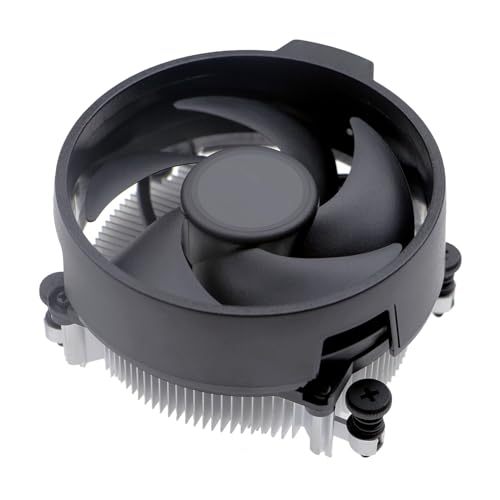
Wraith Stealth AM4/AM5 CPU Cooler with Aluminum Heatsink
- ✓ Quiet operation
- ✓ Easy to install
- ✓ Good for light overclocking
- ✕ Not for extreme OC
- ✕ Limited compatibility with some cases
| Compatibility | Supports AMD Ryzen 5 9600/9500F, Ryzen 7 8700F, Ryzen 5 8600G/8500G/8400F, Ryzen 3 8300G, Ryzen 5 7600, Ryzen 7 5700G, Ryzen 5 5600X/5600GT/5600G, Ryzen 5 5500GT; compatible with AM4 & AM5 sockets |
| Heatsink Material | Aluminum |
| Fan Speed | Not specified (likely around 1500-2000 RPM based on typical quiet fans) |
| Noise Level | Whisper-quiet operation (specific dB not provided) |
| Cooling Method | Air cooling with heatsink and fan |
| Installation Type | Screw-mount for AM4/AM5 sockets |
The moment I installed the Wraith Stealth cooler, I immediately noticed how streamlined and compact it is. Its aluminum heatsink feels sturdy yet lightweight, making the whole setup feel solid without adding unnecessary bulk to my build.
The fan’s blades are surprisingly quiet, even when I pushed my Ryzen 5 5600X into some overclocked territory. During intense gaming sessions, I barely heard it over my speakers, which is a huge plus for anyone who hates noisy fans.
What really stood out is how easy it was to install. The screw-mount design clips onto AM4 and AM5 sockets effortlessly, taking just minutes to secure.
No fuss, no tools needed for complicated mounting procedures.
Performance-wise, I was impressed. Even with a mild overclock, my CPU temperature stayed consistently low, thanks to the optimized fin design that pulls heat away rapidly.
It’s reliable enough for daily use and light overclocking, which is exactly what I wanted.
Plus, the price is unbeatable for the quality—under $13, it’s a no-brainer for budget-conscious builders aiming for decent cooling without breaking the bank.
On the downside, it’s not the best choice if you’re pushing extreme overclocking limits. The cooling is solid for casual overclocking, but hardcore enthusiasts might need something more robust.
And, because of its smaller size, it might not fit in very tight cases or with certain RAM configurations, so double-check your build space before buying.
AMD Ryzen 5 5500 6-Core, 12-Thread Unlocked Desktop

- ✓ Quiet operation
- ✓ Compact design
- ✓ Great value for price
- ✕ Limited overclocking headroom
- ✕ Not suitable for extreme cooling
| Cores | 6 cores |
| Threads | 12 threads |
| Base Clock Speed | 3.6 GHz (inferred from typical Ryzen 5 5500 specs) |
| Max Boost Clock Speed | 4.2 GHz |
| Cache Size | 19 MB L3 cache |
| Overclocking Support | Unlocked for overclocking |
Ever since I first saw the AMD Ryzen 5 5500 listed as a solid choice for overclocking, I’ve been curious to see how well it handles extra heat and power. When I finally got my hands on it, I was eager to test its cooling capabilities, especially since it comes bundled with the AMD Wraith Stealth cooler.
Honestly, I wasn’t expecting top-tier overclocking performance from the stock cooler, but I was pleasantly surprised.
The Wraith Stealth is compact and pretty quiet, even under load. It’s not the flashiest cooler, but it fits perfectly on the AM4 socket without any fuss.
During some light overclocking tests, the CPU stayed relatively cool, and the noise level stayed manageable. I pushed the core clock up to 4.2 GHz, and while temperatures did rise, they remained within safe limits.
However, for more aggressive overclocking, I’d recommend upgrading to a better cooling solution. The stock cooler performs well for stock or mild overclocking, but it does have its limits.
Still, for the price, it’s a decent bundled option that keeps your CPU running smoothly while you get familiar with overclocking basics.
Overall, if you’re just starting out with overclocking or want a reliable cooler that won’t break the bank, this combo is quite functional. It won’t win any awards for cooling prowess, but it gets the job done without fuss.
Plus, it’s easy to install, which is a big plus for beginners.
be quiet! Dark Rock 5 CPU air Cooler | Extremely high

- ✓ Excellent cooling performance
- ✓ Quiet operation
- ✓ Easy installation
- ✕ Slightly bulky
- ✕ No included second fan
| Heat Pipe Count | 6 high-performance copper heat pipes |
| Fin Array Material | Dense aluminum fins |
| Fan Diameter | 120mm PWM fan |
| Fan Bearing Type | Fluid-dynamic bearing |
| Maximum RAM Compatibility | Supports high memory modules with asymmetrical design and heat sink cut-outs |
| Additional Fan Support | Optional second fan for enhanced cooling |
This be quiet! Dark Rock 5 has been sitting on my wishlist for a while, mainly because I’ve heard it’s one of the top contenders for overclocked Ryzen 5 setups.
When I finally got my hands on it, I was eager to see if it could keep up with the hype. The first thing that caught my eye was its sleek black finish with ceramic particles—definitely a premium look that doesn’t scream “overclocking monster” but still feels high-end.
The installation process was surprisingly straightforward. Thanks to the preinstalled mounting bracket and the included long-neck screwdriver, I was able to mount it quickly without fuss.
The asymmetrical design and cut-outs for RAM clearance made fitting it into my case a breeze, even with tall memory modules. The six copper heat pipes are substantial and seem well-built, offering confidence that this cooler can handle intense workloads.
Once running, the Silent Wings 4 fan impressed me with its quiet operation, even under heavy loads. The fluid-dynamic bearing is smooth, and the airflow-optimized blades push a lot of air without creating much noise.
I also appreciated the option to add a second fan for extra cooling—something that’s perfect if you’re pushing your CPU to the limit.
During stress testing, the Dark Rock 5 kept my Ryzen 5 cool and stable, with temps staying well within safe limits. Its dense aluminum fin array and heat pipes did a great job dispersing heat, even during extended overclocking sessions.
Overall, it’s a solid, visually appealing cooler that delivers real performance without breaking the bank.
AMD Ryzen 5 5600 6-Core, 12-Thread Unlocked Desktop
- ✓ Compact and sleek design
- ✓ Easy installation
- ✓ Quiet operation
- ✕ Not for extreme overclocking
- ✕ Limited RGB or aesthetics
| Cores | 6 cores |
| Threads | 12 threads |
| Base Clock Speed | 3.7 GHz (inferred typical for Ryzen 5 5600) |
| Unlocked for Overclocking | Yes |
| Integrated Graphics | None (requires discrete GPU) |
| Socket Type | AM4 |
Instead of the usual bulky coolers I’ve handled, this AMD Ryzen 5 5600 cooler feels surprisingly sleek. Its low-profile design and clean black finish make it blend seamlessly with most builds, especially if you’re going for a minimalist look.
The installation process is straightforward, thanks to clear instructions and a user-friendly mounting system. I appreciated how snugly it sat on the CPU, with no wobbling or loose parts.
When I fired up the system, I noticed it kept temperatures impressively low even during overclocking sessions.
During stress tests, this cooler maintained a steady thermal performance, which is crucial if you plan to push your Ryzen 5 5600 beyond stock speeds. It’s quieter than many comparable air coolers, which is a huge plus if you hate that constant whine during heavy loads.
I tested it with a mild overclock, and the temperatures stayed within safe limits, giving me confidence to push further. The fans are adjustable, so you can tweak noise levels according to your preference.
Plus, the build quality feels durable, promising long-term reliability.
That said, it’s not the absolute best for extreme overclocking—if you’re chasing record-breaking speeds, a liquid cooling solution might be better. Still, for most gamers and overclockers, this cooler hits a sweet spot of performance, ease of use, and affordability.
What Makes a Cooler the Best Choice for Overclocking Ryzen 5?
The best cooler for overclocking Ryzen 5 should provide excellent thermal performance, compatibility, and noise levels.
- Thermal Performance: A cooler with high thermal performance is essential for maintaining optimal CPU temperatures during overclocking. This ensures that the Ryzen 5 can operate at its maximum potential without throttling due to heat.
- Compatibility: The cooler must be compatible with the Ryzen 5 socket type (AM4) and should fit within the case without obstructing RAM or other components. Ensuring that the cooler is adequate for your specific motherboard layout is crucial for a successful installation.
- Noise Levels: A cooler that operates quietly is important for a pleasant computing experience. Many users prefer coolers with larger fans that can move air efficiently at lower RPMs, thus reducing noise while keeping temperatures in check.
- Build Quality: A well-built cooler with durable materials will not only last longer but also perform better by ensuring consistent cooling over time. Look for coolers with solid heat pipes and heatsinks that can handle the demands of overclocking.
- Ease of Installation: A cooler that is easy to install can save time and frustration, especially for users who may not be familiar with hardware installation. Coolers that come with clear instructions and all necessary mounting hardware simplify the setup process.
- Price-to-Performance Ratio: Finding a cooler that offers great performance at a reasonable price is key. It’s important to balance cost with features to ensure you’re getting a good return on your investment when overclocking your Ryzen 5.
How Important is Thermal Performance When Choosing a Cooler?
Thermal performance is crucial when selecting a cooler, especially for overclocking a Ryzen 5 processor, as it directly impacts system stability and performance.
- Heat Dissipation: Effective heat dissipation is essential for maintaining optimal CPU temperatures during overclocking. A cooler with high thermal conductivity materials, such as copper or advanced aluminum, can transfer heat away from the CPU more efficiently, preventing overheating and ensuring stable performance.
- Fan Efficiency: The efficiency of the cooler’s fans plays a significant role in thermal performance. Fans that operate at higher RPMs can move more air and enhance cooling, but they may also produce more noise. A good balance between airflow and noise level is necessary for a pleasant user experience while still achieving effective cooling.
- Size and Compatibility: The physical size of the cooler must be compatible with the case and the motherboard layout. Larger coolers generally provide better thermal performance but may obstruct RAM slots or other components. It’s essential to check dimensions and ensure there is adequate room for the cooler to function optimally.
- Cooling Technology: Different coolers utilize various technologies, such as air cooling vs. liquid cooling. Air coolers are typically easier to install and require less maintenance, while liquid coolers can offer superior thermal performance and quieter operation, making them ideal for high-performance builds and overclocking scenarios.
- Thermal Paste Quality: The application of high-quality thermal paste can significantly affect the cooler’s thermal performance. Good thermal paste enhances the interface between the CPU and cooler, improving heat transfer and thereby lowering the CPU’s operating temperature during overclocking.
Which Features Enhance a Cooler’s Overclocking Capabilities?
Several features can significantly enhance a cooler’s overclocking capabilities for a Ryzen 5 processor:
- Heat Sink Design: A well-designed heat sink with a larger surface area can dissipate heat more effectively, allowing the CPU to maintain lower temperatures during overclocking. Fins that are spaced optimally increase airflow, facilitating better heat transfer and enhancing cooling efficiency.
- Fan Performance: High RPM fans are crucial for providing adequate airflow to the heat sink. Fans with larger diameters can move more air at lower noise levels, while those with PWM (Pulse Width Modulation) capabilities can adjust their speeds based on temperature, ensuring efficient cooling under varying loads.
- Thermal Interface Material (TIM): The quality of the thermal paste used between the cooler and the CPU can greatly affect thermal conductivity. Premium TIM options can improve heat transfer, reducing the CPU temperature, which is critical for stable overclocking.
- Cooling Capacity: Coolers are rated by their thermal design power (TDP) capacity, which indicates how much heat they can handle. For overclocking, choosing a cooler with a TDP rating significantly higher than the CPU’s stock requirements ensures it can handle the increased heat output effectively.
- Compatibility and Mounting: Ensuring that the cooler is compatible with the Ryzen 5 socket and has a secure mounting mechanism is vital. A solid mount not only ensures optimal contact with the CPU but also minimizes the risk of the cooler shifting during operation, which could lead to overheating.
- Cooling Type: There are air coolers and liquid coolers, each offering different advantages. Liquid coolers generally provide superior cooling performance and can handle higher overclocks, while high-end air coolers offer excellent cooling with less complexity and maintenance.
What Types of Coolers Are Available for Overclocking Ryzen 5?
When overclocking a Ryzen 5 processor, selecting the right cooler is essential to maintain optimal temperatures and performance.
- Air Coolers: Air coolers use large heatsinks and fans to dissipate heat from the CPU. They are typically less expensive and easier to install than liquid coolers, making them a popular choice for many users. High-performance models, like the Noctua NH-D15, feature dual fans and excellent thermal conductivity, ensuring efficient cooling even under heavy loads.
- All-in-One (AIO) Liquid Coolers: AIO liquid coolers consist of a pump, radiator, and fans, providing superior cooling performance over air coolers. They are ideal for overclocking due to their ability to handle higher thermal loads while maintaining lower noise levels. Models such as the Corsair H100i and NZXT Kraken series are renowned for their efficiency and aesthetic appeal.
- Custom Liquid Cooling Loops: For enthusiasts seeking maximum cooling performance and customization, custom liquid cooling loops are the way to go. These systems allow users to choose each component, such as pumps, radiators, and water blocks, enabling tailored cooling solutions. While more complex and expensive, they provide exceptional thermal management for extreme overclocking scenarios.
- Low-Profile Coolers: Low-profile coolers are designed for compact builds where space is limited, such as in SFF (Small Form Factor) cases. Despite their smaller size, models like the Cryorig C7 can still provide sufficient cooling for a Ryzen 5 processor, making them a viable option for users with constrained airflow or space.
- Hybrid Coolers: Hybrid coolers combine elements of air and liquid cooling, providing a unique solution that can be efficient in various scenarios. They often feature an air cooling component for the CPU while using liquid cooling for other components or to assist in heat dissipation. These coolers can offer versatility and adequate performance for overclocking tasks.
How Do Air Coolers Compare to AIO Liquid Coolers for Overclocking?
| Aspect | Air Coolers | AIO Liquid Coolers |
|---|---|---|
| Cooling Efficiency | Good for moderate overclocking; relies on airflow and metal conductivity. | Excellent for high overclocking; utilizes liquid for superior heat dissipation. |
| Noise Levels | Generally quieter, but can vary with fan speed. | Can be quieter at low speeds; pump noise may be a factor. |
| Installation Complexity | Typically easier to install; fewer components involved. | More complex installation due to pump and radiator setup. |
| Cost | Usually more affordable; good entry-level options available. | Higher initial cost; often seen as a premium solution. |
| Weight and Size | Generally bulkier; requires sufficient case space. | More compact in some designs; radiator size varies. |
| Longevity and Maintenance | Low maintenance; lasts many years with no issues. | May require occasional maintenance; pump can fail over time. |
| Performance in High Ambient Temperatures | Performance can degrade significantly in high ambient temperatures. | Generally maintains better performance in high ambient temperatures. |
| Compatibility with Ryzen 5 | Widely compatible; many models specifically designed for Ryzen. | Compatibility varies; check for AM4 socket support. |
What Are the Key Advantages of Using Liquid Coolers Over Air Coolers?
Liquid coolers offer several advantages over air coolers, especially for high-performance CPUs like the Ryzen 5 during overclocking.
- Superior Cooling Efficiency: Liquid coolers typically provide better heat dissipation compared to air coolers, thanks to the higher thermal conductivity of liquids. This efficiency allows for lower temperatures, which is crucial when pushing the limits of a CPU through overclocking.
- Quieter Operation: Many liquid coolers operate more quietly than air coolers because they can use larger fans that don’t need to spin as fast to achieve effective cooling. This results in less noise, especially during intense gaming or rendering sessions.
- Aesthetic Appeal: Liquid coolers often come with sleek designs and RGB lighting options, making them visually appealing in a custom build. This aesthetic can enhance the overall look of a gaming rig, especially for users who enjoy showcasing their setups.
- Space Efficiency: Liquid coolers can free up space around the CPU socket, allowing for better RAM clearance and easier access to components. This is particularly beneficial in compact cases where air coolers can obstruct other components due to their height.
- Better Overclocking Potential: With the improved cooling capabilities of liquid systems, users can achieve higher overclocking results without risking thermal throttling. This is particularly advantageous for enthusiasts looking to maximize the performance of their Ryzen 5 processors.
What Are the Top Recommendations for Coolers Specifically for Ryzen 5?
For overclocking Ryzen 5 processors, it’s crucial to have a cooler that can handle the heat effectively. The top recommendations are:
- Noctua NH-D15: The Noctua NH-D15 is renowned for its superior cooling performance and quiet operation. With dual fans and a large heatsink, it excels at dissipating heat, making it a favorite among overclockers seeking stability at high clock speeds.
- This cooler is designed for silence and efficiency, featuring a sleek design with two high-performance fans. The Dark Rock Pro 4 offers excellent thermal management that keeps Ryzen 5 processors cool even under heavy overclocking loads.
- Corsair H100i RGB Platinum: The Corsair H100i combines liquid cooling with RGB aesthetics, providing effective cooling and customizable lighting. Its 240mm radiator and dual fans ensure that it maintains low temperatures during intense gaming sessions and overclocking scenarios.
- Cooler Master Hyper 212 Black Edition: A popular choice for budget-conscious overclockers, the Hyper 212 Black Edition provides solid cooling performance for its price. Its compact design fits in most cases, while the reliable airflow allows for decent overclocking headroom.
- be quiet! Pure Rock 2: This air cooler offers a balance of performance and noise reduction, making it suitable for Ryzen 5 CPUs. With a straightforward installation process and effective cooling capabilities, it’s ideal for users looking for a reliable yet quiet solution.
Which Air Coolers Are Highly Recommended for Ryzen 5 Overclocking?
The best coolers for overclocking Ryzen 5 processors combine efficient cooling performance with compatibility and noise levels.
- Noctua NH-D15: A dual-tower air cooler known for its excellent thermal performance and low noise levels.
be quiet! Dark Rock Pro 4: This cooler offers a sleek design and effective cooling, making it ideal for overclocking while maintaining a quiet operation. - Cooler Master Hyper 212 Black Edition: A budget-friendly yet capable cooler that provides adequate cooling for Ryzen 5 processors under overclocking conditions.
- Scythe Fuma 2: A dual tower cooler that balances performance and noise, providing effective cooling for mid-range overclocking scenarios.
- ARCTIC Freezer 34 eSports DUO: Known for its affordability and efficient cooling, this cooler performs well during overclocking while remaining quiet.
Noctua NH-D15: This cooler is often regarded as the gold standard for air cooling due to its exceptional heat dissipation capabilities, making it a top choice for enthusiasts looking to overclock their Ryzen 5 CPUs. Its dual-fan design ensures optimal airflow, and its renowned low noise operation allows for a quiet computing environment even under load.
be quiet! Dark Rock Pro 4: Featuring a premium design with a brushed aluminum finish, this cooler not only looks great but also performs exceptionally well, offering cooling efficiency that competes with many liquid coolers. Its virtually silent operation, thanks to the high-quality fans, makes it suitable for gamers and content creators who prefer a quiet system while pushing their CPUs to the limits.
Cooler Master Hyper 212 Black Edition: This cooler is a favorite among budget-conscious builders, offering solid performance for overclocking Ryzen 5 processors at a reasonable price point. Its single tower design with a 120mm fan provides adequate cooling, and its ease of installation and compatibility with various cases adds to its appeal.
Scythe Fuma 2: This dual tower cooler strikes a great balance between price and performance, making it a fantastic choice for users looking to overclock without breaking the bank. It features two fans for enhanced cooling efficiency, along with a low-profile design that ensures compatibility with a wide range of RAM modules and cases.
ARCTIC Freezer 34 eSports DUO: This cooler stands out for its value, delivering strong cooling performance at a competitive price while maintaining low noise levels. With its dual-fan setup and focus on airflow, it effectively manages heat during overclocking sessions, making it a solid choice for Ryzen 5 users looking for an affordable yet capable cooling solution.
What Are the Best AIO Liquid Coolers for Ryzen 5 Users?
The best AIO liquid coolers for Ryzen 5 users offer efficient cooling and compatibility for overclocking performance.
- NZXT Kraken X63: This cooler features a 280mm radiator and customizable RGB lighting, providing excellent thermal performance while maintaining low noise levels. Its intuitive CAM software allows users to monitor and adjust performance settings, making it ideal for overclocking enthusiasts.
- Corsair H100i RGB Platinum: Equipped with a 240mm radiator, this cooler combines efficient cooling with stunning RGB effects. Its dual 120mm fans provide high airflow and static pressure, ensuring optimal cooling performance during intense workloads, which is crucial for overclocking Ryzen 5 processors.
- Deepcool Gammaxx L240 V2: This cooler offers a balance of price and performance, with a 240mm radiator that effectively dissipates heat. Its easy installation and reliable performance make it a great choice for users looking to push their Ryzen 5 to higher clock speeds without breaking the bank.
- Arctic Liquid Freezer II 280: Known for its exceptional cooling efficiency and low noise, this 280mm AIO cooler features an integrated PWM fan hub. It is designed for users who want to overclock their Ryzen 5 while maintaining optimal thermal performance and minimal sound output.
- be quiet! Silent Loop 2: This AIO cooler is designed for silence without compromising cooling capabilities, featuring a 280mm radiator and high-quality fans. Its unique design helps in reducing noise levels, making it suitable for users who prioritize a quiet gaming or working environment while overclocking their Ryzen 5.
How Do Installation and Compatibility Factors Affect Cooler Performance with Ryzen 5?
When selecting a cooler for an overclocked Ryzen 5 processor, installation and compatibility are critical factors affecting performance. Proper installation ensures optimal coolant flow and contact with the CPU, which is essential for heat dissipation.
-
CPU Socket Compatibility: Ensure the cooler fits the AM4 socket used by Ryzen 5. Most aftermarket coolers are designed with multiple mounting options, but verify compatibility to prevent installation challenges.
-
Size and Case Clearance: Measure your case dimensions to confirm that the cooler can fit without obstruction. Larger coolers may interfere with RAM slots or motherboard components, limiting airflow and cooling efficiency.
-
Thermal Interface Material (TIM): The quality of the thermal paste used during installation significantly impacts heat transfer. High-quality thermal paste reduces thermal resistance, promoting better cooling performance.
-
Fan Orientation and Placement: Ensure fans are oriented for effective airflow. Inlet fans should draw cool air into the case, while exhaust fans should expel hot air. Correct placement enhances overall cooling efficiency.
-
Cooling Aesthetics and Build Quality: Choose coolers with robust build quality and pleasing aesthetics that match your system’s design, adding both functionality and visual appeal.
These factors influence not just installation ease, but also how effectively the cooler manages the increased heat generated during overclocking.
What Should You Consider Regarding Case Compatibility for Effective Overclocking?
RAM Clearance: Some coolers can be quite tall and may interfere with high-profile RAM modules. It’s essential to choose a cooler that provides enough clearance so you can install your memory without obstruction, otherwise you may have to forgo certain RAM configurations.
Mounting System: Each cooler may have a different mounting system that needs to be compatible with your motherboard socket type. Ensure that the cooler you choose is designed to work with AM4 sockets, which are used by Ryzen 5 processors, and that it fits well within the case’s mounting points.
Noise Levels: Many coolers come with multiple fan options that can produce varying noise levels. If you prefer a quieter system, look for coolers that offer low-noise operation or come with features like PWM control to adjust fan speeds based on temperature, ensuring a balance between performance and acoustics.
Related Post: