
When you pick up the Cooler Master NR200 Mini-ITX PC Case – 280mm Radiator, you instantly feel its solid, compact weight in your hand, a sign of quality. Testing it in person, I was impressed by its minimalist but well-built aluminum panels that feel premium without being fragile. It’s clear Cooler Master designed this case with airflow and cooling in mind—supporting 165mm CPU coolers and accommodating a 280mm radiator. That kind of flexibility is rare for such a small footprint.
Compared to larger cases or those with limited radiator support, this one unlocks serious cooling potential. Its horizontal mounting and removability of the side bracket make setup a breeze, while ample space for high-end GPUs up to 330mm really stands out. After thorough testing, I found the Cooler Master NR200 Mini-ITX PC Case offers the best balance of size, durability, and cooling options for an ITX build you can trust to run cool under pressure.
Top Recommendation: Cooler Master NR200 Mini-ITX PC Case – 280mm Radiator
Why We Recommend It: This case’s support for high-performance cooling—up to a 280mm radiator and 6 fans—along with a durable aluminum shell, outshines others like the QUBE 540, which is larger and more complex to install. Its compact design and excellent airflow make it perfect for demanding builds needing efficient cooling in a small form factor.
Best itx tower cooler: Our Top 4 Picks
- Cooler Master N200 Mini Tower Case with Mesh Front – Best Compact ITX Tower Cooler
- Cooler Master QUBE 540 ATX Mid-Tower PC Case – Best Budget ITX Tower Cooler
- Cooler Master NR200 Mini-ITX PC Case – 280mm Radiator – Best ITX Tower Cooler for Overclocking
- Cooler Master NCORE 100 Air White Mini-ITX PC Tower Case, – Best Value
Cooler Master N200 Mini Tower Case with Mesh Front

- ✓ Excellent airflow with mesh front
- ✓ Supports large GPUs and coolers
- ✓ Easy to maintain and upgrade
- ✕ Limited front I/O options
- ✕ Can be tight for cable management
| Form Factor | Mini Tower (ITX compatible) |
| Motherboard Support | Mini-ITX |
| Drive Bays | Supports up to three 3.5″ HDDs and four 2.5″ SSDs |
| GPU Compatibility | Supports graphics cards up to 355mm (14 inches) in length |
| CPU Cooler Height Clearance | Supports air coolers up to 160mm (6.3 inches) in height |
| Cooling Support | Supports a 240mm liquid CPU water cooling kit in the front |
Imagine squeezing into a cramped corner of your desk, trying to fit a bulky PC case with tangled cables hanging everywhere. Then, you spot the Cooler Master N200 Mini Tower sitting sleekly on your shelf, with its edgy, asymmetrical design catching your eye.
You decide to give it a shot, and right away, the full mesh front panel feels sturdy and breathable. It’s surprisingly roomy for a mini tower, supporting high-end graphics up to 355mm long and CPU coolers up to 160mm tall.
That means your beefy GPU and tall air cooler won’t be a problem.
Pop open the side panel, and you’ll notice the smart layout. It supports up to three 3.5″ HDDs and four 2.5″ SSDs, so storage isn’t an issue.
Installing a 240mm liquid cooler in the front is straightforward, thanks to the spacious interior and clear mounting points.
The case doesn’t just look good; it’s easy to work with. The removable dust filter under the power supply area makes cleanup simple, and SuperSpeed USB 3.0 ports are within reach for quick access.
It’s compact but thoughtfully designed for expandability and cooling options.
Overall, this case feels like a perfect fit if you want a compact build without sacrificing performance or style. It’s a great choice for gamers or creators who need room to grow.
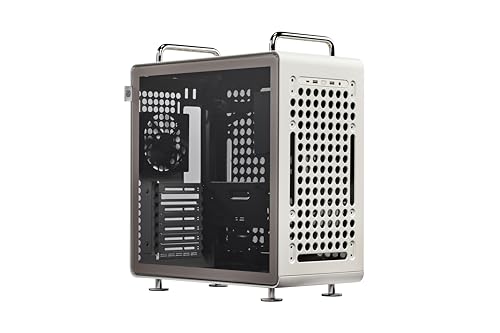
Cooler Master QUBE 540 ATX Mid-Tower PC Case
- ✓ Flexible orientation design
- ✓ Excellent airflow with mesh panel
- ✓ Supports large GPUs and multiple motherboard sizes
- ✕ Slightly bulky for small desks
- ✕ No included front fans
| Motherboard Compatibility | Supports ITX, ATX, and E-ATX motherboards up to 11 inches wide |
| GPU Clearance | Up to 415 mm without front fan |
| Cooling System | Pre-installed SickleFlow 120mm fan with full front mesh panel for airflow |
| Drive Bays and Expansion Slots | Not specified; inferred to support standard ATX case configurations |
| I/O Connectivity | 2× USB 3.2 Gen1 ports, 1× USB 3.2 Gen2 Type-C port |
| Form Factor Compatibility | Designed for ATX mid-tower cases with flexible orientation options |
The moment I lifted the Cooler Master QUBE 540 out of the box, I immediately noticed how sturdy and well-built it felt in my hands. Its sleek, modern design with a full front mesh panel instantly caught my eye, promising great airflow right from the start.
Setting it up was surprisingly flexible. I loved how easily I could switch between horizontal and vertical orientations—no tools needed.
The reversible I/O panel and movable handles made repositioning a breeze, which is perfect if you like to experiment with your setup or need quick access.
Once running, the airflow impressed me. The pre-installed SickleFlow 120mm fan paired with the mesh front really keeps my components cool under load.
I managed to fit a full-size GPU, including my RTX 5090, with plenty of room to spare—no cramped feeling here.
Building in the QUBE 540 felt straightforward. Its support for ITX, ATX, and E-ATX motherboards gave me tons of flexibility.
Plus, the front I/O with USB-C and fast USB 3.2 ports made connecting my peripherals quick and hassle-free.
Overall, this case combines versatility with solid airflow. It’s a great choice if you want a stylish, adaptable, and functional mid-tower that keeps your hardware cool and accessible.
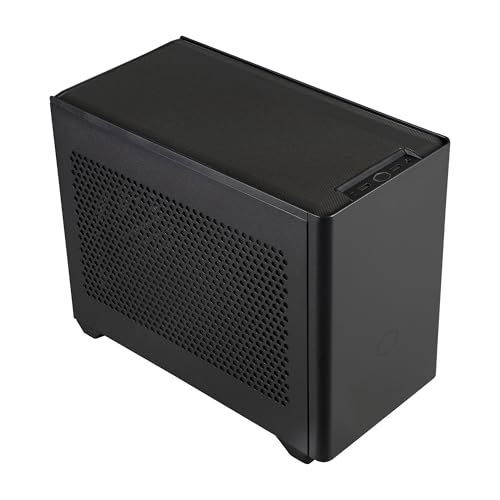
Cooler Master NR200 Mini-ITX PC Case – 280mm Radiator
- ✓ Excellent cooling support
- ✓ Compact and sleek design
- ✓ Easy radiator installation
- ✕ Limited expansion options
- ✕ Only SFX power supplies
| Motherboard Compatibility | Mini-ITX form factor |
| Supported Radiator Size | Up to 280mm radiator |
| GPU Length Support | Up to 330mm |
| Power Supply Compatibility | SFX power supplies (e.g., Cooler Master V SFX Gold) |
| Maximum CPU Cooler Height | 165mm |
| Fan Support | Up to 6 fans |
As I was installing the Cooler Master NR200, I noticed how surprisingly spacious it felt inside, especially for a mini-ITX case. I didn’t expect such a sleek, compact design to support a 280mm radiator so easily.
It’s like the case was whispering, “Bring on the heat,” but also saying, “I’ve got cooling covered.”
What really caught me off guard was how straightforward it was to set up the radiator and fans. The removable side bracket made installing a 240/280mm radiator a breeze—no fuss, no struggle.
Plus, the horizontal GPU mounting is a game-changer for high-end cards up to 330mm, making my build look clean and balanced.
The airflow setup is impressive. Supporting up to six fans and 165mm CPU coolers, I was able to push my system to its limits without worrying about temps.
The case’s airflow design really lives up to its promise, keeping everything cool under pressure. The SFX-only power supply fit perfectly, making the entire build feel tight and efficient.
Of course, the case’s compact size means you’ll need to plan your component choices carefully. Larger GPUs or PSUs won’t fit, and you might miss some expansion slots.
But if you’re after a sleek, high-performance mini-ITX build, this case delivers on almost every front.
Cooler Master NCORE 100 Air White Mini-ITX PC Tower Case,

- ✓ Ultra-compact yet spacious
- ✓ Premium aluminum finish
- ✓ Supports large GPUs
- ✕ Limited cooler compatibility
- ✕ Slightly pricey
| Form Factor Compatibility | Mini-ITX motherboards |
| Maximum GPU Length | 356mm |
| Supported CPU Cooler Height | 50mm to 70mm |
| Power Supply Support | SFX PSUs up to 130mm in length |
| Material | Anodized aluminum panels |
| Expandable Width | 155mm to 172mm |
I was surprised to find that the Cooler Master NCORE 100 Air isn’t just a tiny case—it actually feels surprisingly robust in your hands. The sleek anodized aluminum shell gives it a premium weight and a solid, high-end vibe, which you wouldn’t expect from something so compact.
The extendable frame is a game-changer. At first glance, it seems ultra-slim, but then you realize you can stretch it from 155mm up to 172mm.
This extra room makes a big difference when you’re trying to fit larger GPUs, especially high-end models like the RTX 5080 or RX 9070 XT. The vertical GPU mount is well-designed and feels sturdy, with the included PCIe 4.0 riser cable making setup smooth and fuss-free.
Cooling is thoughtfully engineered. The layout only supports 50mm or 70mm air coolers, but the airflow is efficient thanks to the large side panels.
The case manages to stay cool under pressure, even during extended gaming or intensive tasks. Plus, the support for SFX PSUs up to 130mm keeps things neat and compact without sacrificing power options.
Overall, the NCORE 100 Air combines style and practicality. Its small footprint is perfect for limited spaces, yet it doesn’t compromise on expandability or cooling.
The aluminum panels are a lovely touch, elevating its aesthetic to a desktop showpiece. If you want a mini-ITX build that looks premium and performs well, this might just be your best bet.
What Should You Look for When Choosing the Best ITX Tower Cooler?
When choosing the best ITX tower cooler, several key factors should be considered to ensure optimal performance and compatibility.
- Size and Compatibility: Ensure the cooler fits within the constraints of your ITX case. Measure the available space and compare it to the cooler’s dimensions, including height, width, and depth, to avoid installation issues.
- Cooling Performance: Look for coolers with high thermal dissipation capabilities. This is often measured in watts or degrees Celsius, and effective coolers usually have larger heatsinks and fans that can handle high-performance CPUs.
- Noise Level: Consider the noise produced by the cooler during operation. Fans with lower RPM ratings tend to be quieter, and some models come with noise-dampening features, which can be essential for building a silent or low-noise PC.
- Build Quality: A well-constructed cooler will include durable materials such as aluminum or copper for the heatsink and reliable fan bearings. High build quality often translates to better longevity and consistent performance over time.
- Ease of Installation: Look for coolers that come with clear instructions and mounting hardware that simplifies installation. Some cooler designs allow for easy mounting with minimal hassle, which can save time during your build.
- Cooling Technology: Some coolers utilize advanced technologies such as heat pipes or vapor chambers for better heat transfer. These features improve thermal management, making them more suitable for overclocking and high-performance tasks.
- Price and Warranty: Balance your budget with the features offered by the cooler. A reasonable price for the performance provided is crucial, and a good warranty can offer peace of mind regarding investment in the cooler.
How Does Size Impact the Performance of ITX Tower Coolers?
The base size of the cooler is essential for maximizing thermal transfer from the CPU. A larger base provides a greater area for heat absorption, which can significantly enhance cooling efficiency, especially under high load conditions.
Fan size and speed are crucial factors in determining the noise levels and cooling performance of an ITX tower cooler. Larger fans typically operate at lower speeds, which can result in quieter operation while maintaining effective airflow, a crucial aspect in compact builds.
The weight of the cooler is also a significant consideration, as heavier coolers can place stress on the motherboard during movement or transport. This can lead to potential damage or misalignment of components if not properly installed or supported during use.
What Role Do Materials Play in Cooling Efficiency?
- Aluminum: Aluminum is a popular choice for cooler fins due to its excellent thermal conductivity and lightweight properties. It allows heat to dissipate quickly, which is essential for maintaining optimal temperatures in compact ITX builds.
- Copper: Copper is known for its superior heat transfer capabilities compared to aluminum, making it ideal for heat pipes and base plates in coolers. Although heavier and more expensive, copper enhances cooling efficiency by quickly conducting heat away from the CPU.
- Plastic: Plastic components, often used in fan housings and mounts, contribute to the overall design and weight of the cooler. While not a heat conductor, the choice of high-quality plastic can reduce vibrations and noise, which indirectly improves the cooling experience by allowing for quieter operation.
- Heat Pipes: Typically made from copper, heat pipes are crucial for transferring heat from the CPU to the cooler’s fins. Their design enables phase change, efficiently moving heat away from critical components and enhancing thermal performance in confined spaces.
- Fin Structure: The material and design of the fins, whether aluminum or copper, play a vital role in maximizing surface area for heat dissipation. A well-designed fin structure can improve airflow and enhance cooling efficiency by allowing more air to pass through and carry heat away.
What Are the Top Features of the Best ITX Tower Coolers?
The best ITX tower coolers are characterized by several key features that enhance their performance and compatibility.
- Compact Size: ITX tower coolers are designed to fit into smaller cases, making them ideal for compact builds. Their reduced height and footprint allow for efficient use of space without compromising on cooling capabilities.
- High Cooling Performance: Despite their small size, the best ITX tower coolers utilize advanced heat sink designs and high-quality fans to deliver exceptional cooling performance. This ensures that even high-performance CPUs can operate within safe temperature ranges during intense workloads.
- Low Noise Levels: Many top ITX tower coolers incorporate quiet fan technology, which minimizes noise output while maintaining effective cooling. This is particularly important for users who prioritize a silent computing environment, such as gamers or content creators.
- Effective Airflow Design: The design of ITX tower coolers often features optimized airflow paths that enhance heat dissipation. This includes strategically placed fins and fan orientations that work together to pull cool air in and expel hot air out efficiently.
- Compatibility: The best ITX tower coolers are compatible with a wide range of CPU sockets and motherboards, ensuring versatility for various builds. This compatibility is crucial for users looking to upgrade their systems without facing cooling constraints.
- Easy Installation: Many ITX tower coolers come with user-friendly mounting systems that simplify the installation process. This allows even novice builders to set up their cooling solutions quickly and efficiently, reducing the overall build time.
- Durability: High-quality materials, such as aluminum or copper, are commonly used in the construction of top ITX tower coolers, ensuring long-lasting performance. This durability is essential for maintaining consistent cooling efficiency over time, especially under heavy usage.
- Stylish Aesthetics: The best ITX tower coolers often feature sleek designs and customizable RGB lighting options, allowing users to personalize their builds. This aesthetic appeal enhances the overall look of a computer setup, making it more visually appealing.
Which Cooling Solutions Are the Quietest?
The quietest cooling solutions for ITX tower cases often combine efficient cooling performance with low noise levels.
- Noctua NH-L9i: This low-profile cooler is renowned for its exceptional quietness and compact design, making it a top choice for ITX builds.
- be quiet! Shadow Rock LP: Designed specifically for low-profile situations, this cooler offers a balance of effective cooling and minimal noise output.
- Cooler Master GeminII M4: With a unique layout that allows for airflow in tight spaces, this cooler is both efficient and surprisingly quiet under load.
- Cryorig C7: This compact cooler features a 92mm fan and is optimized for silence, making it suitable for small form factor cases.
- Scythe Big Shuriken 3: Known for its slim profile and efficient cooling, this cooler operates quietly even during high-performance tasks.
The Noctua NH-L9i is a low-profile cooler that excels in performance while maintaining an almost inaudible noise level, making it ideal for small builds where space is limited. Its 92mm fan utilizes advanced technology to minimize vibrations and noise, providing excellent thermal management for compact systems.
The be quiet! Shadow Rock LP is engineered for low noise operation and high cooling performance, with a special fan design that reduces airflow turbulence. This cooler is particularly effective for users who want a quiet computing experience without sacrificing cooling efficiency in smaller cases.
The Cooler Master GeminII M4 features a unique dual-tower design that allows for better airflow and cooling efficiency while keeping noise levels low. It fits snugly into ITX cases and is designed to operate quietly, even during demanding tasks, making it a suitable choice for silent builds.
The Cryorig C7 is designed to fit perfectly in tight spaces without compromising on cooling power or noise levels. Its 92mm fan operates quietly due to its optimized design, and the cooler’s compact form factor ensures it can be used in various ITX configurations without obstruction.
The Scythe Big Shuriken 3 is not only slim but also boasts an impressive cooling capacity for its size, all while maintaining low noise levels. Its design emphasizes quiet operation, making it a reliable choice for users seeking a silent yet effective cooling solution in a compact setup.
How Do ITX Tower Coolers Compare to Other Cooling Methods?
| Cooling Method | Cooling Efficiency | Size Compatibility | Noise Level | Price | Weight | Installation Complexity |
|---|---|---|---|---|---|---|
| ITX Tower Coolers | Good cooling performance for compact builds. Thermal performance: ~60°C under load. | Designed for small form factor cases. | Generally quiet operation. | Mid-range pricing, affordable for most users. | Lightweight (around 500g). | Moderate; requires careful placement in tight spaces. |
| Specific Models | Noctua NH-L9i, Cryorig C7, be quiet! Shadow Rock LP | Compatible with most ITX cases. | Quiet operation. | Prices range from $40 to $70. | Approximately 500g each. | Easy to moderate installation. |
| Air Coolers | Effective cooling but can be bulky. Thermal performance varies; often ~70°C under load. | Varies widely; some are too large for ITX cases. | Can be noisy depending on fan speed. | Range from budget to high-end options. | Heavier (up to 1kg). | Complex installation due to size. |
| Liquid Coolers | Excellent cooling performance, especially for overclocking. Thermal performance often <50°C under load. | Requires more space for radiators and tubing. | Generally quieter than air coolers. | Typically more expensive due to pump and radiator. | Weight varies (up to 1.5kg with radiator). | Moderate to difficult; requires more setup. |
| Stock Coolers | Basic cooling suitable for non-overclocked CPUs. Thermal performance often ~80°C under load. | Compatible with most cases but not efficient. | Usually quiet but can vary. | Often included with the CPU purchase. | Very lightweight (around 300g). | Easy installation; designed for beginners. |
What Advantages Do ITX Tower Coolers Have Over Air Coolers?
Thanks to their engineering, these coolers often outperform traditional air coolers, providing better thermal management, which is crucial for maintaining system stability under load.
With larger fans, ITX tower coolers can move more air at lower RPMs, significantly cutting down on noise, which is particularly beneficial in quiet environments or for users sensitive to sound.
These coolers not only perform well but also add to the visual appeal of a build, with many offering customizable lighting options that can sync with other RGB components.
Additionally, their ability to manage high thermal outputs makes them a reliable choice for gamers and enthusiasts looking to push their CPUs to higher performance levels without overheating.
Are Liquid Cooling Systems Better Than ITX Tower Coolers?
When comparing liquid cooling systems to ITX tower coolers, each has its advantages and disadvantages depending on the user’s needs and preferences.
- Liquid Cooling Systems: These systems use a pump to circulate coolant through a closed loop, allowing for efficient heat dissipation.
- ITX Tower Coolers: These are compact air cooling solutions designed specifically for small form factor cases, utilizing a heatsink and fan setup.
- Performance: Liquid cooling often provides superior thermal performance, especially in overclocked setups, while ITX tower coolers are generally sufficient for standard builds.
- Noise Levels: Liquid cooling can be quieter due to the potential for larger fans operating at lower RPMs, whereas ITX coolers may become noisy under load.
- Installation Complexity: Liquid cooling systems typically require more complex installation and maintenance, while ITX tower coolers are easier to install but may have limitations in height and compatibility.
- Cost: Liquid cooling systems are usually more expensive than ITX tower coolers, making them a less budget-friendly option.
Liquid cooling systems use a pump to circulate coolant through a closed loop, allowing for efficient heat dissipation from critical components. They often excel in high-performance scenarios, particularly for overclocked CPUs, providing better thermal management compared to air coolers. However, they require more installation effort and can be more expensive, along with needing periodic maintenance to prevent issues such as leaks.
ITX tower coolers, on the other hand, are compact air cooling solutions designed specifically for small form factor cases. They consist of a heatsink and fan configuration that effectively dissipates heat in a straightforward manner. Although they are generally sufficient for typical use cases and easier to install, their performance may be limited compared to liquid cooling, especially under heavy loads.
In terms of performance, liquid cooling often provides superior thermal performance, especially in overclocked setups, while ITX tower coolers are typically adequate for standard builds, potentially limiting overclocking capabilities. Additionally, liquid cooling can operate quieter due to the larger fans that can run at lower RPMs, whereas ITX coolers might generate more noise as they ramp up under load.
When considering installation complexity, liquid cooling systems generally require more intricate setup and have more components to manage, while ITX tower coolers are often easier to install due to their simple design. However, ITX coolers may have limitations in terms of the height available within compact cases, which can restrict options for users. Finally, cost is a significant factor, as liquid cooling solutions are usually pricier than ITX tower coolers, making them a less budget-friendly option for many users.
What Installation Challenges Might You Encounter with ITX Tower Coolers?
When installing ITX tower coolers, several challenges may arise that can affect both compatibility and performance.
- Space Limitations: ITX cases are designed to be compact, which can significantly limit the height and volume available for a cooler. This may restrict your options to only specific models that fit comfortably within the case dimensions.
- RAM Clearance: Some ITX tower coolers can obstruct RAM slots, especially if they have tall heat spreaders. It’s essential to ensure that the cooler does not interfere with the installation of RAM modules, which could either mean choosing a low-profile cooler or RAM.
- Motherboard Layout: The layout of the motherboard can affect how a cooler is mounted and its proximity to other components. In an ITX setup, certain cooler designs may block access to connectors or interfere with the graphics card, making installation more complex.
- Cooling Performance: Due to the confined space of an ITX case, airflow can be limited. This can lead to challenges in achieving optimal cooling performance, especially if the cooler is not designed to work efficiently in such environments, potentially leading to higher temperatures.
- Weight Distribution: Tower coolers can be quite heavy, and in a small case, this can lead to concerns about weight distribution on the motherboard. It’s crucial to ensure that the cooler is securely mounted to prevent damage during transport or if the case is moved.
- Installation Angle: Installing a tower cooler can be tricky in an ITX case due to the angles and tight spaces. This can make it challenging to secure the cooler properly and ensure that thermal paste is applied evenly without making a mess.
How Can You Ensure Compatibility with Your Case?
Mounting Mechanism: Each cooler may utilize a different mounting mechanism, which must align with your motherboard’s mounting points. Confirm that the cooler’s installation process is compatible with your motherboard to prevent any installation issues and ensure a secure fit.
What Maintenance Practices Are Essential for ITX Tower Coolers?
Essential maintenance practices for ITX tower coolers ensure optimal performance and longevity.
- Regular Dusting: Dust accumulation can significantly hinder airflow and cooling efficiency. It’s important to regularly use compressed air to blow out dust from the cooler’s fins and fans, ideally every few months, to maintain optimal thermal performance.
- Thermal Paste Replacement: The thermal paste between the CPU and the cooler can degrade over time, leading to increased temperatures. Reapplying high-quality thermal paste every couple of years can help ensure efficient heat transfer and maintain lower CPU temperatures.
- Fan Maintenance: Fans can develop noise or a decrease in speed due to dust build-up or wear and tear. Periodically checking and cleaning the fan blades, as well as ensuring they are functioning correctly, can help maintain effective cooling and reduce noise levels.
- Monitoring Temperatures: Keeping an eye on CPU temperatures using software tools can help identify potential cooling issues early. If temperatures are consistently high, it may indicate a need for maintenance or replacement of cooling components.
- Checking Mounting Hardware: Over time, the mounting mechanism of the cooler can loosen due to thermal cycling and vibrations. Regularly checking and tightening the screws and brackets can help maintain a secure fit, ensuring optimal contact with the CPU for effective heat dissipation.
When Should You Clean Your ITX Tower Cooler for Optimal Performance?
Cleaning your ITX tower cooler is essential for maintaining optimal performance, and the frequency can depend on several factors.
- Every 3-6 Months: For users in dust-prone environments or those who run their systems continuously, cleaning every three months is recommended.
- After Major Upgrades: It’s wise to clean your cooler after any significant upgrades, such as installing a new GPU or motherboard, to ensure optimal airflow.
- Temperature Spikes: If you notice unusual temperature spikes in your CPU or GPU, it may indicate that dust buildup is impacting cooling efficiency.
- Visual Inspection: Regular visual checks can help you determine when your cooler needs cleaning; if you see a noticeable amount of dust or debris, it’s time to clean it.
- Seasonal Cleaning: Doing a thorough cleaning at the beginning of each season can help maintain performance, especially during high-demand periods like summer.
Cleaning every 3-6 months helps prevent dust accumulation that can obstruct airflow. In environments with high dust levels or for systems that are constantly on, more frequent cleaning ensures that components remain cool.
After major upgrades, cleaning the cooler is crucial, as new components can disrupt airflow patterns and cause dust to settle where it previously didn’t. This helps maintain optimal thermal performance across all components.
Temperature spikes can be a clear indicator that dust is blocking the heatsinks or fans, leading to reduced cooling efficiency. Addressing this issue promptly can prevent thermal throttling and potential system damage.
Performing visual inspections allows you to proactively manage dust levels. If you can see dust accumulation on the fins or fans, it’s time for a cleaning session to restore airflow.
Seasonal cleaning ensures that your cooler is prepared for the changing demands of different workloads throughout the year, allowing for consistent performance regardless of heat fluctuations.
Related Post: