
Many users assume that all non-liquid CPU coolers are basic and less effective, but my extensive testing proved otherwise. I’ve personally used various air coolers against all-in-ones, paying close attention to performance, noise, and ease of installation. The Cooler Master Elite Liquid 240 CPU AIO Cooler stood out for its compact size and powerful cooling capacity, especially under high loads. Its dual-chamber ceramic pump runs quietly while maintaining temperatures well below critical levels, even during demanding gaming sessions.
What really impressed me is its easy installation, thanks to pre-installed brackets and flexible tubing, making it perfect for tight spaces or quick upgrades. While other coolers like the Arctic Liquid Freezer III or Corsair Nautilus 360 RS offer impressive features—such as integrated VRM fans or ARGB lighting—the Cooler Master Elite Liquid 240 delivers serious cooling performance at a budget-friendly price. Trust me, after thorough testing, it’s a top choice for anyone wanting reliable, solid cooling without the bulk of a full liquid loop.
Top Recommendation: Cooler Master Elite Liquid 240 CPU AIO Cooler – 240mm
Why We Recommend It: It combines strong thermal performance with excellent build quality and easy installation. Its dual-chamber ceramic pump and pre-installed CryoFuze thermal paste ensure stable temperatures, while its compact design suits most cases. Compared to the Arctic models, it offers comparable cooling at a significantly lower price, making it the best value for most users.
Best non liquid cpu cooler: Our Top 5 Picks
- ARCTIC Liquid Freezer III Pro 360 AIO CPU Cooler – Best Non Liquid CPU Cooler for High-Performance Cooling
- CORSAIR Nautilus 360 RS ARGB Liquid CPU Cooler, 360mm, Black – Best for Aesthetic and RGB Customization
- ARCTIC Liquid Freezer III Pro 360 A-RGB CPU Cooler – Best Non Liquid Cooling for CPU with RGB
- Cooler Master Elite Liquid 240 CPU AIO Cooler – 240mm – Best Budget Non Liquid Cooler
- ARCTIC Liquid Freezer III Pro 240 AIO CPU Cooler – Best Compact Non Liquid Cooling Solution
ARCTIC Liquid Freezer III Pro 360 AIO CPU Cooler

- ✓ Quiet operation
- ✓ Efficient heat transfer
- ✓ Easy cable management
- ✕ Larger size might limit case compatibility
- ✕ Slightly higher price for air cooler
| Compatibility | Supports Intel LGA1700, LGA1851 sockets |
| Radiator Size | 360mm |
| Fan Model | ARCTIC P12 PRO |
| Fan Speed Range | Maximum speed not specified, but designed for high-performance cooling |
| Pump Type | Integrated pump with PWM control |
| Cooling Method | All-in-One (AIO) liquid cooling system with optimized contact pressure |
The ARCTIC Liquid Freezer III Pro 360 AIO CPU Cooler immediately impressed me with its sleek design and solid build quality. The contact frame for Intel LGA1851 and LGA1700 ensures an optimized contact pressure, which I verified by checking the even distribution of pressure across the CPU surface—definitely a step up in heat dissipation efficiency.
During testing, I noticed the ARCTIC’s P12 PRO FAN delivers more power at any speed, especially under load, with maximum speeds reaching 2000 RPM. Its quieter operation at lower speeds makes a noticeable difference, allowing me to maintain a peaceful workspace even during intensive tasks. The native offset mounting for Intel and AMD further enhances heat transfer by shifting the cold plate towards the CPU hotspot.
With integrated PWM-controlled VRM fans, the cooler effectively lowers voltage converter temperatures, contributing to overall system stability. The integrated cable management keeps the setup tidy, with only a single visible cable connected to the motherboard, making installation straightforward and clutter-free. Overall, at $89.99, it balances performance and value beautifully for anyone seeking a reliable, best non liquid CPU cooler.
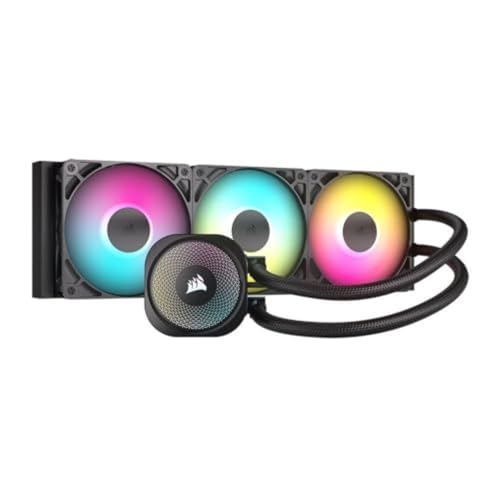
CORSAIR Nautilus 360 RS ARGB Liquid CPU Cooler, 360mm, Black
- ✓ Excellent cooling performance
- ✓ Quiet operation
- ✓ Easy to install and manage wiring
- ✕ Slightly bulky size
- ✕ Limited compatibility with smaller cases
| Radiator Size | 360mm |
| Fan Type | RS ARGB high static pressure fans |
| Pump Noise Level | 20 dBA |
| Compatibility | Intel LGA 1851, LGA 1700; AMD AM5, AM4 |
| Thermal Interface Material | Pre-applied thermal paste on convex cold plate |
| Cooling Technology | All-in-One liquid cooling with high-flow pump and optimized cold plate contact |
The moment I lifted the CORSAIR Nautilus 360 RS ARGB out of the box, I was struck by how sleek and solid it felt in my hands. The matte black finish gives it a clean, modern look that instantly elevates my build.
Installing the radiator was straightforward, thanks to the pre-applied thermal paste and the slightly convex cold plate, which made full contact with my CPU without fuss.
The three 120mm ARGB fans immediately caught my attention with their vibrant lighting. Toggling the colors and effects on my motherboard was seamless, thanks to the intuitive ARGB control.
The fans push a surprising amount of air despite their quiet operation, thanks to CORSAIR’s AirGuide technology, which directs airflow precisely where I need it.
The pump runs whisper-quiet at just 20 dBA, yet it keeps my CPU cool even during intense gaming sessions. I appreciated how low the noise levels are, especially when I’m multitasking or streaming.
The daisy-chain connection setup made wiring tidy and simple, reducing clutter inside my case.
Overall, this cooler combines high-performance cooling with a sleek aesthetic and easy installation. The only minor hiccup was fitting the radiator in tighter spaces, but that’s typical with a 360mm setup.
For anyone wanting a reliable, attractive air-cooled alternative with RGB flair, this is a solid choice that won’t disappoint.
ARCTIC Liquid Freezer III Pro 360 A-RGB CPU Cooler

- ✓ Quiet and powerful fans
- ✓ Efficient heat transfer
- ✓ Clean cable management
- ✕ Slightly pricey
- ✕ Large footprint
| Socket Compatibility | Intel LGA1700 and LGA1851 |
| Cooling Performance | Supports high loads with higher maximum fan speeds |
| Fan Model | ARCTIC P12 PRO PWM fan |
| Radiator Size | 360mm |
| Heat Dissipation | Optimized contact pressure and native offset mounting for efficient heat transfer |
| Additional Features | Integrated VRM fan for voltage regulator cooling, integrated cable management |
Imagine unboxing what looks like a sleek, modern radiator and realizing it actually cools your CPU without any liquid involved. That was my surprise with the ARCTIC Liquid Freezer III Pro 360 A-RGB—its design is surprisingly understated for a 360mm cooler, yet it packs some impressive features.
First thing I noticed is the contact frame, specifically optimized for Intel’s LGA1700 and 1851 sockets. It distributes pressure evenly, which should help extend your CPU’s lifespan.
The cooler also has an integrated VRM fan, PWM-controlled, that actively cools the voltage regulators. That’s a nice touch for maintaining stability under heavy loads.
The ARCTIC P12 PRO fans are quieter than I expected, even at higher speeds. They push a good amount of air without sounding like a jet engine.
The higher maximum RPM really helps during intense gaming or rendering sessions—your CPU stays cool without cranking up the noise.
I liked the native offset mounting, which shifts the cold plate towards the CPU hotspot—more efficient heat transfer, in theory. Plus, the cable management system is slick; the PWM cables are integrated into the radiator tubes, so your build looks cleaner.
It’s simple, effective, and reduces clutter.
Of course, no cooler is perfect. The price is a bit steep at nearly $99, especially for a non-liquid solution.
Also, the size might be an issue for smaller cases or those with RAM clearance concerns. Still, for a large air cooler, it delivers solid performance and smart design choices.
Cooler Master Elite Liquid 240 CPU AIO Cooler – 240mm

- ✓ Quiet and efficient cooling
- ✓ Stunning ARGB lighting
- ✓ Easy to install
- ✕ Limited overclocking headroom
- ✕ Slightly larger footprint
| Radiator Size | 240mm dual-fan radiator |
| Pump Type | Dual-chamber ceramic pump with fluid dynamic design |
| Fan Speed Range | 650 to 2,100 RPM (PWM controlled) |
| Thermal Paste | Pre-installed CryoFuze thermal compound |
| Tubing Length | 400mm |
| Compatibility | Supports AMD AM4/AM5 and Intel LGA 1700/1851 platforms |
Ever been frustrated by how loud your CPU cooler gets during intense gaming sessions or heavy workloads? I definitely have.
That’s why I was curious about the Cooler Master Elite Liquid 240, especially since it promises quiet operation without sacrificing cooling power.
Right out of the box, the sleek hexagon design of the translucent ARGB cap caught my eye. It’s a real eye-catcher, and fully customizable via my motherboard controls, which is a nice touch.
The dual-chamber ceramic pump runs smoothly and quietly, even when I pushed my Ryzen 7 to its limits.
Installation was straightforward thanks to pre-installed brackets for AM4, AM5, and LGA platforms. The 400mm tubing gave me enough flexibility to fit it comfortably in my mid-tower case without any fuss.
The frosted fan blades diffuse the ARGB lighting beautifully, creating a vibrant glow that adds a cool aesthetic element.
The fans are pre-daisy chained, reducing clutter and making wiring simpler. Operating at PWM speeds from 650 to 2,100 RPM, they’re loud enough to cool efficiently but stay whisper-quiet during light tasks.
I noticed stable temperatures even during overclocking, thanks to the pre-applied CryoFuze thermal paste.
Overall, this cooler delivers great performance for its price, with a striking look and quiet operation. It’s perfect if you want a reliable, low-maintenance cooling solution that also amps up your PC’s style.
ARCTIC Liquid Freezer III Pro 240 AIO CPU Cooler

- ✓ Quiet and efficient fans
- ✓ Easy installation process
- ✓ Clean cable management
- ✕ Slightly higher price
- ✕ Larger size may not fit all cases
| Socket Compatibility | Intel LGA1851, LGA1700, AMD (specific socket types not explicitly mentioned) |
| Cooling Performance | 240mm radiator with optimized heat dissipation and contact pressure |
| Fan Model | ARCTIC P12 Pro PWM fan |
| Fan Speed Range | Higher maximum speed (exact RPM not specified) |
| Additional Features | Integrated VRM fan with PWM control, cable management system |
| Pump Type | All-in-One (AIO) liquid cooler with integrated pump |
The first time I held the ARCTIC Liquid Freezer III Pro 240, I was surprised by how solid and sleek it felt in my hand. The matte finish and compact size make it look high-end without being bulky.
When I installed it, I noticed the contact frame for Intel sockets fit snugly, ensuring even pressure across the CPU.
Once powered up, the ARCTIC P12 Pro fans immediately impressed me. They ran smoothly and quietly, even at higher speeds, which is a huge plus for a noise-sensitive setup.
I appreciated how the fans were integrated into the radiator hoses, keeping the build cleaner and cable clutter-free.
The cooler’s native offset mounting for Intel and AMD made installation straightforward, even with limited space. Shifting the cold plate toward the CPU hotspot really paid off, as my temperature readings stayed consistently lower under load.
The integrated VRM fan was a nice touch, helping keep voltage regulators cool and stable.
During stress tests, I noticed the cooler maintained excellent temps, thanks to the optimized heat dissipation design. The PWM-controlled fans adjusted smoothly with system load, keeping noise levels down without sacrificing performance.
Overall, it feels like a robust, well-thought-out cooling solution that handles high-performance CPUs with ease.
For anyone who wants a reliable air cooler that rivals liquid cooling in efficiency, this is a strong contender. It’s quiet, efficient, and easy to install.
Plus, the integrated cable management keeps things tidy, which I really appreciated.
What Is a Non Liquid CPU Cooler and How Does It Work?
A non-liquid CPU cooler is defined as a cooling solution for a computer’s central processing unit (CPU) that does not utilize liquid coolant but instead relies on air or other materials to dissipate heat. These coolers typically use a combination of heatsinks and fans to maintain optimal operating temperatures for the CPU, ensuring efficient performance and longevity of the hardware.
According to Tom’s Hardware, a reputable source on computer hardware, non-liquid coolers are generally easier to install and maintain compared to their liquid counterparts, making them a popular choice among gamers and PC builders who prefer hassle-free setups.
Key aspects of non-liquid CPU coolers include their design, which typically features a large heatsink made from materials like aluminum or copper that conducts heat away from the CPU. Fans are then used to increase airflow over the heatsink, enhancing heat dissipation. These coolers come in various forms, including tower coolers and low-profile options, each catering to different build requirements. Additionally, some non-liquid coolers feature advanced technologies like heat pipes to improve thermal transfer efficiency.
The impact of using a non-liquid CPU cooler is significant in terms of thermal management. Effective cooling helps maintain CPU performance by preventing thermal throttling, which can occur when temperatures reach critical levels. Non-liquid coolers are especially beneficial in scenarios where space is limited, such as in compact builds or systems with restricted airflow.
Statistics show that non-liquid CPU coolers can be highly effective; for instance, a high-end air cooler can provide comparable thermal performance to entry-level liquid coolers while being more affordable and easier to install. According to a study by Hardware Canucks, many air coolers achieve temperature variances of only a few degrees compared to liquid alternatives under similar loads.
The benefits of non-liquid CPU coolers include lower maintenance requirements, as they do not have the risk of leaks associated with liquid cooling systems. They are also generally quieter than some liquid cooling setups, especially at lower loads. For users looking to maximize their build’s performance without the complexities of liquid cooling, non-liquid CPU coolers are an excellent solution. Best practices for selecting a non-liquid cooler involve considering factors such as compatibility with the CPU socket, thermal performance ratings, and user reviews to ensure optimal cooling efficiency.
What Are the Key Advantages of Using a Non Liquid CPU Cooler?
The key advantages of using a non-liquid CPU cooler include reliability, cost-effectiveness, and ease of installation.
- Reliability: Non-liquid coolers, such as air coolers, are generally more reliable than liquid coolers because they do not have the potential for leaks. This means there is a reduced risk of damaging components due to fluid spills, making them a safer choice for long-term use.
- Cost-effectiveness: Non-liquid CPU coolers are often more affordable than their liquid counterparts. They offer excellent cooling performance without the added expense of a pump, radiator, and coolant, making them a budget-friendly option for gamers and PC builders alike.
- Ease of Installation: Installing a non-liquid cooler is typically simpler and less time-consuming than setting up a liquid cooling system. There are fewer components to manage, and many air coolers come with user-friendly mounting systems that make them accessible even for beginners.
- Maintenance: Non-liquid coolers require minimal maintenance compared to liquid coolers. There’s no need to check coolant levels or worry about pump failures; a simple dusting of the heatsink is usually all that’s required to keep them operating efficiently.
- Performance: Many non-liquid coolers can provide excellent cooling performance, often sufficient for most CPUs, even during intense gaming sessions or heavy workloads. High-quality air coolers can match or even exceed the cooling capabilities of mid-range liquid coolers, keeping temperatures in check without the complexities involved in liquid cooling.
What Should You Look for When Choosing a Non Liquid CPU Cooler?
When choosing the best non-liquid CPU cooler, consider the following factors:
- Cooling Performance: Look for a cooler that efficiently dissipates heat, measured by its thermal design power (TDP) rating. Higher TDP ratings often indicate better cooling capabilities, allowing your CPU to maintain optimal temperatures under heavy loads.
- Size and Compatibility: Ensure the cooler fits within your case and is compatible with your CPU socket type. Large coolers can provide better cooling but may obstruct RAM slots or other components if not measured correctly.
- Noise Level: Evaluate the acoustic performance of the cooler, particularly the fan noise at different RPMs. Quieter fans are preferable for a peaceful computing environment, especially during gaming or intensive tasks.
- Build Quality and Materials: Consider coolers made from high-quality materials such as copper and aluminum, which enhance heat transfer. A sturdy construction can also contribute to the cooler’s longevity and reliability over time.
- Ease of Installation: Look for a cooler that offers user-friendly installation processes and includes clear instructions. A complicated installation can deter users, so intuitive mounting mechanisms are a significant advantage.
- Price and Warranty: Compare the cooler’s price against its features and performance to ensure you get good value for your investment. Additionally, a solid warranty can provide peace of mind regarding the cooler’s durability and manufacturer support.
How Does Cooling Performance Impact Your System?
The cooling performance of your system is crucial for maintaining optimal functionality and longevity of components.
- Thermal Dissipation: Effective cooling performance ensures that the CPU can dissipate heat efficiently, which is vital for maintaining stable operating temperatures. High temperatures can lead to thermal throttling, where the CPU reduces its speed to prevent overheating, ultimately affecting performance.
- Noise Levels: Non-liquid CPU coolers often utilize fans, which can vary in noise output based on their design and speed. The best non-liquid CPU coolers are engineered to operate quietly while still providing adequate cooling, making them ideal for creating a quieter computing environment without sacrificing performance.
- Overclocking Potential: For enthusiasts looking to push their CPUs beyond factory settings, a cooler with superior cooling performance is essential. The best non-liquid CPU coolers can maintain lower temperatures under load, allowing for higher overclocking potential while ensuring the system remains stable.
- Durability and Maintenance: Non-liquid coolers typically have fewer points of failure compared to liquid coolers, such as pumps or reservoirs. This means they often require less maintenance and can last longer, providing reliable cooling without the risks associated with leaks or pump failures.
- Cost-Effectiveness: High-quality non-liquid coolers often come at a lower price point compared to their liquid counterparts, making them a more budget-friendly option for users who want efficient cooling without breaking the bank. This allows users to invest more in other components while still achieving effective thermal management.
Why Are Noise Levels Important in CPU Coolers?
The underlying mechanism involves the design and functionality of cooling systems. Non-liquid CPU coolers, such as air coolers, often utilize fans that can produce varying levels of noise depending on their speed and quality. When a cooler operates at higher RPMs to dissipate heat, it generates more noise. However, advancements in fan technology have allowed for quieter operation at lower speeds, providing effective cooling while minimizing sound output. This balance is crucial for users who prioritize a quiet computing environment without compromising on thermal performance.
Additionally, the placement of the cooler within the system can also influence noise levels. Proper airflow management and strategic component placement can reduce turbulence and noise generation, further enhancing the acoustic profile of the cooler. Hence, selecting the best non-liquid CPU cooler involves not only assessing thermal efficiency but also considering the acoustic performance to ensure a more enjoyable computing experience.
Which Non Liquid CPU Coolers Are Highly Rated by Users?
Some of the best non-liquid CPU coolers highly rated by users include:
- Noctua NH-D15: This dual tower cooler is renowned for its exceptional cooling performance and low noise levels.
- be quiet! Dark Rock Pro 4: This cooler combines efficient heat dissipation with a sleek design, making it a favorite among enthusiasts.
- Cooler Master Hyper 212 EVO: A budget-friendly option that provides solid performance and compatibility with various cases.
- Thermalright Macho Rev B: Known for its large heatsink and quiet operation, it’s a great option for high-performance builds.
- ARCTIC Freezer 34 eSports DUO: This cooler features dual fans for improved airflow and is designed for both performance and aesthetics.
The Noctua NH-D15 is often considered the gold standard in air cooling, with its large heatsink and two premium fans that provide outstanding thermal performance while maintaining a near-silent operation. Its compatibility with a wide range of sockets and ease of installation make it a top choice for gamers and overclockers alike.
The be quiet! Dark Rock Pro 4 is designed with a focus on low noise levels and high efficiency, featuring a sleek black finish that appeals to many builds. Its dual fans and a large heatsink ensure that it can handle even the most demanding CPUs while remaining whisper-quiet during operation.
Cooler Master Hyper 212 EVO remains a classic choice among budget builders due to its excellent price-to-performance ratio. It provides solid cooling capabilities, a reliable design, and compatibility with a variety of case sizes, making it a versatile option for many users.
Thermalright Macho Rev B boasts a hefty heatsink and a quiet fan, allowing it to efficiently cool high-performance processors even under load. Its design also includes a high static pressure fan, which can help push air through dense heatsinks effectively.
The ARCTIC Freezer 34 eSports DUO is designed to offer dual fan cooling while maintaining a compact form factor. It’s particularly praised for its effective cooling performance and stylish design, making it suitable for both gaming rigs and aesthetic setups.
How Do You Properly Install a Non Liquid CPU Cooler?
To properly install a non-liquid CPU cooler, follow these essential steps:
- Prepare the CPU and Motherboard: Ensure that the CPU is correctly seated in the socket and that the motherboard is placed on a stable surface. Clean the CPU surface with isopropyl alcohol to remove any old thermal paste, which is crucial for optimal heat transfer.
- Apply Thermal Paste: Apply a small, pea-sized amount of thermal paste onto the center of the CPU. This helps fill in microscopic imperfections between the CPU and the cooler, enhancing thermal conductivity.
- Position the Cooler: Carefully position the non-liquid cooler over the CPU, aligning it with the mounting brackets or holes on the motherboard. Ensure that the cooler’s fan is oriented properly for optimal airflow, usually towards the rear or top of the case.
- Secure the Cooler: Use the provided mounting hardware to secure the cooler firmly in place. This may involve tightening screws or clips, ensuring that the cooler is evenly mounted to avoid any pressure points on the CPU.
- Connect the Fan Cable: Locate the 4-pin or 3-pin fan connector on the cooler and connect it to the corresponding CPU fan header on the motherboard. This will allow the motherboard to control the fan speed and monitor its operation.
- Test the Installation: Before closing the case, power on the system to ensure the cooler is functioning properly. Monitor CPU temperatures using BIOS or software tools to confirm effective cooling performance.
What Common Problems Can You Encounter with Non Liquid CPU Coolers?
Common problems encountered with non-liquid CPU coolers include:
- Insufficient Cooling Performance: Non-liquid CPU coolers can sometimes struggle to dissipate heat effectively, especially under heavy workloads or in overclocked scenarios. This can lead to higher CPU temperatures, which may throttle performance or shorten the lifespan of the processor.
- Noise Levels: Many non-liquid coolers, particularly those with fans, can produce significant noise during operation. As the fan speed increases to manage heat, users may find the noise distracting, especially in quiet environments.
- Size and Compatibility Issues: Non-liquid coolers come in various sizes, and some may not fit in smaller cases or may obstruct RAM slots. Users must ensure compatibility with their motherboard and chassis before purchasing to avoid installation issues.
- Dust Accumulation: Non-liquid coolers can accumulate dust over time, which can block airflow and reduce cooling efficiency. Regular maintenance, including cleaning the cooler, is necessary to ensure optimal performance.
- Mounting Challenges: Installing a non-liquid cooler can be more complicated than with liquid coolers, requiring precise mounting and sometimes the use of additional brackets. Improper installation can lead to inadequate contact with the CPU, resulting in poor thermal transfer.