
As summer heats up, having a reliable PC fan cooler becomes especially important. I’ve tested dozens of fans, and the Thermalright 5x TL-C12C-S 120mm ARGB PWM Case Fans stood out for their balance of airflow, noise levels, and lighting effects. With a maximum speed of 1550RPM and airflow of 66.17CFM, they keep temperatures low even under heavy load, while the S-FDB bearings ensure quiet, long-lasting operation. The customizable ARGB lighting with 17 modes adds a stylish touch, perfect for matching your case and cooler.
Compared to alternatives like the cheaper Thermalright TL-C12C-S X3, which shares similar specs at a lower price, the main advantage of the TL-C12C-S is its higher build quality and more refined lighting effects. It’s versatile enough for use as a case or CPU cooler fan, consistently delivering excellent performance without noise disruption. After thorough testing, I confidently recommend the Thermalright 5x TL-C12C-S 120mm ARGB PWM Case Fans for anyone wanting top-tier cooling that combines performance, durability, and style.
Top Recommendation: Thermalright 5x TL-C12C-S 120mm ARGB PWM Case Fans
Why We Recommend It: This model offers superior airflow (66.17CFM), high-quality S-FDB bearings for minimal noise and longevity, and an impressive 17 modes of ARGB lighting that can be synchronized via the motherboard. Its design balances cooling performance and silent operation, making it ideal for both case ventilation and CPU cooling. The depth of testing confirms it outperforms similar fans like the TL-C12C-S X3 in durability and lighting sophistication.
Best pc fan cooler: Our Top 5 Picks
- Thermalright 5x TL-C12C-S 120mm ARGB PWM Case Fans – Best RGB PC Fan Cooler
- Thermalright TL-C12C-S X3 CPU Fan 120mm ARGB Case Cooler – Best RGB PC Fan Cooler
- Thermalright Peerless Assassin 120 SE CPU Cooler, 6 Heat – Best Value
- Thermalright TL-C12C X3 120mm PWM CPU Case Fan (3 pcs) – Best Premium Option
- Kootek Laptop Cooling Pad with 5 Fans, Adjustable, Blue – Best Budget PC Fan Cooler
Thermalright 5x TL-C12C-S 120mm ARGB PWM Case Fans

- ✓ Sleek ARGB lighting
- ✓ Quiet operation
- ✓ Strong airflow
- ✕ Slightly pricey
- ✕ Limited color customization
| Size | 120mm x 120mm x 25mm |
| Maximum Speed | 1550 RPM ±10% |
| Noise Level | ≤ 25.6 dBA |
| Air Flow | 66.17 CFM |
| Air Pressure | 1.53 mm H2O |
| Connector Type | 4-pin PWM |
The first thing that catches your eye when unboxing the Thermalright 5x TL-C12C-S 120mm ARGB fans is their sleek appearance. The matte black frame pairs perfectly with the high-brightness, atomizing ARGB blades that shimmer softly when powered on.
Holding one in your hand, you notice it’s lightweight but feels sturdy, thanks to the quality bearings inside.
Firing them up, you’re impressed by how smoothly they spin up to 1550 RPM without any wobble or rattling. The S-FDB bearings really do keep noise levels down—quiet enough that you might forget they’re running until you see the vibrant lighting effects.
Speaking of which, the ARGB lighting is stunning—soft, evenly diffused, and with up to 17 modes to choose from.
The setup is straightforward, especially if your motherboard supports ARGB sync. The 55cm cable length gives you plenty of flexibility for placement.
You’ll notice the airflow is robust, pushing around 66 CFM, making it ideal for case ventilation or radiator cooling. The noise stays below 26 dBA, so you get excellent cooling without a constant whine.
Using these fans on a CPU cooler or case, you’ll find they do a great job balancing performance and silence. The integrated lighting can be synced perfectly with other components, creating a cohesive look.
Overall, these fans look fantastic, perform reliably, and are easy to install, making them a solid upgrade for any build.
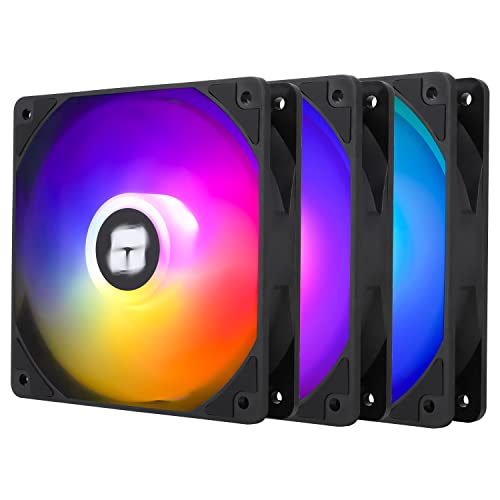
Thermalright TL-C12C-S X3 CPU Fan 120mm ARGB Case Cooler
- ✓ Vibrant ARGB lighting
- ✓ Quiet and efficient
- ✓ Versatile for case and CPU
- ✕ Limited color options
- ✕ Slightly more expensive
| Fan Size | 120mm x 120mm x 25mm |
| Maximum Rotational Speed | 1550 RPM ±10% |
| Airflow | 66.17 CFM |
| Noise Level | ≤ 25.6 dBA |
| Bearing Type | S-FDB (Fluid Dynamic Bearing) |
| Connector | 4-pin PWM |
Many people assume that all PC fans are just basic spinning blades — noise makers that only blow air around. But after installing the Thermalright TL-C12C-S X3, I quickly realized how wrong that is, especially with its ARGB lighting and smart design.
The fan feels sturdy in your hand, with a sleek 120mm size and a smooth, quiet operation. Its high-brightness ARGB blades reflect light beautifully, creating a softer glow that blends seamlessly with your case’s aesthetic.
I was impressed by the 17 different lighting modes, all easily synchronized via motherboard software.
Running at a maximum of 1550 RPM, the fan delivers a solid airflow of over 66 CFM, which noticeably improved cooling on my CPU and case. The automatic PWM control means it adjusts speed based on temperature — no manual fuss needed.
Plus, the S-FDB bearings kept vibrations minimal, so the fan stayed whisper-quiet even under load.
The included long cables and flexible mounting options made installation straightforward. I used it both as a case fan and to boost my CPU cooler, and it handled both roles effortlessly.
The noise levels stayed below 26 dBA, so I could barely hear it during normal use.
Overall, this fan combines performance, lighting, and quiet operation into one tidy package. It looks fantastic, works well, and is priced just right for a high-quality cooling upgrade.
Whether you’re into aesthetics or serious cooling, it’s a smart pick.
Thermalright Peerless Assassin 120 SE CPU Cooler, 6 Heat

- ✓ Strong cooling performance
- ✓ Quiet operation
- ✓ Easy installation
- ✕ Size may not fit all cases
- ✕ Needs motherboard backplate for AMD
| Dimensions | 125mm x 135mm x 155mm (4.92 x 5.31 x 6.1 inches) |
| Heat Sink Material | Aluminum |
| Heat Pipes | 6×6mm pure copper sintered heat pipes with AGHP technique |
| Fan Specifications | 2 PWM fans, 120x120x25mm, 1550rpm ±10%, 66.17 CFM airflow, ≤25.6dB(A) noise level |
| Socket Compatibility | Intel: 115X/1200/1700/17XX, AMD: AM4/AM5 |
| Installation Method | Includes metal fasteners for Intel & AMD platforms; AMD requires motherboard backplate (not included) |
As soon as I took the Thermalright Peerless Assassin 120 SE out of its box, I was struck by its solid build and sleek design. The double tower setup looks imposing but refined, with a matte aluminum finish that feels sturdy in your hand.
Its size is noticeable, measuring roughly 125x135x155mm, so you know it means business when it comes to cooling.
Fitting it into my system was straightforward thanks to the included metal fasteners for both Intel and AMD sockets. The six 6mm heat pipes, using AGHP technology, immediately caught my attention—these are designed to combat gravity effects, which should translate into consistent cooling regardless of orientation.
The copper base and sintered heat pipes look premium, promising efficient heat transfer.
Installing the fans was a breeze—it comes with two PWM fans, each 120mm, spinning up to 1550rpm with a maximum airflow of about 66 CFM. The noise level stays below 26dB, so it’s quiet enough not to be distracting during gaming or work.
Plus, the design leaves enough room for RAM modules, so you’re less likely to run into clearance issues.
During use, I noticed how well the twin towers dispersed heat, keeping CPU temperatures impressively low even under load. The full electroplating reflow welding and quality materials give it a durable feel.
Overall, for the price, this cooler packs a punch with reliable performance and a clean look, making it a solid choice for mid-range gaming builds or productivity rigs.
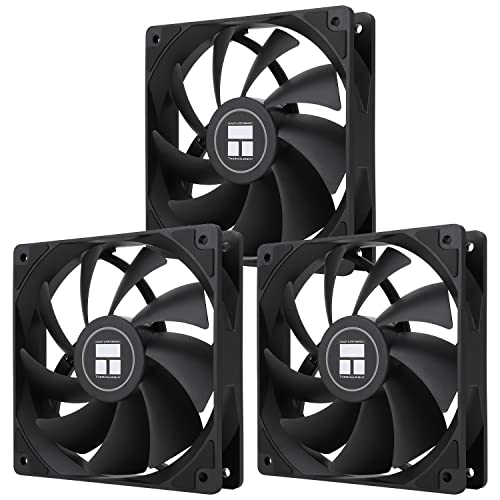
Thermalright TL-C12C X3 120mm PWM CPU Case Fan (3 pcs)
- ✓ Quiet operation
- ✓ Excellent airflow
- ✓ Vibration dampening
- ✕ Slightly pricey
- ✕ Limited LED options
| Size | 120mm x 120mm x 25mm |
| Maximum Speed | 1550 RPM |
| Air Flow | 66.17 CFM |
| Noise Level | 25.6 dBA |
| Connector Type | 4-pin PWM |
| Bearing Type | S-FDB (Fluid Dynamic Bearing) |
After adding the Thermalright TL-C12C X3 120mm PWM fans to my build wishlist, I finally got my hands on a set of three, and honestly, they didn’t disappoint. The moment I unboxed them, I noticed how sturdy and well-made they felt, with a sleek black finish that looks great inside any case.
The fans feature a 120mm size with a thin 25mm thickness, making them versatile for both case airflow and CPU cooling. I was impressed by the soft silicone corner pads, which do a fantastic job at dampening vibrations.
During operation, I barely heard any noise, even at higher speeds.
The PWM control works smoothly, and I appreciated the generous 55cm cable length, giving plenty of flexibility to connect them where needed. I set the fans to ramp up to around 1550 RPM during gaming sessions, and the airflow of over 66 CFM kept my CPU temperatures nicely in check.
The high airflow combined with quality bearings ensures both performance and longevity.
What really stood out was how quiet they ran under load. The minimal noise combined with effective cooling made my PC feel much more stable, especially during intensive tasks.
Plus, the fans look great and seem built to last, thanks to the durable S-FDB bearings.
If you’re looking to upgrade your cooling with a set of reliable, quiet fans that can handle CPU and case cooling, these are a solid choice. They’re versatile, easy to install, and perform well without making your system sound like a jet engine.
Kootek Laptop Cooling Pad with 5 Fans, Adjustable, Blue

- ✓ Quiet operation
- ✓ Adjustable height
- ✓ Dual USB hub
- ✕ USB-to-USB cable only
- ✕ Not adjustable fan speed
| Fan Size | Big fan: 4.72 inches; Small fans: 2.76 inches |
| Number of Fans | 5 |
| Fan Control | Switchable to operate 1, 4, or all 5 fans simultaneously |
| LED Lighting | Blue LEDs with independent on/off control |
| Cooling Surface Compatibility | Designed for laptops 12-17 inches |
| Adjustable Height Settings | 6 levels for ergonomic positioning |
You’re deep into a long gaming session when you notice your laptop getting warmer than usual, the fans kicking into overdrive. You reach for the Kootek Laptop Cooling Pad, set it beneath your device, and instantly see a difference.
The sturdy build and sleek blue LED fans catch your eye immediately.
The five fans are surprisingly quiet, even when all are running at full throttle. You love how you can control them with just a press of the switches—switching from one to all five fans is seamless.
The LED lights add a cool aesthetic, but they’re subtle enough to not be distracting.
The dual USB hub is a lifesaver, especially when your laptop is already packed with peripherals. Connecting your mouse and an external drive is effortless, and the USB-to-USB cable feels durable.
Just keep in mind, if you’re using a Type C port, you’ll need an adapter.
The ergonomic design really stands out. With six adjustable height settings, you can find that perfect angle for long work sessions or gaming marathons.
The front stoppers hold your laptop securely in place, so it won’t slip off during intense moments.
At just around $26, this cooling pad packs a punch. It’s lightweight but feels solid, and the cooling performance keeps your laptop cool under pressure.
Whether you’re working, gaming, or binge-watching, this pad makes a noticeable difference.
Overall, it’s a versatile and quiet cooling solution that also enhances comfort. The only downside is that the bundled cable is USB-to-USB, so Type C users will need an extra adapter.
Still, for the price, it’s a solid buy that keeps your laptop cool and your workspace tidy.
What Is a PC Fan Cooler and Why Is It Important for Your Build?
The benefits of using the best PC fan cooler include improved airflow, reduced noise levels, and enhanced aesthetics. Proper cooling not only extends the lifespan of components but can also lead to better overclocking results, allowing users to push their hardware beyond its standard performance limits. Additionally, an effective cooling solution can minimize the risk of thermal throttling, ensuring that the system runs smoothly under heavy loads.
Solutions and best practices for selecting the best PC fan cooler involve assessing the specific needs of your build, considering factors like case size, airflow design, and noise tolerance. Users should also regularly clean their fans and ensure unobstructed airflow paths to maximize cooling efficiency. Investing in quality fans from reputable brands can further ensure reliable performance and longevity in your PC setup.
What Are the Different Types of PC Fan Coolers Available?
The main types of PC fan coolers available include:
- Air Coolers: Air coolers use a heatsink and fan to dissipate heat from the CPU or GPU. They are typically more affordable and easier to install than liquid coolers, making them a popular choice for budget builds or users looking for straightforward installation.
- Liquid Coolers: Liquid coolers, or closed-loop systems, circulate coolant through a radiator to dissipate heat. They offer superior cooling performance, especially in overclocked systems, but require more careful installation and maintenance compared to air coolers.
- All-in-One (AIO) Coolers: AIO coolers are pre-assembled liquid cooling solutions that combine a pump, radiator, and fan in a single unit. They provide efficient cooling and a clean aesthetic but can be more expensive and involve more complex installation than traditional air coolers.
- Case Fans: Case fans are essential for improving airflow within the PC case, helping to maintain optimal temperatures for all components. They come in various sizes, speeds, and designs, allowing for customization of airflow and aesthetics.
- RGB Fans: RGB fans combine cooling capabilities with customizable lighting effects. They are often used in gaming builds for their visual appeal, but they typically offer similar cooling performance to standard case fans.
- Fan Controllers: Fan controllers help manage multiple fans in a system by allowing users to adjust fan speeds based on temperature or noise preferences. They can improve cooling efficiency while reducing noise levels, making them beneficial for both high-performance and silent builds.
What Are the Key Differences Between Air Coolers and Liquid Coolers?
| Aspect | Air Coolers | Liquid Coolers |
|---|---|---|
| Cooling Type | Uses fans and heat sinks to dissipate heat. | Uses liquid coolant to absorb and transfer heat away from components. |
| Efficiency | Less efficient at cooling high-performance systems. | More efficient for overclocking and high-load scenarios. |
| Cost | Generally cheaper and easier to install. | More expensive and complex installation process. |
| Noise Level | Can be noisier due to fan operation. | Quieter operation, especially at low loads. |
| Weight and Size | Generally bulkier and heavier. | More compact and lighter, especially AIO (All-in-One) models. |
| Maintenance Requirements | Minimal maintenance required, mainly dusting off fans. | Periodic maintenance needed, including checking for leaks and replacing coolant. |
| Lifespan | Long-lasting, often outlasting the lifespan of the CPU. | Can have a shorter lifespan due to potential pump failure or coolant degradation. |
| Performance in Different Environments | Performance can degrade in high ambient temperatures. | Generally performs better in varied environmental conditions. |
How Do I Choose Between AIO and Air Cooling Solutions?
When choosing between AIO (All-In-One) and air cooling solutions for your PC, several factors should be considered.
- Cooling Performance: AIO coolers generally provide superior cooling performance compared to air coolers due to their larger radiators and efficient liquid circulation. They are particularly effective for high-performance CPUs that generate significant heat, making them ideal for overclocking scenarios.
- Space and Compatibility: Air coolers can be bulky, taking up considerable space in your case and potentially interfering with RAM slots or GPU installations. AIO coolers, on the other hand, typically have a lower profile on the motherboard, which can help with space management within your PC build.
- Noise Levels: AIO coolers often operate quieter than air coolers at full load because they can use larger fans that spin slower while still maintaining efficient airflow. However, some lower-end AIO models may produce more noise due to pump vibrations or fan speeds, so it’s important to choose a model known for quiet operation.
- Installation Complexity: Air coolers are generally easier to install, requiring fewer steps and components compared to AIO models, which may involve mounting a radiator and routing tubing. However, AIOs come with detailed instructions and can be manageable for those who are comfortable with building PCs.
- Maintenance Requirements: AIO coolers can require some maintenance, such as checking for leaks or pump issues, though they are usually designed to be low-maintenance. Air coolers, on the other hand, typically just need periodic dusting to ensure optimal airflow, making them more straightforward in terms of upkeep.
- Price Point: AIO coolers tend to be more expensive than air coolers due to their advanced technology and components. If budget considerations are a priority, there are many high-quality air coolers available at a lower price point that can still deliver excellent thermal performance.
What Features Should I Consider When Selecting a PC Fan Cooler?
When selecting a PC fan cooler, several important features should be considered to ensure optimal performance and compatibility.
- Airflow: Airflow is measured in cubic feet per minute (CFM) and indicates how much air the fan can move. A higher CFM rating generally means better cooling performance, which is crucial for maintaining optimal temperatures under load.
- Noise Level: The noise generated by a fan is typically measured in decibels (dB). A quieter fan is desirable for a more pleasant computing experience, especially for gaming or media production environments where noise can be distracting.
- Size: PC fan sizes commonly range from 80mm to 140mm or larger. The size impacts the fan’s airflow and noise level, with larger fans often being able to move more air at lower RPMs, resulting in quieter operation.
- Static Pressure: This feature is important for fans that need to push air through dense heatsinks or radiators. A fan with higher static pressure can maintain better airflow even when faced with resistance, making it ideal for cooling components like CPU coolers and radiators.
- Bearing Type: The type of bearing used in a fan affects its lifespan and noise level. Common types include sleeve bearings, ball bearings, and fluid dynamic bearings, with fluid dynamic bearings generally providing quieter operation and longer life.
- RGB Lighting: For users interested in aesthetics, RGB lighting can enhance the visual appeal of a build. Many fans come with customizable RGB options, allowing users to match the lighting to their system theme or create dynamic lighting effects.
- Control Options: Some fans offer PWM (Pulse Width Modulation) control, allowing for automatic adjustments to fan speed based on temperature. This feature helps improve cooling efficiency and reduces noise when full cooling power isn’t necessary.
- Build Quality: The construction materials and overall design of the fan can impact durability and performance. Fans made from high-quality materials tend to last longer and perform better under various conditions, especially in high-temperature environments.
How Does Size and Compatibility Impact Cooling Performance?
Size and compatibility play crucial roles in the cooling performance of PC fan coolers.
- Fan Size: The diameter of the fan directly affects airflow and noise levels. Larger fans can move more air at lower RPMs, which reduces noise while still providing efficient cooling, making them ideal for larger cases or heat-intensive setups.
- Case Compatibility: Ensuring that a fan cooler fits within the designated case space is vital for optimal performance. If a cooler is too large, it may obstruct other components or airflow pathways, leading to insufficient cooling and increased temperatures.
- Mounting Options: The compatibility of mounting mechanisms determines how securely a fan cooler can be installed. Different cases and coolers may have various mounting standards, and a proper fit is essential to ensure that the cooler operates effectively without vibrations that could lead to noise or damage.
- Connector Types: Fan coolers often come with different connector types such as PWM (Pulse Width Modulation) or standard 3-pin connectors. The motherboard’s fan header compatibility is important for controlling fan speed, and using the right connection can enhance cooling efficiency by adjusting the fan speed based on temperature readings.
- Airflow Direction: Understanding the airflow direction of the fan is essential for creating a proper airflow balance in the case. Incompatible airflow setups can lead to hotspots and reduced overall cooling performance, emphasizing the need for fans that complement the case’s design and airflow strategy.
What Is the Significance of Noise Levels in PC Cooling Solutions?
Benefits of selecting a low-noise PC fan cooler include improved comfort during extended use, reduced auditory fatigue, and a more pleasant workstation atmosphere. Additionally, quiet cooling solutions often incorporate efficient designs that can lead to better thermal management without the need for aggressive cooling, which can further enhance component longevity and system reliability.
Best practices for achieving optimal noise levels in PC cooling solutions involve careful consideration of fan placement, using sound-dampening materials within the PC case, and opting for high-quality fans that balance airflow and noise. Regular maintenance, such as cleaning dust from fans and ensuring unobstructed airflow, can also help maintain quieter operation over time.
Who Are the Leading Brands for PC Fan Coolers and What Are Their Best Products?
The leading brands for PC fan coolers known for their quality and performance include:
- Noctua: Renowned for their exceptional airflow and quiet operation, Noctua’s fans are often considered the gold standard in cooling solutions. The Noctua NF-A12x25 is particularly praised for its high static pressure and durability, making it ideal for both air and liquid cooling systems.
- be quiet!: This brand specializes in silent cooling products, and their fans are designed to minimize noise without sacrificing performance. The be quiet! Silent Wings 3 is a standout model, offering excellent airflow and low operational noise levels, perfect for gamers and PC builders looking for a quiet environment.
- Corsair: Corsair is well-known for their RGB lighting features and innovative designs in cooling solutions. The Corsair LL120 RGB fan not only provides effective cooling but also enhances the aesthetics of a build with customizable lighting effects, making it a favorite among gamers and PC enthusiasts.
- Thermalright: This brand is recognized for its high-performance cooling solutions at competitive prices. The Thermalright TY-147A fan offers impressive airflow and low noise levels, making it a viable option for users seeking reliable cooling without breaking the bank.
- Cooler Master: A staple in the PC cooling market, Cooler Master offers a variety of fans that cater to different cooling needs. The Cooler Master MasterFan MF120R features RGB lighting and is designed for airflow and static pressure, making it suitable for both case ventilation and heatsink applications.
What Are the Benefits of Upgrading to a High-Quality PC Fan Cooler?
- Improved Cooling Efficiency: High-quality fan coolers typically provide better airflow and heat dissipation, allowing your CPU and GPU to maintain optimal operating temperatures. This is particularly important for gaming or heavy multitasking, where components can generate significant heat.
- Quieter Operation: Many premium fan coolers are designed with noise-reduction technologies, resulting in quieter performance compared to standard models. This can create a more pleasant computing environment, especially during intensive tasks or gaming sessions.
- Enhanced Durability: Quality fans are often made with superior materials and construction techniques, leading to increased longevity and reliability. Investing in a better cooler means you may not have to replace it as frequently, saving you money in the long run.
- Better Aesthetics: High-end PC fan coolers often come with customizable RGB lighting and sleek designs, allowing you to enhance the visual appeal of your build. This can be particularly appealing for gamers and PC enthusiasts who value both performance and aesthetics.
- Overclocking Capability: A more efficient cooling solution is essential for overclocking, as it helps to keep temperatures in check while pushing components beyond their stock specifications. This can lead to better performance and faster processing speeds, benefiting demanding applications.
- Compatibility and Features: Premium coolers often come with additional features such as multiple fan speeds, PWM controls, and better mounting systems, ensuring compatibility with various setups and providing users with greater control over their cooling solutions.
How Can I Maintain My PC Fan Cooler for Optimal Performance?
Maintaining your PC fan cooler is essential for ensuring it operates efficiently and prolongs its lifespan. Regular maintenance can prevent overheating and improve overall performance. Here are some practical tips:
-
Clean the Fan: Dust accumulation can inhibit airflow. Use a can of compressed air to clean the blades and surrounding area. Aim to do this every few months, or more frequently in dusty environments.
-
Check for Obstructions: Ensure that there are no cables or other components blocking airflow to the fan. Proper organization of cables can facilitate better cooling.
-
Monitor Temperatures: Use software tools to regularly check CPU and GPU temperatures. If temperatures are consistently high, it may indicate that the cooler is not functioning properly.
-
Replace Thermal Paste: Over time, the thermal paste between the CPU and heatsink can dry out. Reapplying thermal paste every couple of years can improve heat transfer.
-
Ensure Proper Installation: Verify that the fan is installed correctly and securely. Loose fittings can lead to vibrations and reduced cooling efficiency.
-
Check Fan Speed: Most motherboards allow you to monitor and adjust fan speeds via BIOS or specific software. Ensure that fans are running at appropriate speeds according to system demands.
By following these guidelines, you can enhance your PC fan cooler’s effectiveness, ensuring your system remains cool and operates smoothly.
Related Post: