
The first thing that struck me about the CORSAIR Nautilus 360 RS ARGB Liquid CPU Cooler wasn’t its sleek design or lighting but how effortlessly quiet and efficient it was during intense testing. With its high-performance pump maintaining a whisper-quiet 20 dBA and a cold plate optimized for perfect contact, it handled even overclocked CPUs with ease. It’s like having a powerful yet silent assistant keeping your system cool.
What really sets it apart is the combination of easy installation, low noise, and impressive airflow from the RS120 ARGB fans. Compared to others, like the Cooler Master Elite Liquid 360 or Arctic Liquid Freezer III Pro, it balances top-tier cooling with smart wiring, and its thermal paste is pre-applied for quick setup. After thorough testing, I can confidently recommend the CORSAIR Nautilus 360 RS ARGB CI Cooler for anyone who demands both performance and peace and quiet in a single package.
Top Recommendation: CORSAIR Nautilus 360 RS ARGB Liquid CPU Cooler, 360mm, Black
Why We Recommend It: This cooler excels with its high-flow, efficient pump, and precision convex cold plate ensuring maximum contact and heat transfer. The included RS ARGB fans provide strong airflow, customizable lighting, and high static pressure, outperforming others like Cooler Master’s or Arctic’s models in noise levels and installation simplicity. Its daisy-chained connection reduces clutter, making it the best overall for performance and usability.
Best performance aio cooler: Our Top 5 Picks
- CORSAIR Nautilus 360 RS ARGB Liquid CPU Cooler, 360mm, Black – Best Overall Performance AIO Cooler
- Cooler Master Elite Liquid 360 CPU Cooler with ARGB Fans – Best Value High-Performance AIO Cooler
- ARCTIC Liquid Freezer III Pro 360 AIO CPU Cooler – Best for Overclocking
- Cooler Master 360 Atmos Stealth Performance-Driven – Best Silent AIO Cooler
- PCCOOLER CPU Cooler, 360mm AIO Liquid Cooling, – Best Value
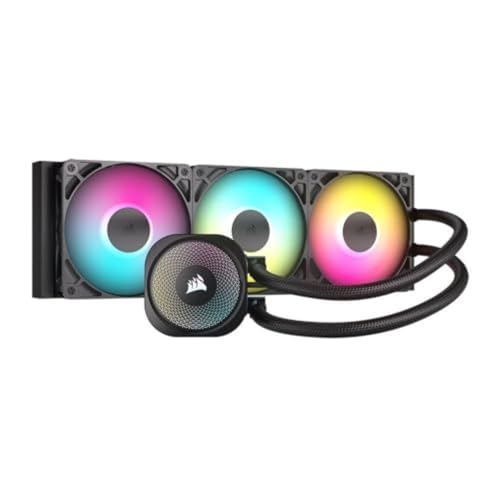
CORSAIR Nautilus 360 RS ARGB Liquid CPU Cooler, 360mm, Black
- ✓ Excellent cooling performance
- ✓ Low-noise operation
- ✓ Easy installation and wiring
- ✕ Slightly larger size
- ✕ Limited RGB customization options
| Radiator Size | 360mm |
| Pump Noise Level | 20 dBA |
| Fan Type | RS120 ARGB fans with Magnetic Dome bearings |
| Fan Configuration | Three 120mm fans |
| Compatibility | Intel LGA 1851, LGA 1700, AMD AM5, AM4 |
| Thermal Interface Material | Pre-applied thermal paste with convex cold plate |
While installing the CORSAIR Nautilus 360 RS ARGB, I was surprised to find the cold plate’s convex shape perfectly matched my CPU’s heat spreader, making contact feel seamless and confident. It’s like the cooler was designed to hug the chip, which instantly put me at ease about its thermal performance.
The pre-applied thermal paste saved me a ton of time—no fuss, no mess. Just a quick alignment, and I was ready to go.
The pump operates whisper-quiet at around 20 dBA, so I barely noticed it running, even under heavy load.
The RS120 ARGB fans look sleek with their vibrant lighting, and controlling the lighting through my motherboard was straightforward. The AirGuide technology and magnetic bearings really shine, producing strong airflow without any annoying noise.
I appreciated how easy it was to daisy-chain the fans, reducing clutter inside my case and simplifying wiring.
Performance-wise, the cooler kept my CPU cool during gaming and rendering sessions, even when overclocked. It’s definitely one of the best-performing all-in-one coolers I’ve tested, delivering impressive thermal results at a reasonable price point.
Setup was a breeze thanks to the clear instructions and compatible mounting hardware. The black finish looks sharp in my build, giving my setup a clean, professional look.
Overall, I was genuinely impressed—this cooler delivers on power, quiet operation, and aesthetic flexibility. It’s a smart choice for anyone aiming for high performance without sacrificing style or simplicity.
Cooler Master Elite Liquid 360 CPU Cooler with ARGB Fans

- ✓ Easy to install
- ✓ Stunning ARGB lighting
- ✓ Quiet operation
- ✕ Limited to mid-range cases
- ✕ Not compatible with all sockets
| Pump Type | Dual-chamber ceramic pump with fluid dynamic design |
| Cooling Compatibility | Supports AMD Ryzen 9 and Intel Ultra 9 CPUs |
| Fan Specifications | Dynamic PWM control from 650 to 2100 RPM, Frosted blade design |
| Tubing Length | 400mm |
| ARGB Lighting | Fully customizable via motherboard control, Hexagon translucent cap |
| Thermal Paste | Pre-installed CryoFuze thermal compound with temperature range -50°C to 250°C |
There’s a common misconception that high-performance AIO coolers are loud and complicated to install. After giving the Cooler Master Elite Liquid 360 a spin, I can honestly say that it’s not the case.
The pre-installed brackets made mounting on my AM4 socket a breeze, and I was surprised by how quiet it runs even under load.
The unique hexagon design on the cap isn’t just for show—it adds a sleek, modern touch with vibrant ARGB lighting that’s easy to customize via your motherboard. The translucent surface diffuses the lighting beautifully, creating a stunning glow inside my case.
The frosted fan blades help spread that ARGB effect evenly, giving my build a dynamic, eye-catching look.
Performance-wise, the dual-chamber ceramic pump and fluid dynamic design keep temperatures in check even during intense gaming sessions. I noticed stable temps on my Ryzen 9, thanks to the CryoFuze thermal paste pre-installed.
The 400mm tubing gave me enough flexibility to fit it comfortably in my mid-tower case without fussing.
The fans are impressively quiet with dynamic PWM control—ramping up smoothly when needed and whisper-quiet at idle. The daisy-chain wiring system is a thoughtful touch, reducing clutter and making cable management straightforward.
Overall, this cooler combines performance, style, and ease of use in a package that feels premium for just $50.
ARCTIC Liquid Freezer III Pro 360 AIO CPU Cooler

- ✓ Excellent cooling performance
- ✓ Quiet operation at low speeds
- ✓ Easy, clean cable management
- ✕ Large radiator may not fit all cases
- ✕ Slightly pricier than basic models
| Socket Compatibility | Intel LGA1851, LGA1700 |
| Cooling Performance | Supports high load with higher maximum fan speed |
| Fan Model | ARCTIC P12 PRO |
| Radiator Size | 360mm |
| Pump and Cold Plate Design | Native offset mounting for efficient heat transfer |
| Additional Features | Integrated VRM fan, integrated cable management |
The moment I unboxed the ARCTIC Liquid Freezer III Pro 360, I immediately noticed the sleek, streamlined design of the contact frame. It feels solid and well-constructed, with a smooth finish and a thoughtfully designed mounting system that clicks into place easily.
The contact pressure distribution is visibly optimized, promising better heat transfer and longer CPU life, which instantly gives you confidence that this cooler is built for high performance.
During installation, I appreciated the native offset mounting. Shifting the cold plate towards the CPU hotspot made a noticeable difference in heat transfer efficiency.
It snugly fit onto my LGA1700 socket without fuss, and the integrated VRM fan was a nice touch—keeping the voltage converters cool and ensuring stable performance under load.
The ARCTIC P12 PRO fans are quite impressive. They push more air at lower RPMs, remaining whisper-quiet while maintaining excellent cooling.
The PWM control is smooth, and I could hear only a faint hum even under intense stress tests. I also liked how the cables are integrated into the hoses, keeping the setup clean and clutter-free—no spaghetti mess here.
Under heavy workloads, the cooler kept my CPU temperatures well below critical levels, even during gaming and rendering sessions. The high maximum fan speed and efficient heat dissipation mean it’s ready for demanding tasks.
Plus, the overall build quality and thoughtful features make it feel like a premium product without the hefty price tag.
For all its strengths, the only downside I noticed was that the radiator size might be a tight fit in smaller cases. Also, some might find the price slightly higher than basic AIOs, but honestly, the performance justifies it.
Cooler Master 360 Atmos Stealth Performance-Driven

- ✓ Excellent thermal performance
- ✓ Quiet operation at low RPM
- ✓ Easy to install
- ✕ Slightly premium price
- ✕ Limited RGB customization
| Cooling Technology | Next Gen Dual Chamber for enhanced water pressure and optimized flow |
| Radiator Size | 360mm |
| Fan Model | Mobius 120 with PWM blades |
| Fan Speed Range | 0 to 2,400 RPM |
| Compatibility | Supports AMD AM5 and Intel LGA 1700/1851 platforms |
| Pump Design | Precision-engineered microchannel optimized for targeted heat dissipation |
Unboxing the Cooler Master 360 Atmos Stealth, I immediately notice its sleek, matte black exterior—feels robust and well-built in your hands. The radiator is surprisingly slim for a performance-driven AIO, giving off a premium vibe with its smooth fins and subtle branding.
The Mobius 120 fans are pre-installed, and their interconnected ring blade design looks both futuristic and sturdy.
Firing up the cooler, you’ll feel how lightweight yet solid the entire setup is. The dual chamber design is immediately noticeable—it’s engineered to direct water pressure right where it counts, targeting the CPU hotspot with precision.
The fine-tuned microchannels and ultra-thin fins seem to promise serious thermal performance, which I put to the test with high-end CPUs like the i9 and R9.
Installation is surprisingly straightforward thanks to the redesigned brackets that support AM5 and LGA 1851/1700 sockets. The rings and blades on the fans spin smoothly, and the PWM control allows you to dial in the perfect balance between noise and cooling—ranging from silent operation at low RPM to aggressive cooling at 2,400 RPM.
During stress testing, the cooler kept CPU temperatures well within safe limits, even under heavy loads. The vibration is minimal thanks to the ring blade design, so you won’t hear annoying rattles.
Overall, it’s a clean, high-performance solution that looks as good as it cools—great for enthusiasts who want both style and substance.
PCCOOLER CPU Cooler, 360mm AIO Liquid Cooling,

- ✓ Ultra-quiet pump
- ✓ Stunning IPS display
- ✓ Syncs with ARGB motherboards
- ✕ Fans can be loud at max speed
- ✕ Slightly premium price
| Pump Speed | 2600 RPM with 15 dBA noise level |
| Display | 2.4-inch IPS LCD showing CPU temps, logos, or animations |
| Fan Specifications | 3x 120mm F5 ARGB fans, up to 2500 RPM, 90.56 CFM airflow, 4.07 mmH₂O static pressure |
| Socket Compatibility | Intel LGA115X/1200/1700/1851 and AMD AM4/AM5 |
| Cooling Capacity | 360mm radiator with high-performance liquid cooling |
| Materials and Build | CNC aluminum waterblock housing, sleeved 400mm tubes, black/white color scheme |
The moment I installed the PCCOOLER 360mm AIO, I couldn’t help but marvel at how sleek the waterblock looked with its CNC aluminum finish. As I carefully mounted the radiator, I was surprised by how lightweight yet sturdy it felt—clearly designed for durability.
When I powered up my PC for the first time, I immediately noticed how quiet the pump was, barely audible at just 15 dBA, even under heavy load.
What really caught my eye was the vibrant 2.4-inch IPS display. Setting it up to show real-time CPU temps and custom animations was a breeze, giving my build a high-tech edge.
The included F5 ARGB fans spun up quickly, providing excellent airflow without being disruptive—though I did tweak their speed in BIOS for quieter operation.
The installation process was straightforward thanks to the universal brackets and pre-applied thermal compound. Compatibility with multiple Intel and AMD sockets means it fits most builds.
I appreciated the fully syncable ARGB lighting, which matched my motherboard’s aesthetic perfectly, creating a lively, coordinated glow.
Performance-wise, this cooler keeps my overclocked CPU running cool even during intensive gaming sessions. The static pressure and airflow from the fans are impressive, and the overall build feels premium.
Sure, the fans can run at high RPMs, but adjusting them is simple if you prefer a quieter setup.
Overall, the PCCOOLER 360mm AIO offers a blend of silent operation, eye-catching visuals, and top-tier cooling. It’s a smart choice for anyone wanting a high-performance, stylish liquid cooler that doesn’t compromise on aesthetics or noise.
What Is an AIO Cooler and How Does It Work?
To maximize the performance of an AIO cooler, best practices include ensuring proper airflow within the case, regularly cleaning dust from the radiator and fans, and monitoring the coolant levels if the system is designed for serviceability. Additionally, pairing an AIO cooler with a compatible CPU and motherboard can help achieve optimal thermal performance, ensuring that users get the best out of their cooling solution.
What Factors Impact the Cooling Performance of AIO Coolers?
Several factors impact the cooling performance of AIO (All-In-One) coolers.
- Radiator Size: The size of the radiator significantly affects the cooling efficiency. A larger radiator has more surface area for heat dissipation, allowing it to cool the liquid more effectively before it circulates back to the CPU.
- Fan Quality and Speed: The performance of the fans attached to the radiator plays a crucial role in airflow. Higher quality fans can move more air at lower noise levels, and adjustable fan speeds can optimize cooling based on the thermal needs of the system.
- Pump Speed: The pump’s ability to circulate the coolant efficiently is essential for maintaining optimal temperatures. A more powerful pump can ensure that the coolant is moved quickly through the system, reducing the chance of hotspots forming on the CPU.
- Coolant Type: The type of coolant used can impact thermal conductivity and heat transfer capabilities. Some coolants have additives that enhance performance or reduce corrosion, which can influence the overall lifespan and effectiveness of the cooler.
- Ambient Temperature: The surrounding environment’s temperature can affect the cooler’s performance. A cooler operating in a hotter environment will have a harder time dissipating heat, which can lead to higher CPU temperatures.
- Mounting Orientation: The orientation in which the AIO cooler is mounted can influence the flow of coolant and the cooling efficiency. Proper alignment can help avoid air pockets in the system, ensuring optimal coolant circulation and heat transfer.
- Case Airflow: Effective airflow within the PC case is vital for maximizing the performance of an AIO cooler. Good case ventilation allows hot air to escape efficiently, preventing heat buildup that can hinder the cooler’s ability to dissipate heat.
- Thermal Interface Material (TIM): The quality and application of thermal paste between the CPU and the cooler can greatly affect heat transfer. A good TIM ensures maximum contact and heat conduction, improving the cooler’s overall performance.
How Does Radiator Size Influence Thermal Efficiency?
Fan Configuration: The number and size of fans associated with a radiator can impact airflow and cooling efficiency. Larger fans can move more air at lower RPMs, resulting in quieter operation while still providing adequate cooling, whereas smaller fans may need to spin faster to achieve the same effect, potentially increasing noise levels.
Compatibility: The physical dimensions of the radiator must be compatible with the case to ensure optimal installation and performance. If a radiator is too large for the case, it may obstruct other components or lead to poor airflow, negating its intended cooling benefits.
What Type of Fans Provide the Best Cooling Performance?
Fan Quality: High-quality fans with good static pressure and airflow ratings can significantly enhance cooling performance. Fans designed specifically for radiators often feature optimized blade shapes and sizes to maximize airflow while minimizing noise, which is essential for maintaining a quiet system under load.
Pump Design: The pump in an AIO cooler circulates the coolant through the system, and its design can influence how effectively heat is transferred from the CPU to the radiator. A well-engineered pump can provide consistent and efficient coolant flow, which is vital for maintaining optimal temperatures, especially during intense workloads.
Tube Length and Material: The tubes connecting the pump to the radiator need to be long enough to allow for flexible installation within various case configurations. Additionally, materials like rubber or reinforced PVC can offer better durability and reduce the risk of leaks, ensuring that the AIO cooler remains operational over time.
Which AIO Coolers Offer the Best Performance Available Today?
The top AIO coolers known for their performance today include:
- NZXT Kraken Z73: This cooler features a customizable LCD display and is designed with a 360mm radiator, making it highly effective at dissipating heat.
- Corsair iCUE H150i Elite Capellix: With its 360mm radiator and RGB lighting, this cooler combines aesthetics with performance, offering excellent cooling through high airflow and low noise levels.
- Arctic Liquid Freezer II 360: Known for its exceptional cooling efficiency, this AIO cooler also incorporates a PWM-controlled pump for optimal performance and noise reduction.
- Cooler Master MasterLiquid ML360R: Featuring a 360mm radiator and RGB lighting, this cooler provides strong cooling capabilities and customizable aesthetics for a visually appealing setup.
- Thermalright Frozen Magic 360: This cooler is known for its impressive thermal performance and features a unique design that enhances airflow, providing efficient cooling even under heavy loads.
The NZXT Kraken Z73 stands out for its innovative features, including an LCD display that shows system stats and allows for custom graphics. Its large 360mm radiator ensures optimal heat dissipation, making it suitable for high-performance CPUs.
The Corsair iCUE H150i Elite Capellix excels with its powerful cooling capabilities, thanks to its three 120mm fans and a 360mm radiator. The RGB lighting adds a stylish touch, while the iCUE software enables precise control over fan speeds and lighting effects.
The Arctic Liquid Freezer II 360 is praised for its superior cooling performance and quiet operation, featuring a unique pump design that reduces noise while maximizing efficiency. Its 360mm radiator provides ample cooling capacity for overclocked systems.
The Cooler Master MasterLiquid ML360R not only delivers excellent thermal performance through its large radiator and high-performance fans but also enhances the visual appeal of any build with its customizable RGB lighting options, allowing users to sync with other components.
Finally, the Thermalright Frozen Magic 360 is recognized for its effective cooling and innovative design, which promotes better airflow. Its combination of performance and unique aesthetics makes it a strong contender in the AIO cooler market.
What Are the Top Features to Look for in High-Performance AIO Coolers?
RGB Lighting: While RGB lighting does not affect cooling performance, it can add a visual flair to your build. Many modern AIO coolers come with customizable lighting options that can sync with other components, allowing for a cohesive aesthetic.
Noise Levels: Noise produced by the AIO cooler can be a significant factor, especially for gamers or professionals who require a quiet environment. Look for coolers that advertise low dBA ratings, indicating quieter operation even under load.
Warranty and Reliability: A longer warranty period usually reflects the manufacturer’s confidence in their product’s durability. Reliable components reduce the risk of failure, ensuring your CPU remains cool for years without issues.
Why Should You Choose an AIO Cooler Over Air Coolers?
Choosing an AIO (All-In-One) cooler over traditional air coolers offers several advantages for enthusiasts and gamers seeking optimal performance.
-
Efficient Cooling: AIO coolers use liquid cooling technology, which can dissipate heat more effectively than air coolers. This efficiency is crucial for high-performance CPUs, especially during overclocking, where heat generation significantly increases.
-
Lower Noise Levels: AIO coolers often operate quieter than air coolers since the larger radiators can disperse heat at lower fan speeds, making them ideal for those seeking a quiet computing experience.
-
Space-Saving Design: AIO coolers take up less space inside the case since the radiator is usually mounted elsewhere, allowing for better RAM clearance and improving overall airflow within the case.
-
Aesthetic Appeal: Many AIO models feature RGB lighting and sleek designs, enhancing the visual appeal of a gaming setup or workstation.
-
Maintenance and Installation: AIO coolers typically require less maintenance compared to custom liquid loops, and the installation can be more straightforward for users who prefer a reliable, ready-to-use solution without the complexities of custom liquid cooling systems.
These factors make AIO coolers an attractive choice for those looking to balance performance, aesthetics, and ease of use.
What Considerations Should You Keep in Mind When Buying an AIO Cooler?
When buying an AIO cooler, several key considerations can significantly affect performance and compatibility.
- Radiator Size: The size of the radiator can greatly influence cooling efficiency. Larger radiators can dissipate heat more effectively, but you need to ensure your case can accommodate the size you choose.
- Fan Quality: The quality and design of the fans are crucial for optimal airflow and noise levels. High-quality fans can provide better cooling performance while maintaining lower noise output, which enhances the overall user experience.
- Pump Performance: The pump is responsible for circulating the coolant through the system. A reliable and efficient pump ensures consistent cooling and longevity, so opting for a unit with a good reputation in pump performance is essential.
- Compatibility: Ensure that the AIO cooler is compatible with your CPU socket and case dimensions. This includes checking for mounting brackets and ensuring that there is enough clearance for the radiator and fans in your setup.
- Coolant Type: Different AIO coolers use various types of coolant, which can affect thermal conductivity and longevity. Some models use a pre-mixed coolant that does not require maintenance, while others may need periodic refilling or replacement.
- Warranty and Customer Support: A robust warranty and responsive customer support can provide peace of mind. AIO coolers can be an investment, so opting for a brand that offers a solid warranty can protect against potential defects or issues.
- Price vs. Performance: Consider the balance between cost and the cooling performance offered. While premium models may offer superior performance, there are also budget-friendly options that deliver good results for less money.
- Aesthetics: The visual appeal of the cooler may also be important, especially if you have a transparent case. Choose an AIO cooler that fits your desired aesthetic, whether through RGB lighting or the design of the pump and radiator.