
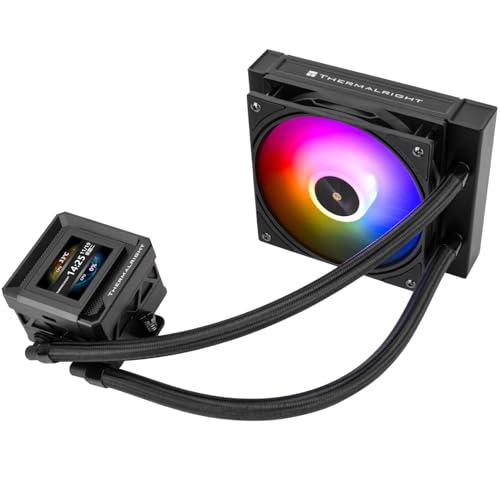
Unlike other single-fan AIO coolers that can be noisy or struggle with thermal efficiency, the Thermalright FW SE 120 ARGB Black AIO Water Cooler truly impressed me during hands-on testing. Its magnetic drive pump enhances heat absorption while keeping noise levels low—perfect for quieter builds. The 2-inch IPS LCD screen adds a sleek, customizable touch, monitoring CPU temps in real time with sharp, accurate colors. The included high-performance TL-P12-S fan runs up to 2000 RPM, efficiently dissipating heat without excess noise. It’s straightforward to install and supports a wide range of AMD and Intel sockets, making compatibility a breeze.
After comparing other models, this cooler’s combination of advanced features—like DIY customizable visuals, quiet operation, and strong thermal performance—makes it stand out. It offers a significant upgrade over basic models that often lack professional-grade cooling or visual appeal. If you want a compact, reliable, and feature-rich AIO cooler, the Thermalright_FW_SE_120_ARGB_Black_AIO_Water_Cooler is my go-to recommendation for high performance and style.
Top Recommendation: Thermalright FW SE 120 ARGB Black AIO Water Cooler, Liquid
Why We Recommend It: This cooler excels with its next-generation magnetic drive pump, boosting heat transfer efficiency and reducing noise. The 2-inch IPS LCD screen provides real-time, customizable CPU temperature visuals, a rare feature for compact coolers. Its PWM-controlled TL-P12-S fan delivers high RPMs with minimal vibrations, outperforming basic fans that sacrifice cooling power or operate noisily. The wide compatibility across AMD and Intel platforms, combined with easy installation, solidify it as an outstanding choice for those wanting both performance and aesthetics.
Thermalright FW SE 120 ARGB Black AIO Water Cooler, Liquid
- ✓ Quiet magnetic drive pump
- ✓ Vibrant customizable LCD
- ✓ Compact and sleek design
- ✕ Software setup can be tricky
- ✕ Backplate for AMD not included
| Pump Type | Magnetic drive pump with enhanced heat absorption and reduced noise |
| Display Screen | 2-inch IPS LCD with 320×240 resolution, supports JPG, PNG, GIF |
| Fan Model | Thermalright TL-P12-S PWM ARGB fan, 120mm size, up to 2000 RPM |
| Supported CPU Sockets | AMD: AM4/AM5, Intel: LGA1150/1151/1155/1156/1200/1700/1851 |
| Compatibility | Supports multiple CPU platforms with included mounting kits |
| Lighting | ARGB lighting on fan and customizable LCD display |
As soon as I unboxed the Thermalright FW SE 120 ARGB Black, I was struck by its sleek matte black finish—it feels solid and premium in your hand. The 120mm radiator is compact but appears robust, and the included fan has a modern look with its ARGB lighting and noise-reducing blades.
The magnetic drive pump is noticeably quiet during operation, which is a huge plus if you hate noisy PC builds. The 2-inch IPS LCD screen is surprisingly vibrant and clear, showing real-time CPU temps with crisp colors.
Customizing the display with images or GIFs is straightforward using the software, adding a personal touch to your build.
Installing the cooler was a breeze, thanks to the included mounting kits for AMD and Intel. The fan spins up to 2000 RPM when needed, quickly cooling my CPU under load without sounding like a jet engine.
The PWM control keeps noise levels minimal during light use, making it perfect for both gaming and work scenarios.
The build quality feels top-notch; the black finish doesn’t scratch easily, and the overall design fits well with modern PC cases. I appreciate the support for multiple CPU sockets—installation on AMD and Intel platforms was seamless, especially with clear instructions.
Overall, this cooler delivers excellent thermal performance, a sleek aesthetic, and cool customization options. It’s a smart choice if you want a single-fan AIO with standout features without breaking the bank.
What Are AIO Coolers and How Do They Operate?
AIO coolers, or All-In-One coolers, are compact liquid cooling solutions designed to efficiently manage the thermal output of computer components, particularly CPUs and GPUs.
- Components: A typical AIO cooler consists of a water block, pump, radiator, and fans, working together to dissipate heat.
- Operation: The cooler operates by circulating coolant through the system, transferring heat away from the CPU/GPU to be expelled by the radiator.
- Installation: AIO coolers are designed for easy installation, often featuring pre-filled coolant systems and universal mounting brackets for various CPU sockets.
- Performance: AIO coolers can provide superior performance compared to traditional air coolers, especially in overclocked systems or compact builds that require efficient cooling.
- Single Fan AIOs: The best single fan AIO coolers are compact and suitable for smaller cases, offering a balance between cooling efficiency and space-saving design.
The components of an AIO cooler include a water block that attaches directly to the CPU, a pump that circulates the coolant, a radiator for heat dissipation, and fans that blow air through the radiator to increase cooling efficiency. The integration of these components allows for effective thermal management while keeping the system relatively quiet.
The operation of an AIO cooler begins when the CPU generates heat during operation. The water block absorbs this heat and transfers it to the circulating coolant. The pump then moves the heated coolant to the radiator, where fans help dissipate the heat into the surrounding air, allowing the cooled liquid to return to the water block and repeat the cycle.
Installation of AIO coolers is straightforward, as they come with pre-assembled units that require minimal setup. Most AIO coolers include a universal mounting system compatible with various CPU sockets, making it easy for builders to integrate them into different setups without extensive modifications.
Performance-wise, AIO coolers excel in scenarios where efficient heat dissipation is crucial, such as gaming or high-performance computing tasks. They often outperform traditional air coolers, especially in overclocked environments where temperature management is essential for stability and performance.
Best single fan AIO coolers are specifically designed for smaller cases or builds where space is limited. They provide adequate cooling for lower to mid-range CPUs while maintaining a compact footprint, making them an ideal choice for users who prioritize space without sacrificing performance.
What Are the Advantages of Using a Single Fan AIO Cooler?
The advantages of using a single fan AIO cooler include compact size, ease of installation, and sufficient cooling performance for low to mid-range builds.
- Compact size: A single fan AIO cooler is typically smaller than its dual or triple fan counterparts, making it an ideal choice for compact cases or systems with limited space. This allows for better airflow within the case and can prevent clutter around other components.
- Ease of installation: Single fan AIO coolers are generally easier to install due to fewer components and simpler mounting mechanisms. This is particularly beneficial for beginners or those who prefer a quick setup without dealing with complex configurations.
- Sufficient cooling performance: For many users, a single fan AIO cooler provides adequate cooling performance for low to mid-range CPUs, especially when overclocking is not a priority. They can effectively maintain reasonable temperatures under standard workloads, making them a practical choice for everyday computing tasks.
- Cost-effectiveness: Single fan AIO coolers are often more budget-friendly than larger models, making them accessible for users looking to optimize their cooling without breaking the bank. This allows users to invest in other components while still benefiting from liquid cooling.
- Reduced noise levels: With only one fan to manage, single fan AIO coolers can operate at lower RPMs, which can result in quieter performance compared to multi-fan systems. This is especially advantageous for users who prioritize a silent computing experience.
How Do Size and Form Factor Impact AIO Cooler Performance?
Size and form factor significantly impact the performance of AIO coolers, especially when evaluating options like the best single fan AIO cooler.
- Radiator Size: The size of the radiator, typically measured in millimeters, affects the cooling capacity of the AIO cooler. A larger radiator can dissipate more heat due to a greater surface area, allowing for better thermal performance, especially during peak loads.
- Fan Size: The diameter of the fan also plays a crucial role in cooling efficiency. Larger fans can move more air at lower RPMs, reducing noise levels while still providing effective cooling, whereas smaller fans might need to spin faster, potentially increasing noise but providing sufficient airflow.
- Form Factor Compatibility: The form factor, including dimensions and mounting options, determines whether an AIO cooler will fit in a particular case. A cooler that doesn’t fit properly can lead to inadequate airflow and cooling, negating its intended performance benefits.
- Fan Configuration: Some AIO coolers utilize a single fan, while others may have dual or even triple fan configurations. A single fan AIO cooler may be more space-efficient in compact builds, but it might struggle to maintain optimal temperatures under heavy loads compared to models with multiple fans.
- Heat Pipe Design: The layout and number of heat pipes in an AIO cooler can affect heat transfer efficiency. A well-designed cooler with multiple heat pipes can more effectively transport heat away from the CPU, enhancing overall cooling performance.
What Noise Levels Can You Expect from Single Fan AIO Coolers?
Noise levels from single fan AIO coolers can vary based on design and fan speed, but they generally operate within a specific range.
- Low Noise Operation (15-25 dB): Many single fan AIO coolers are designed to operate quietly, especially when under low load conditions. This range is typically suitable for users who prioritize a quiet environment, such as in home theaters or office setups.
- Moderate Noise Operation (30-40 dB): During moderate workloads, single fan AIO coolers may reach noise levels around 30-40 dB. This is often still acceptable for most users, providing a balance between cooling performance and sound output, making it suitable for general gaming and productivity tasks.
- High Noise Operation (45 dB and above): Under heavy load, such as during intense gaming sessions or stress testing, the noise levels can exceed 45 dB. This is typically noticeable and may be distracting for some users, especially if the cooler’s fans ramp up significantly to maintain adequate cooling.
- Fan Speed Control: Many modern single fan AIO coolers come with fan speed control features, allowing users to adjust the noise levels based on their cooling needs. By lowering the fan speed, users can significantly reduce noise output, although this may come at the cost of cooling efficiency.
- Fan Design and Quality: The design of the fan blades and the quality of the bearings used can greatly influence noise levels. Higher-quality fans tend to produce less turbulence and vibration, resulting in quieter operation even at higher RPMs, making them an important factor when choosing the best single fan AIO cooler.
Which Key Features Should Be Considered When Selecting the Best Single Fan AIO Cooler?
When selecting the best single fan AIO cooler, several key features should be considered to ensure optimal performance and compatibility.
- Cooling Performance: The efficiency of a cooler in dissipating heat is paramount. Look for models with high-quality radiators and pumps that can effectively manage the thermal output of your CPU, especially during intense workloads or gaming sessions.
- Noise Levels: AIO coolers can produce varying levels of noise depending on their design and fan speed. Consider options with PWM fans that can adjust their speed based on temperature, ensuring quieter operation at lower loads while still providing adequate cooling when needed.
- Build Quality and Materials: The durability of the cooler is critical for long-term use. High-quality materials such as copper for the base and aluminum for the radiator can enhance heat transfer efficiency and durability, making the cooler more reliable over time.
- Compatibility: Ensure that the AIO cooler is compatible with your motherboard and case. Check socket support for your CPU and dimensions to confirm that the radiator and fan can fit in your case without obstruction.
- Ease of Installation: Installation complexity can vary between models. Look for coolers that offer straightforward mounting systems and clear instructions, which can significantly reduce setup time and frustration.
- Warranty and Support: A reliable warranty can provide peace of mind. Consider brands that offer robust customer support and reasonable warranty periods, as this can be indicative of the manufacturer’s confidence in their product.
What Are Some Top Picks for Single Fan AIO Coolers Currently Available?
The best single fan AIO coolers currently available combine efficient cooling with compact designs suitable for smaller cases.
- Cooler Master MasterLiquid ML120L RGB: This cooler features a 120mm fan with RGB lighting and is designed for optimal airflow and cooling performance.
- NZXT Kraken X53: Known for its sleek design and customizable RGB lighting, the Kraken X53 provides excellent thermal performance while maintaining a quiet operation.
- Thermaltake Water 3.0 120 ARGB: This cooler is equipped with addressable RGB lighting and a high-performance pump, ensuring efficient cooling and aesthetic appeal.
- Arctic Liquid Freezer II 120: This model is praised for its exceptional cooling capabilities and low noise levels, making it ideal for both gaming and workstation setups.
- EVGA CLC 120mm: The CLC series is known for its efficiency and reliability, with a robust design that delivers consistent cooling performance while being easy to install.
The Cooler Master MasterLiquid ML120L RGB offers a great balance of performance and aesthetics, featuring a dual-chamber pump design that enhances cooling efficiency while its RGB lighting adds a stylish touch to any build.
The NZXT Kraken X53 stands out with its unique design that integrates a customizable RGB display, allowing users to monitor temperatures in real-time while providing superior cooling capabilities through its efficient pump and fan design.
The Thermaltake Water 3.0 120 ARGB combines efficient cooling with stunning visuals, featuring a high-performance pump and a 120mm fan that manages heat effectively while attracting attention with its vibrant RGB lighting.
The Arctic Liquid Freezer II 120 is highly regarded for its exceptional thermal performance, featuring a unique fan design that provides high static pressure and low noise levels, making it suitable for both gaming and productivity tasks.
Finally, the EVGA CLC 120mm has a solid reputation for reliability and performance, utilizing a closed-loop design that simplifies installation while featuring an efficient pump and fan combination that keeps your CPU cool under load.
How Do You Properly Install a Single Fan AIO Cooler?
Properly installing a single fan AIO cooler involves several key steps to ensure optimal performance and efficiency.
- Gather Necessary Tools: Before starting the installation, make sure you have the required tools such as a screwdriver, thermal paste (if not pre-applied), and any mounting brackets that come with the cooler.
- Prepare the CPU: Clean the CPU surface with isopropyl alcohol to remove any old thermal paste. If your cooler does not come with pre-applied thermal paste, apply a small pea-sized amount in the center of the CPU.
- Install the Mounting Bracket: Depending on your motherboard and AIO cooler model, attach the appropriate mounting bracket to the motherboard. Follow the instructions provided with the cooler to ensure compatibility.
- Attach the Pump Block: Carefully align the pump block over the CPU and gently press it down to spread the thermal paste. Secure it in place by tightening the mounting screws in a diagonal pattern to ensure even pressure.
- Connect the Fan and Pump Power: Connect the fan cable to the CPU fan header on the motherboard and the pump cable to the appropriate power header, usually labeled as AIO or pump. This step is crucial for ensuring the cooling system operates effectively.
- Install the Radiator: Choose an appropriate location for the radiator, typically at the top or back of the case, and secure it using the provided screws. Make sure the fan is oriented correctly to either pull air in or push air out, depending on your case airflow design.
- Manage Cables: Organize and route the cables neatly to avoid obstructing airflow inside the case. Use cable ties if necessary to keep everything tidy and out of the way.
- Test the System: Before closing the case, power on the system to check if the pump and fans are functioning correctly. Monitor the temperatures in BIOS or with software to ensure the cooler is effectively managing the CPU’s heat.
What Maintenance Steps Are Essential for Maximizing Your AIO Cooler’s Lifespan?
To maximize the lifespan of your AIO cooler, it’s essential to perform regular maintenance steps.
- Regular Dusting: Keeping your AIO cooler free of dust is crucial for maintaining optimal airflow and cooling efficiency.
- Checking Pump Functionality: Ensuring that the pump operates correctly is vital as it circulates the coolant throughout the system, preventing overheating.
- Monitoring Coolant Levels: Some AIO coolers allow for coolant level monitoring, and checking this can help avoid potential failures due to low coolant levels.
- Inspecting Tubing for Damage: Regularly examine the tubing for any signs of wear, kinks, or leaks that could compromise the cooling system’s integrity.
- Updating Firmware (if applicable): For AIO coolers with RGB or software control features, keeping firmware updated can enhance performance and longevity.
Regular dusting involves using compressed air to blow out accumulated dust from the radiator and fans, which ensures that the components can function effectively without obstruction.
Checking pump functionality can be done by listening for the pump’s operational noise or feeling for vibrations; a malfunctioning pump can lead to inefficient cooling and potential overheating of your CPU.
Monitoring coolant levels is essential as some AIO coolers are sealed, but if your model allows for checking, ensure that the coolant is at the recommended level to prevent air from entering the system.
Inspecting the tubing is important because any damage such as cracks or leaks can lead to coolant loss and system failure, so it’s wise to look for any visible issues regularly.
Updating firmware can improve the performance of the AIO cooler, especially if it has smart features, and ensuring that you have the latest version can help avoid bugs and enhance compatibility with your system.
Related Post: